
Xi-Putin meeting in Beijing cements closer China-Russia partnership with wide-ranging pacts
Xi-Putin meeting in Beijing produced security, energy and trade agreements and a joint declaration calling for a ‘multipolar world’, raising regional concern.
Chinese President Xi Jinping and Russian President Vladimir Putin met in Beijing on May 20 in a high-profile summit that deepened the China-Russia partnership through a series of agreements and a joint declaration calling for "a multipolar world and a new type of international relations." The Xi-Putin meeting produced accords spanning security cooperation, energy projects and expanded trade ties, underscoring both capitals’ intent to coordinate more closely on global affairs. Leaders framed the summit as a move to restructure international norms and to present a united front on challenges to their interests.
Leaders sign security and economic pacts
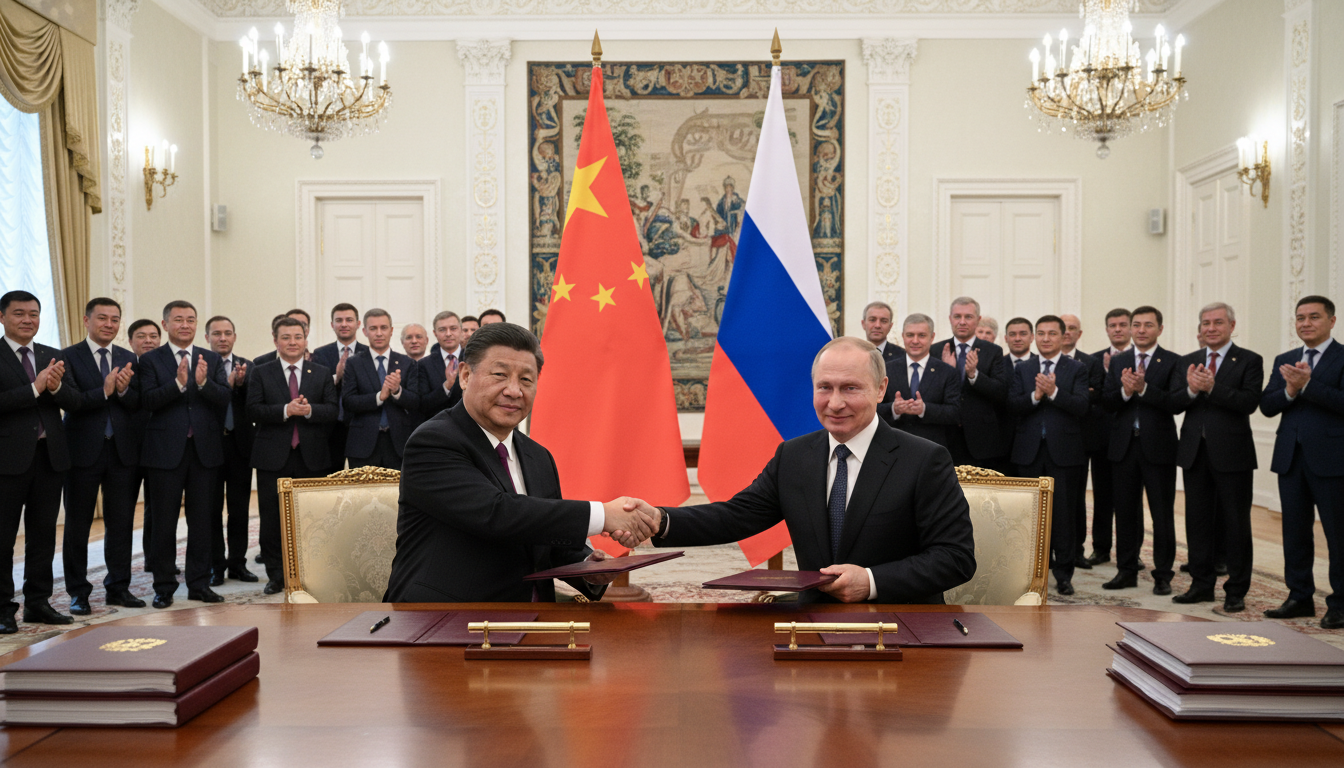
Both presidents participated in a signing ceremony at the Great Hall of the People that officials described as covering defense, economic and technological cooperation. Russian and Chinese delegations signed multiple memoranda and agreements intended to bind their strategic calculations more tightly. The texts of the agreements released by state media emphasized joint exercises, coordinated planning and measures to deepen military-to-military contacts.
Economic accords signed alongside security measures aimed to accelerate cooperation in energy supplies, infrastructure projects and financial settlements. Officials said the agreements would expand trade in national currencies and seek to insulate bilateral commerce from external disruptions. State statements presented the packages as mutually beneficial steps to stabilize long-term economic ties.
Joint declaration asserts a ‘multipolar world’ vision
In a jointly issued declaration, the two leaders called for a "multipolar world and a new type of international relations," language that signals a deliberate challenge to the existing Western-led order. The document framed multipolarity as a principle for resolving international disputes and for promoting what it called "sovereign equality" among states. Analysts noted the wording was designed to appeal to other countries wary of unilateral pressure from major powers.
The declaration also emphasized principles such as non-interference, respect for territorial integrity and cooperation on global governance reforms. Observers said the formulation gives Beijing and Moscow a shared diplomatic platform to resist sanctions, contest influence in multilateral institutions and coordinate positions on issues from Ukraine to Taiwan and the Middle East.
Ceremony at the Great Hall underscores symbolism
The public signing and handshakes at the Great Hall of the People were staged for maximal symbolism, with both leaders highlighting the length and depth of bilateral ties. Photographs of the encounter and the ceremonial exchange of documents were broadcast widely in state media in Beijing and Moscow. The venue and pageantry echoed past high-level meetings and were intended to project unity at a moment of heightened geopolitical tension.
State commentary accompanying the images framed the summit as a reaffirmation of friendship and strategic partnership, while officials emphasized continuity with previous cooperative undertakings. The optics were carefully choreographed to send a message to domestic and international audiences about the resilience of China-Russia relations.
Energy and trade agreements target economic resilience
Energy cooperation emerged as a central focus of the agreements, with officials citing plans to deepen oil and gas deliveries and to expand joint projects in downstream industries. Both sides highlighted the need for reliable energy links to support industrial growth and to provide alternative routes and partners amid shifting global markets. Commitments to coordinate on major infrastructure initiatives and logistics were presented as practical steps to translate political alignment into economic integration.
Trade officials accompanying the summit pointed to measures designed to ease customs procedures, boost bilateral investment and increase transactions in local currencies. While specific project timelines were not publicly itemized, the stated intent is to reduce dependence on third-party financial systems and to promote a more resilient trade architecture between the two countries.
Western and regional capitals voice concern over implications
Governments in Europe, North America and parts of Asia responded with caution, saying the Xi-Putin meeting could alter strategic balances and complicate efforts to manage regional crises. Officials expressed particular concern about closer security coordination and the potential for expanded arms cooperation or intelligence sharing. Some analysts said the summit may harden divisions and complicate diplomatic pathways on issues where Beijing or Moscow have leverage.
Regional neighbors, including countries in the Asia-Pacific, warned that intensified Sino-Russian coordination could increase uncertainty over maritime and territorial flashpoints. Diplomatic statements from several capitals called for continued dialogue and transparency, while urging adherence to international law and restraint in military posturing.
The summit comes amid a volatile global landscape where geopolitical competition has intensified and alliances are being reassessed. The reinforcement of China-Russia ties at the Xi-Putin meeting is likely to shape diplomatic calculations for months to come as governments evaluate the impact on security, trade and multilateral forums.
The Xi-Putin meeting in Beijing represents a strategic pivot toward closer bilateral coordination at both political and operational levels. Observers say the agreements and the joint declaration will guide future cooperation, but also raise complex questions for neighboring states and global powers about balancing influence and managing risks. The full effects of the summit will depend on how the signed accords are implemented and whether the partnership translates into sustained policy coordination on contentious international issues.

