
Alibaba opens Qwen AI to external agents as competition with Tencent intensifies
Alibaba opens Qwen AI to external agents and ‘skills’, inviting developers and partners as competition with Tencent intensifies across China’s consumer AI market.
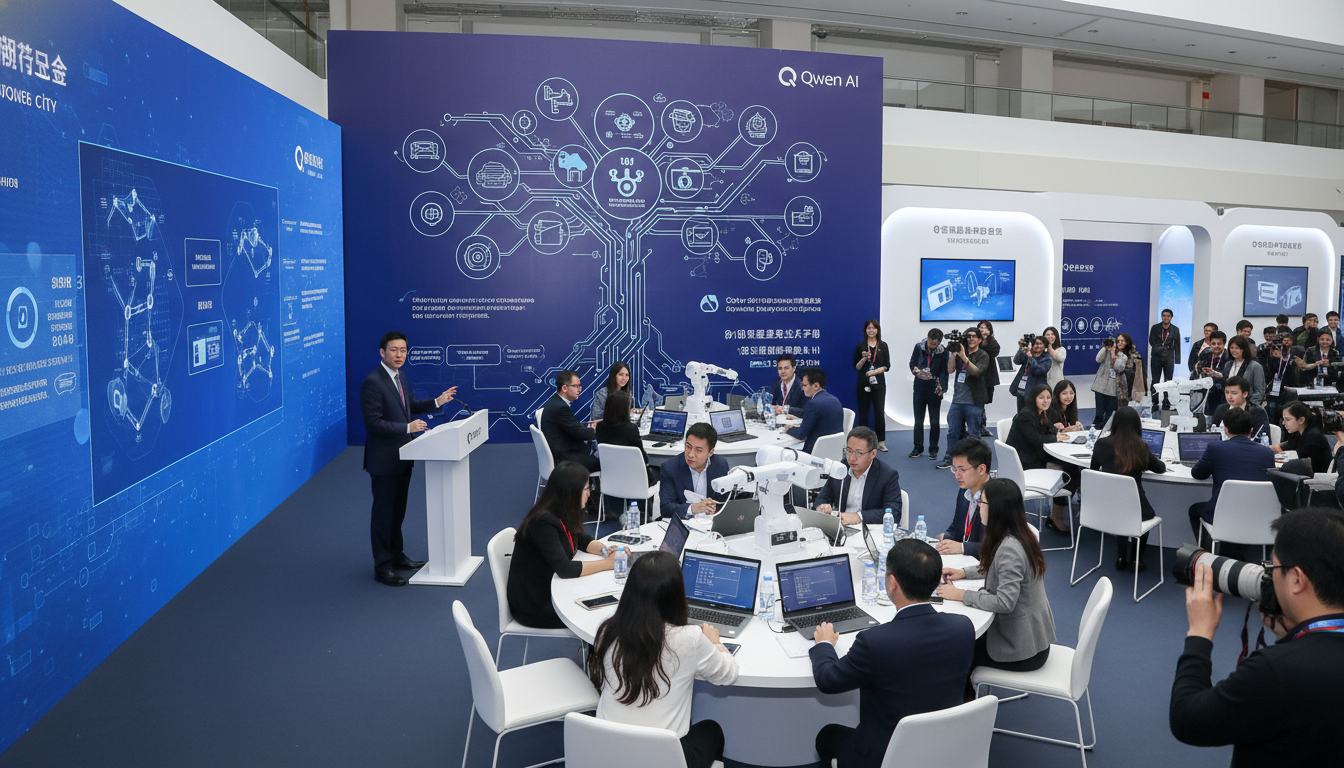
Alibaba announced on Wednesday that its consumer-facing AI app Qwen will open its ecosystem to third-party agents and "skills," a move designed to broaden the app’s capabilities and accelerate its reach. The company framed the change as an effort to build a larger developer and partner community around Qwen, which the firm launched in November. The announcement signals a sharper push into the consumer AI agent arena as rivalry with Tencent escalates.
Alibaba expands Qwen to outside developers
Alibaba said the update will allow external developers and companies to build and plug specialized agents and skills into the Qwen ecosystem. This approach lets partners offer targeted services — such as travel planning, finance tools, or retail experiences — that run inside the Qwen app environment. The company described the change as a way to speed innovation and diversify the range of functions available to end users.
The move follows trends in the global AI market where platform operators open developer access to multiply capabilities and drive engagement. By enabling third-party contributions, Alibaba aims to create a marketplace of interoperable agents that can be discovered and used by Qwen’s consumer base. That marketplace strategy also positions the company to monetize both platform usage and premium developer integrations.
How the ‘skills’ model will work for Qwen
Alibaba’s architecture will let partners register discrete skills and agent templates that integrate with Qwen’s natural language interface. Developers will be able to submit modules that perform specific tasks, and users can activate or disable skills depending on their needs. Alibaba has signaled it will provide tooling and documentation to ease integration and to help ensure user experience consistency across contributed agents.
The company emphasized safeguards that will govern the submission and operation of third-party skills, including content controls and technical requirements. These measures are aimed at preserving quality and protecting user data as the ecosystem grows. Alibaba will likely monitor early integrations closely to refine policies and technical standards.
Tencent rivalry sharpens in AI agent race
Industry observers see Alibaba’s step as a direct response to moves by Tencent, which has been advancing its own consumer-facing agent offerings and platform integrations. Tencent’s extensive social and messaging footprint gives it strong distribution advantages for agent services, and Alibaba’s push to enlist external developers is intended to counterbalance that reach. Analysts say the competition between the two groups is now centering on who can create the most useful, widely adopted agent platform.
The contest is not only about features but distribution and partner economics. Alibaba will need to attract developers who might otherwise favor Tencent’s ecosystems, meaning the company may offer incentives, revenue-sharing plans, or promotional support. Success will depend on how quickly Qwen can host a varied set of high-quality skills that meet everyday consumer needs.
Business rationale and consumer goals
Alibaba frames the expansion as a consumer-first move: richer, more personalized services delivered through conversational AI should boost engagement across its commerce, cloud and digital services. Integrating external agents could make Qwen a hub for everyday tasks, from shopping assistance to booking and personal finance management. For Alibaba, deeper consumer usage of Qwen also opens cross-selling and data-driven service opportunities across its broader ecosystem.
The company’s strategic calculus also includes strengthening Qwen’s technical footprint and data network effects. As more partners deploy skills, Qwen can collect diverse interaction patterns that inform model improvements and feature development. Alibaba’s cloud division and merchant network are expected to play roles in seeding early commercial partnerships.
Regulatory and data-security considerations
Opening a consumer AI platform to third parties amplifies regulatory and security questions, particularly in China’s tightly governed internet sector. Authorities increasingly scrutinize how platforms handle personal data, content moderation, and algorithmic behavior. Alibaba will need to ensure compliance with national rules and evolving guidance on AI deployment to avoid enforcement risks and reputational setbacks.
Experts say clear, enforceable standards for third-party skills — including data access limits and content filtering — will be critical. Alibaba’s prior experience operating large consumer platforms gives it institutional knowledge, but the company will face heightened attention from both regulators and users as Qwen’s scope expands.
Market implications and next steps for Qwen
For developers and partners, the opening presents new commercial and technical opportunities to reach Chinese consumers through conversational interfaces. Early adopters could gain visibility within Qwen’s user base, while Alibaba tests monetization pathways such as paid skills or revenue sharing. Observers will be watching which categories — travel, finance, education, entertainment, or retail — emerge fastest on the platform.
Alibaba said it will roll out the developer access in phases and provide support resources to onboard partners. The company did not publish a detailed timetable for the full marketplace launch, instead indicating it will iterate based on partner feedback and internal safety reviews. How rapidly Qwen can scale useful integrations will shape whether the platform narrows the gap with Tencent or sparks a broader fragmentation of the Chinese AI agent market.
The expansion of Qwen into an open-agent ecosystem underscores the intensifying battle among China’s tech giants to define consumer AI experiences, and it will test Alibaba’s ability to balance rapid innovation with safety, compliance and partner economics.

