
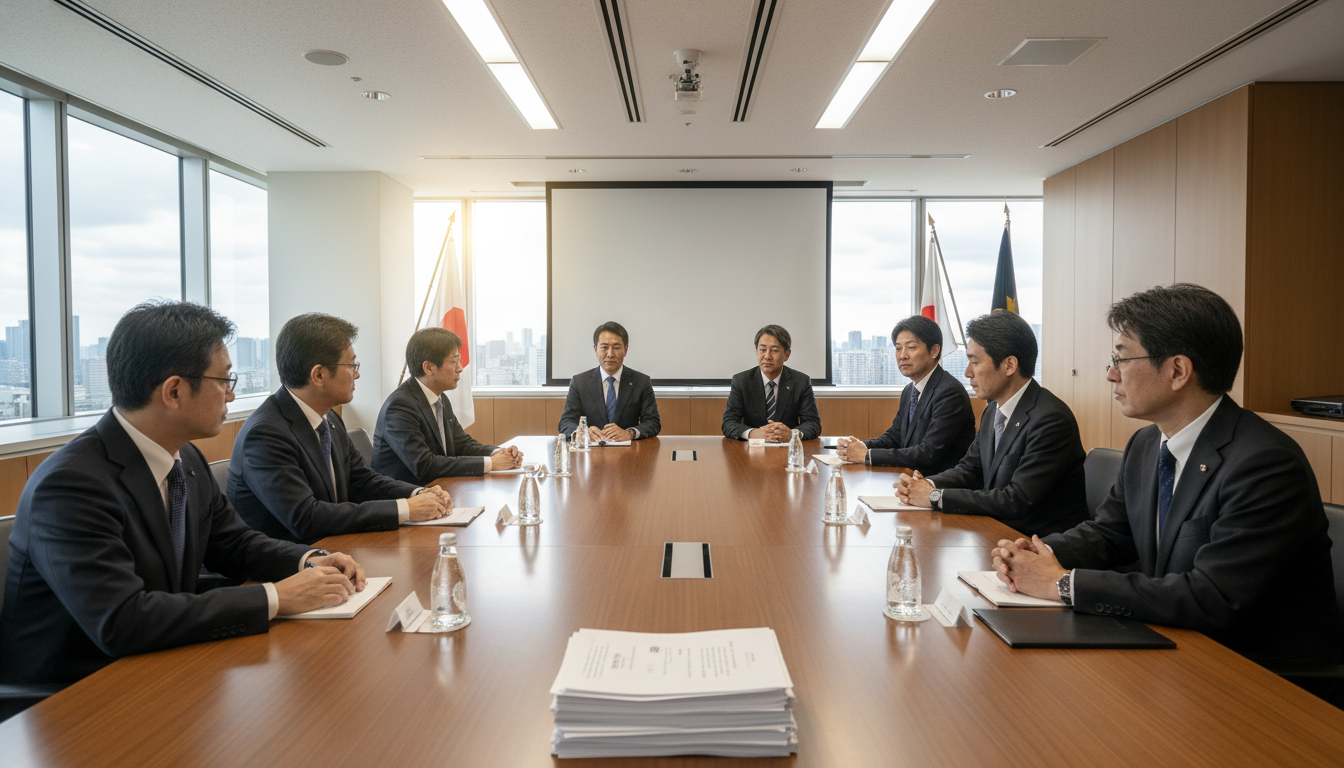
Yamada Holdings and Edion in Talks to Merge, Creating ¥2.5 Trillion Consumer Electronics Group
Yamada Holdings and Edion consider a merger to form a ¥2.5 trillion retail group, aiming to boost product development and better compete with online retailers.
Yamada Holdings and Edion have confirmed they are in talks about a possible merger that would create a consumer electronics group with annual sales of about ¥2.5 trillion. Both companies said the talks are factual and that board resolutions are scheduled for June 5, 2026, as they weigh a combination intended to strengthen product development and scale against rising online competition. The proposed integration represents one of the biggest consolidation moves in Japan’s electronics retail sector in recent years.
Merger Talks Confirmed by Both Companies
Both Yamada Holdings and Edion issued statements acknowledging discussions about a potential management integration.
Each company said the examination of a merger is underway and that their respective boards are expected to meet on June 5, 2026, to consider formal resolutions.
Company statements stopped short of final terms, but confirmed the process has progressed to the point of scheduled board consideration.
Officials emphasized that final details, including any binding agreements or timelines, will depend on board approvals and subsequent negotiations between the firms.
Combined Group to Reach ¥2.5 Trillion in Annual Sales
If completed, the combined entity would report roughly ¥2.5 trillion in annual revenue, positioning it as a dominant player in Japan’s consumer electronics retail market.
Yamada is already the sector’s largest chain and Edion is one of the country’s major rivals, and their union would significantly increase scale in purchasing, private-brand development and logistics.
Industry observers note that scale of this size offers stronger negotiating leverage with manufacturers and suppliers.
Larger revenue and combined retail footprints are also likely to provide the resources needed for expanded online services and hybrid store formats.
Aim to Strengthen Product Development and Digital Capabilities
A central rationale for the proposed merger is to bolster product development and innovation to better compete with e-commerce platforms.
Executives have cited the need to accelerate development of private-label products, deepen partnerships with vendors and enhance in-house merchandising expertise.
The integration is also expected to allow greater investment in digital channels, including improved online storefronts, unified inventory systems and logistics to support same-day or rapid delivery.
Such capabilities are seen as essential for traditional brick-and-mortar retailers seeking to defend market share from online-only competitors.
Board Votes and Regulatory Review Expected on June 5, 2026
Both companies have indicated that their boards will deliberate on the integration at meetings scheduled for June 5, 2026.
A favorable decision by the boards would likely trigger more detailed negotiations on governance, share ownership and integration plans to be presented to shareholders.
Any large-scale merger of this nature may also draw attention from regulators under Japan’s Antimonopoly Act, and the companies acknowledged that necessary regulatory clearances could be required.
The timetable for completion will depend on the pace of approvals and the complexity of integrating operations across retail, logistics and IT systems.
Potential Impact on Stores, Suppliers and Employment
Market consolidation on this scale could prompt changes to store footprints and supplier relationships as the companies seek efficiencies.
Analysts say the merged group may rationalize overlapping locations, redesign store formats to emphasize services and experiential retail, and centralize procurement to reduce costs.
Suppliers could face both opportunities and pressures as the combined buyer commands larger orders but may also press for lower prices.
Employment impacts will depend on integration choices; while some roles could be redundant, executives have signaled intentions to invest in new digital and development teams.
Next Steps and Market Watchers Await Board Decisions
The immediate next step is the board consideration on June 5, 2026, after which more concrete details could be released if approvals are secured.
Market participants, suppliers and competitors will closely monitor announcements for indications of governance structure, the degree of operational integration and the timeline for implementation.
Should the boards approve the deal, the companies will face months of detailed planning to merge logistics, point-of-sale systems and product lines while maintaining customer service.
For consumers, the outcome could mean wider product ranges, more competitive pricing and expanded online options from a single, larger retail group.

