
Japan, Indonesia to Begin Talks on Asagiri-class Destroyer Export
Japan and Indonesia will begin talks to export an Asagiri-class destroyer, a significant step after Tokyo revised its defense export policy to permit transfers.
Tokyo announcement and commencement of talks
Japan’s Defense Ministry announced on Friday, June 5, 2026, that Tokyo and Jakarta have agreed to begin discussions on the potential export of an Asagiri-class destroyer currently in service with the Japan Maritime Self-Defense Force. The ministry said the decision follows bilateral consultations and reflects a mutual interest in bolstering defense cooperation between the two countries.
The announcement frames the move as exploratory rather than final, with officials describing the initial phase as technical and legal dialogues to determine feasibility. Both capitals emphasized that any transfer would comply with Japan’s export control regime and applicable international law.
Policy change enabling export discussions
The talks come after Tokyo revised its policy on the export of defense equipment, loosening previous restrictions that limited overseas transfers of certain Japanese-made systems. The revision, approved earlier this year by the government, was intended to support allied and partner capabilities while maintaining export control safeguards.
Japanese officials have said the policy change was calibrated to allow transfers that strengthen regional security without undermining nonproliferation commitments. The Defense Ministry’s announcement reiterated that exports will be evaluated case by case, with scrutiny on end-use, maintenance, and export licensing.
About the Asagiri-class destroyer and its role
The Asagiri-class destroyer is a purpose-built escort ship used by the Maritime Self-Defense Force for tasks such as maritime patrol, anti-submarine warfare, and fleet escort. Tokyo characterizes the class as a capable, mid-sized warship well-suited to coastal defense and multirole operations.
Although the vessels are not Japan’s newest frontline destroyers, officials noted that an Asagiri-class hull could provide Indonesia with a reliable surface combatant while offering scope for training, logistics, and systems integration. Any transfer would involve technical assessments to ensure interoperability and safety.
Bilateral strategic context
Officials in both Tokyo and Jakarta have framed the talks as part of a broader deepening of security ties between Japan and Indonesia. The two governments have increased defense engagement in recent years through joint exercises, capacity-building programs, and high-level visits.
Analysts say an Asagiri-class destroyer export would signal a maturing partnership, particularly in the maritime domain where both countries share interests in safe sea lanes and regional stability. Jakarta’s expanding naval needs and Tokyo’s willingness to support partner capability-building provide the immediate context for the discussion.
Industrial, legal and logistical considerations
Any export would entail complex industrial and legal arrangements, including approvals under Japan’s export control framework, possible refurbishment or modification of the vessel, and long-term logistics support. Japanese shipyards and defense suppliers could be involved in preparing the ship and supplying spare parts and technical assistance.
Legal reviews will also consider end-use assurances and safeguards to prevent unauthorized transfers or misuse. Officials have pointed to precedents for case-by-case licensing and the need to align transfer terms with Japan’s domestic law and international commitments.
Diplomacy and next steps after Jakarta meeting
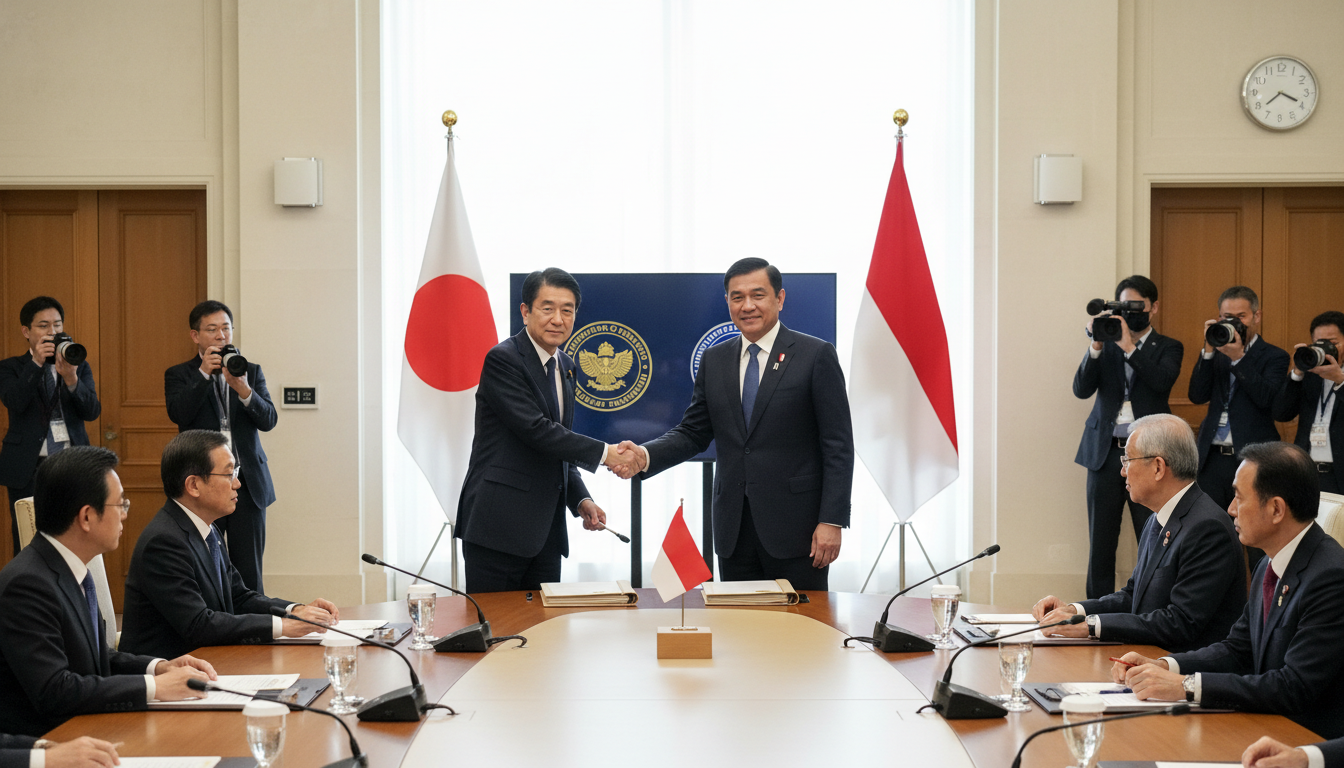
The announcement followed recent high-level exchanges between defense ministers, including a May 4 meeting in Jakarta where Japanese Defense Minister Shinjiro Koizumi and Indonesian Defense Minister Sjafrie Sjamsoeddin were photographed shaking hands. Japanese officials said those meetings helped lay the groundwork for formal technical talks initiated on June 5, 2026.
Tokyo and Jakarta plan to proceed with working-level discussions on technical specifications, legal conditions, and a possible timeline for evaluation. Both sides stressed that the process will be transparent and measured, with further political approvals required before any transfer proceeds.
The talks represent an early but consequential application of Japan’s revised defense export policy and a tangible manifestation of growing Japan–Indonesia security cooperation. Observers will watch closely how technical, legal and diplomatic elements are resolved in the months ahead, and whether this case shapes future Japanese transfers to regional partners.

