
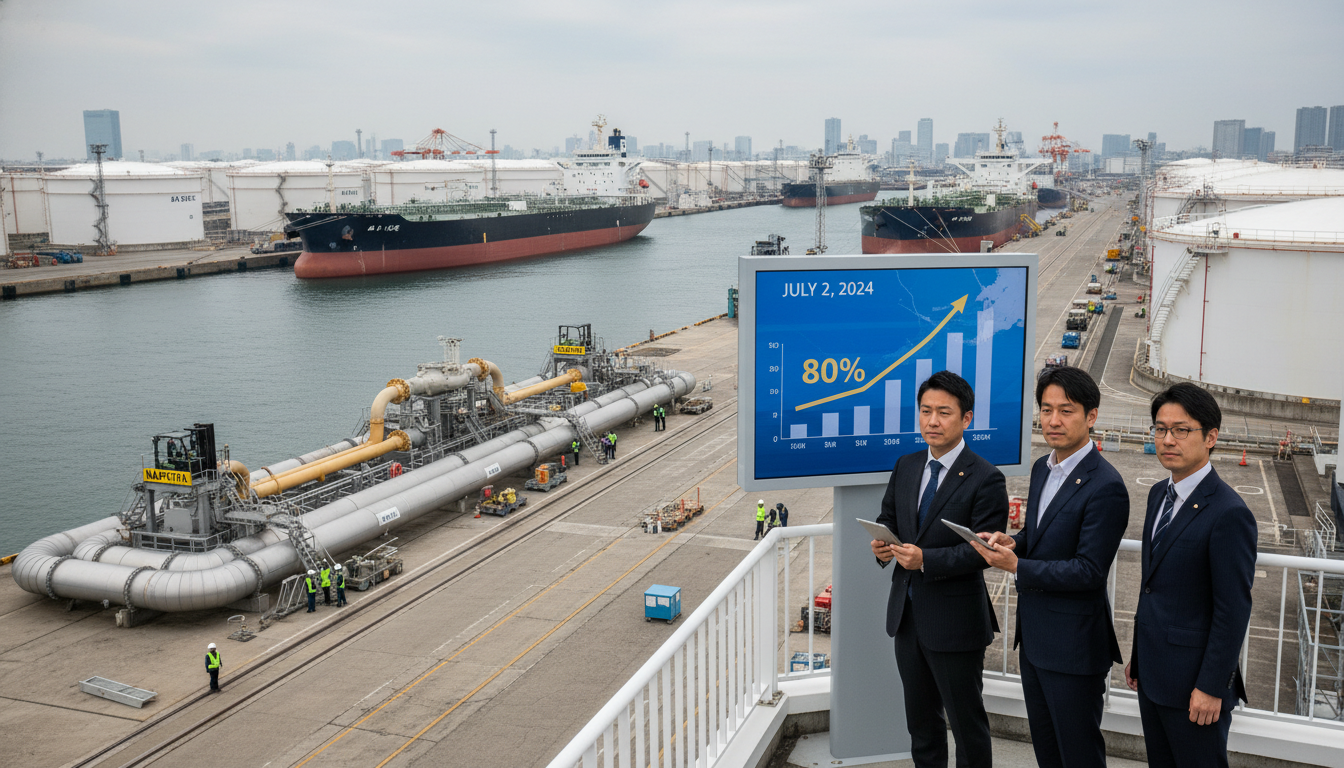
Japan Secures Naphtha Supply as May Imports Recover to Nearly 80% of Pre-war Levels
Japanese chemical firms diversify naphtha sourcing, lifting May imports to almost 80% of pre-war volumes while prices remain elevated amid ceasefire uncertainty.
Japanese companies have made substantial headway in securing alternative supplies of naphtha, reviving shipments to nearly 80% of levels seen before the Iran war, industry sources say. The move to diversify suppliers has eased immediate shortages, but naphtha prices remain high as markets weigh the durability of supply routes and ongoing ceasefire uncertainty.
May Import Recovery and Trade Figures
In May, naphtha imports to Japan rebounded sharply from wartime disruptions, reaching close to four-fifths of the pre-conflict baseline. This recovery reflects a combination of contracted deliveries, opportunistic spot purchases and the release of inventories that helped bridge the shortfall caused by reduced flows through the Strait of Hormuz.
Trade data and procurement briefs indicate the rebound was broad-based across refiners and chemical makers, with both state-linked and private firms participating in a concentrated buying effort. The uptick, however, still leaves annualized volumes below long-term averages and underscores the gap that remains to be closed.
Chemical Makers Shift Sourcing to Asia and Beyond
Major Japanese petrochemical firms and their trading partners have pivoted toward Southeast Asian, East Asian and Western suppliers to replace lost Middle Eastern volumes. Companies have increased purchases from suppliers in Singapore, South Korea and Malaysia while also sourcing reformate and condensate from Europe and the U.S. Gulf on a spot and term basis.
Procurement teams report a mix of strategies: locking in longer-term contracts where possible, supplementing with higher-priced spot cargoes, and using blended feedstock strategies to maintain cracker runs. These sourcing adjustments have required rapid commercial negotiation and logistical coordination across time zones.
Rerouted Shipping and Rising Logistics Costs
With the de facto closure of the Strait of Hormuz forcing tankers to avoid the short sea route, ships have been rerouted around the Cape of Good Hope or through extended transits, lengthening voyage times significantly. The longer voyages have raised freight costs and pushed up marine insurance premiums, both of which have contributed to higher landed naphtha prices for Japanese buyers.
Operators have also employed tactical measures such as ship-to-ship transfers in neutral waters and increased use of storage hubs to smooth delivery timing. Those stopgap logistics solutions have proved effective but add complexity and cost to an already strained supply chain.
Impact on Petrochemical Production and Domestic Plants
Naphtha is a primary feedstock for steam crackers that produce ethylene and propylene, the building blocks for plastics and chemicals. Japanese plants have managed to keep many cracker units operating by switching feedstock blends, adjusting run rates and prioritizing higher-margin product lines.
Some downstream producers of plastics and specialty chemicals have absorbed higher feedstock costs, while others have passed them on through price adjustments. The ability of firms to maintain output has varied by plant configuration and contractual flexibility, with integrated manufacturers generally faring better than smaller, standalone processors.
Price Environment and Market Outlook Amid Ceasefire Uncertainty
Despite the import recovery, naphtha prices remain elevated and volatile. Market participants cite persistent geopolitical risk, extended shipping routes and tighter global inventories as drivers of the premium. Traders are closely watching diplomatic signals and any credible timeline for a durable ceasefire in the region, since a sustained reduction in hostilities would likely restore some Middle Eastern flows and relieve pressure on freight and insurance costs.
Analysts caution that a rapid normalization of supply is not guaranteed, and price swings could continue in the near term. As a result, many buyers are balancing the cost of securing cargoes now against the risk of future price spikes.
Policy and Industry Risk Management Measures
Government and industry bodies have stepped up coordination to mitigate supply shocks. Measures include encouraging strategic stockpiling, facilitating information sharing among refineries and exploring incentives for alternative feedstock use and domestic recycling. Regulators have also signaled readiness to streamline permits for logistical adjustments that reduce bottlenecks.
Private sector initiatives are advancing as well, with consortium purchasing, joint storage agreements and greater use of financial hedges to manage price exposure. Longer term, several firms are accelerating investments in feedstock flexibility and chemical recycling to reduce dependence on imported naphtha.
The partial recovery in naphtha imports demonstrates the resilience of Japan’s petrochemical supply chain, but it also highlights the cost and complexity of maintaining that resilience under geopolitical stress. Companies and policymakers will be watching developments in the region closely, as the pace of any ceasefire-driven normalization will determine whether the current patchwork of alternative sourcing becomes a durable new pattern or a temporary reprieve.

