
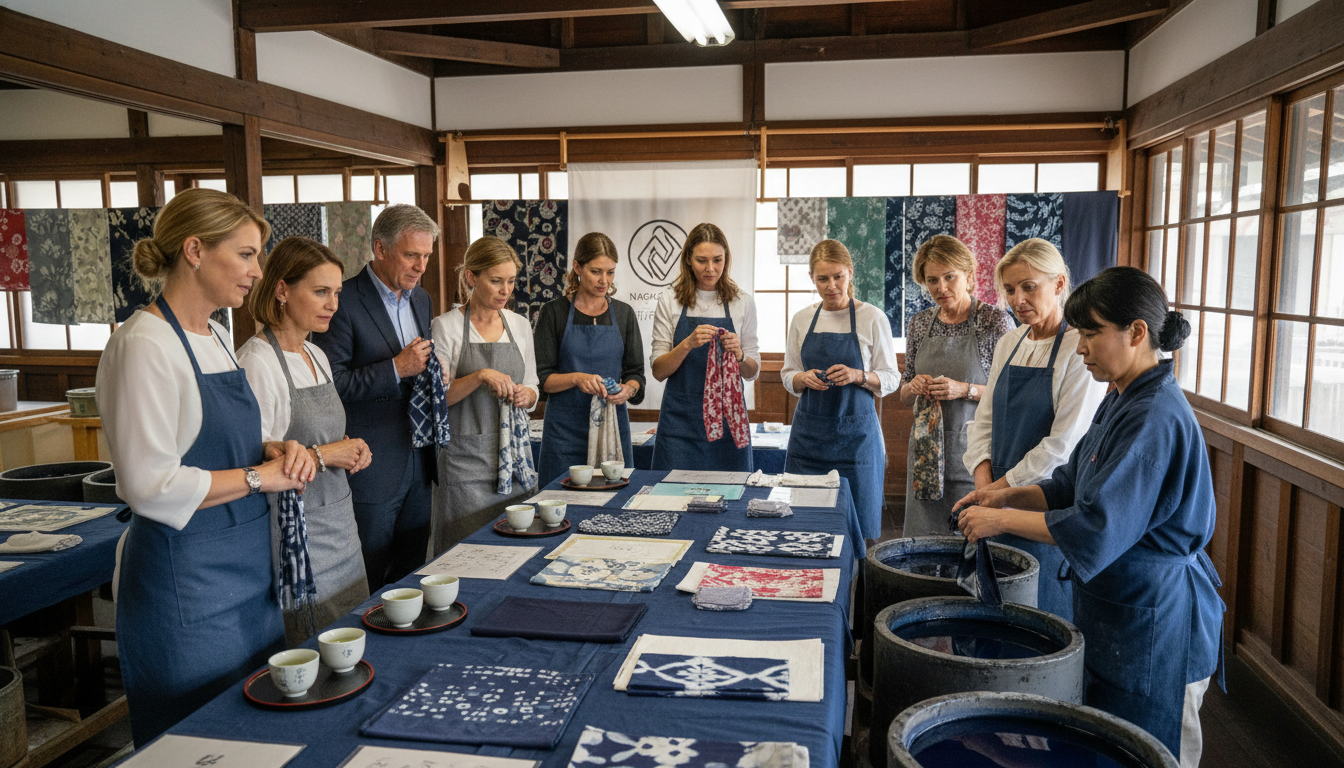
Nagoya tourism pivots to cultural workshops with Arimatsu shibori and scented-sachet experiences
Nagoya tourism shifts to cultural workshops as Meitetsu World Travel offers Arimatsu shibori dyeing and scented-sachet crafts to attract affluent visitors.
Nagoya tourism operators are launching curated cultural workshops to draw high-spending visitors who increasingly avoid crowded Tokyo and Kyoto. Meitetsu World Travel and local partners are promoting hands-on experiences such as Arimatsu shibori dyeing and scented-sachet making to reposition Nagoya as a cultural destination. Organizers say the programs aim to offer intimate access to traditional artisans while spreading tourism beyond Japan’s better-known hotspots.
Operator strategy to lure affluent travelers
Meitetsu World Travel has reframed some itineraries to stress exclusive, participatory activities in and around Nagoya. The company’s approach targets affluent inbound tourists looking for authentic craft encounters rather than mass-market sightseeing. By emphasizing small-group workshops and direct engagement with artisans, operators hope to command higher per-visitor spending and longer stays in the central Japan hub.
These packaged experiences are marketed as a contrast to the crowded streets of Tokyo and the heavily visited sites in Kyoto. Travel planners described the initiative as an attempt to diversify tourist flows and showcase the region’s cultural assets tied to Nagoya’s long history of trade and manufacturing. The shift reflects broader industry efforts to balance visitor distribution across Japan.
Arimatsu shibori workshop explained
Arimatsu shibori is a traditional Japanese resist-dyeing technique developed in the Narumi and Arimatsu districts near Nagoya. In workshop settings, participants learn to fold, bind and dye cloth to create distinctive patterns under the guidance of locally based craftsmen. These hands-on sessions are designed to be immersive, enabling visitors to produce a personalized textile while learning about the method’s centuries-old local roots.
Organizers emphasize that the dyeing workshops are kept intentionally small to preserve the quality of instruction and the authenticity of the craft. Guests are typically shown both historical examples and contemporary applications of shibori, reinforcing the connection between local heritage and modern design. The tactile nature of the activity is pitched as a memorable alternative to passive museum visits.
Scented-sachet making and complementary crafts
Alongside shibori, the tours feature scented-sachet making—an artisanal practice that pairs local scents with fabric craft. Participants select fillings and fragrances associated with the Chubu region and assemble small sachets that serve as portable mementos. The activity is presented as both a cultural exercise and a light craft that appeals to visitors seeking creative souvenirs.
Program coordinators also sometimes arrange visits to small workshops and specialty stores where travelers can observe related crafts, textile production and traditional dye suppliers. These visits are described as opportunities to connect tourism revenue directly to neighborhood businesses and independent artisans. The combination of tactile workshops and micro-retail experiences is intended to produce economic benefits that reach beyond central tourist districts.
Local partnerships and community benefits
The new offerings are being developed in cooperation with municipal tourism offices, artisan groups and local chambers of commerce. Stakeholders say the partnerships are designed to ensure that workshops are authentic and that artisans are fairly compensated for their time and expertise. Public-private collaboration also helps with logistics, such as arranging access to historic dyeing houses and translating instructional materials for overseas visitors.
Community leaders note that fostering deeper ties between tourism operators and craftspeople can help sustain traditional skills that might otherwise decline. By channeling visitor interest into workshops and commissions, the model seeks to create a steady demand for hand-crafted goods. Officials caution, however, that scaling such programs requires careful management to avoid over-commercialization or disruption to local production schedules.
Economic implications for Nagoya and the region
Promoting craft-based tourism aligns with broader efforts to broaden Nagoya’s appeal beyond industry-focused visitors and business travelers. Economists and tourism analysts say attracting affluent cultural tourists could increase average spending per visitor, benefiting hospitality, retail and specialty producers in the wider region. Extending stays outside Tokyo and Kyoto also has the potential to relieve pressure on overcrowded heritage sites while distributing revenues more evenly.
At the same time, operators face operational challenges, including maintaining the artisanal quality of workshops, securing consistent interpreter support and balancing visitor demand with the capacity of small workshops. Long-term success will depend on preserving the integrity of the crafts while integrating them into travel offerings in a way that remains economically viable for both tour operators and local makers.
Local stakeholders view the initiative as a strategic move to broaden Nagoya’s image and build new tourism niches. If sustained, the workshops could help make Nagoya a repeatable cultural stop on higher-end Japan itineraries, offering visitors hands-on knowledge and tangible souvenirs tied to the region’s living traditions.
Meitetsu World Travel and partner organizations say they will continue to refine schedules and participant limits to protect craft quality and ensure community benefits.

