
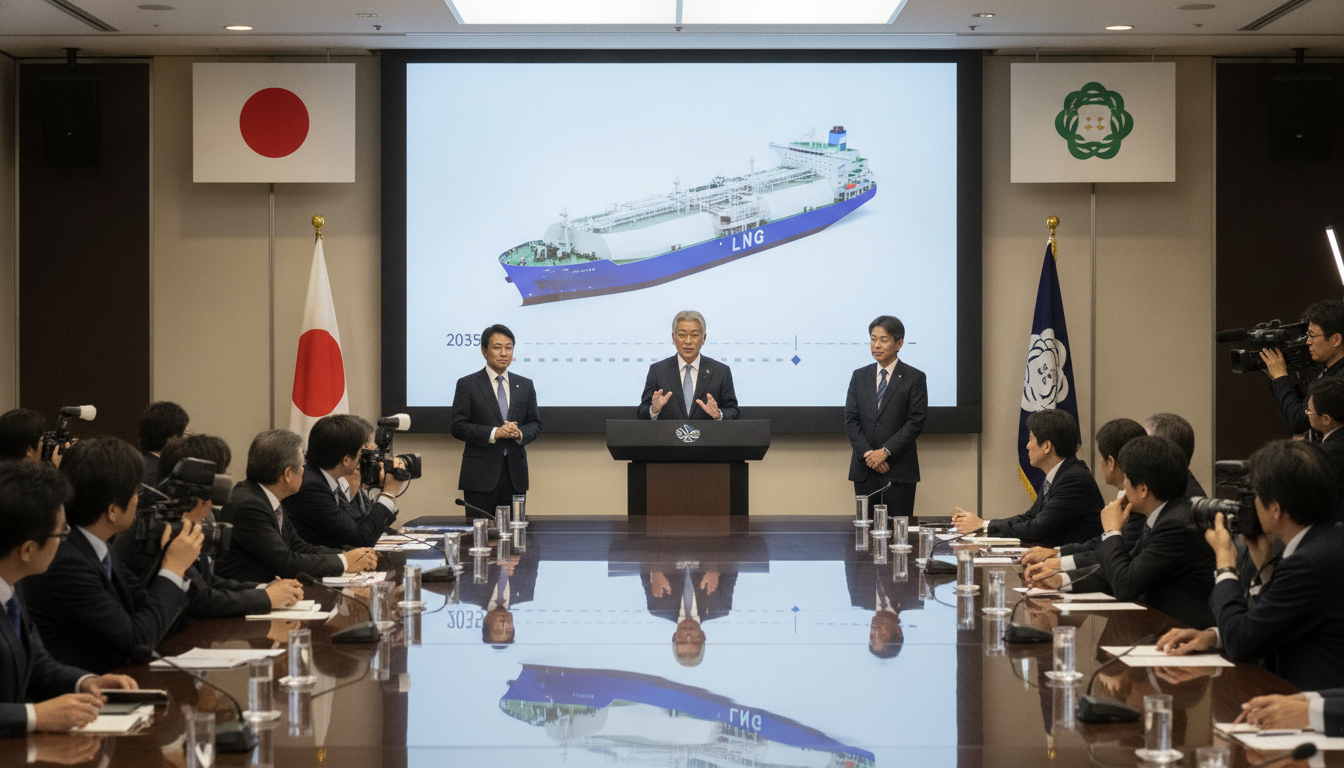
Japan to Resume Domestic Construction of LNG Carriers by 2035, Shipbuilders Target 3–5 Vessels a Year
Imabari Shipbuilding, Kawasaki Heavy Industries and Namura Shipbuilding plan to restart domestic construction of LNG carriers by about 2035, aiming to build 3-5 ships annually with possible South Korean technology assistance.
Three Japanese shipbuilders — Imabari Shipbuilding, Kawasaki Heavy Industries and Namura Shipbuilding — said they intend to resume domestic construction of LNG carriers around 2035, aiming to produce three to five vessels a year, industry sources said. The move to rebuild local capacity for LNG carriers reflects strategic interest from domestic yards and ship owners in securing supply and technological know‑how for large gas tankers. Companies are reportedly open to importing specialized components and design expertise from South Korean firms as they scale up production. The planned effort would mark a shift after decades in which much large tanker construction shifted to foreign yards.
Three Shipbuilders Announce Joint Initiative
Imabari, Kawasaki Heavy and Namura have outlined a coordinated plan to reestablish construction lines capable of producing modern LNG carriers. Industry officials described the initiative as a multi‑year effort to restore skills, invest in new gantries and adapt existing slipways to meet the size and complexity of gas carriers. The three firms say they will align capacity planning and may pool certain production stages to reach sustainable output. Executives view the collaboration as necessary to overcome the fixed‑cost challenges of building a small fleet domestically.
Production Targets and Proposed Timeline
The consortium’s publicly stated target is to resume hull construction by about 2035 and to reach a steady cadence of three to five ships annually thereafter. Company planners expect a ramp period in the early 2030s for training, tooling, and qualification of suppliers before serial production begins. The 3–5 ships per year figure is intended to match likely domestic demand from Japanese shipping companies while also leaving room for international orders. Officials emphasize that meeting the timeline will depend on financing, workforce development and supply‑chain readiness.
Technology Transfer and South Korean Collaboration
Officials noted that South Korean technology could play a key role in restarting Japan’s LNG carrier output, particularly for large cryogenic cargo containment systems and advanced hull fabrication techniques. South Korean yards have dominated recent decades in complex gas carrier design, and Japanese builders are pragmatic about seeking technology partnerships to bridge capability gaps. The shipbuilders are reportedly in early discussions with Korean suppliers and engineering firms about licensing, joint ventures or component procurement. Any formal technology transfer arrangements would aim to combine Korean systems with Japanese shipyard integration and quality control.
Market Drivers Behind the Decision
Shipowners’ demand for modern, fuel‑efficient LNG carriers and a desire among Japanese operators to secure domestic repair and conversion options are important drivers for the plan. A global LNG trade that has expanded in recent years has increased demand for new tonnage capable of long voyages and stricter environmental standards. Domestic construction would allow Japan’s shipping companies to shorten lead times and exercise greater oversight of technical specifications. Observers say geopolitical concerns and resilience of strategic energy logistics also factor into the industry’s calculations.
Industrial and Supply‑Chain Challenges Ahead
Restarting large‑scale LNG carrier construction will require solving several structural challenges, including a scarcity of specialized welders, cryogenic tankmakers and large block assembly capacity. Suppliers for key components such as propulsion systems, reliquefaction plants and insulated cargo tanks will need to be identified or developed domestically. Yard owners must also weigh the economics of high capital expenditure for gantries and outfitting facilities against uncertain order books. Training programs, apprenticeship pipelines and targeted financing will be critical to move from announcements to ship deliveries.
Impact on Japan’s Maritime Employment and Exports
If implemented, the plan could revive specialised maritime jobs and stimulate related industries such as heavy steel fabrication and maritime equipment manufacturing. Restoring LNG carrier construction capability would create roles in engineering, project management and quality assurance that have atrophied as newbuilds migrated overseas. There is potential for technology spillover into offshore and other merchant sectors if the revival reaches scale. Export opportunities could emerge if Japanese yards can offer distinctive value in engineering integration or environmental compliance.
The planned revival of domestic LNG carrier construction signals a strategic bid by Imabari, Kawasaki Heavy and Namura to reclaim a segment of large‑shipbuilding expertise, while balancing pragmatic collaboration with foreign suppliers. Achieving the stated ambition by around 2035 will hinge on successful partnerships, investment in facilities and a steady pipeline of orders from shipping companies. The industry is now watching how the three yards coordinate technical programs and secure the supply chains needed to turn plans into keels and, ultimately, completed LNG carriers.

