
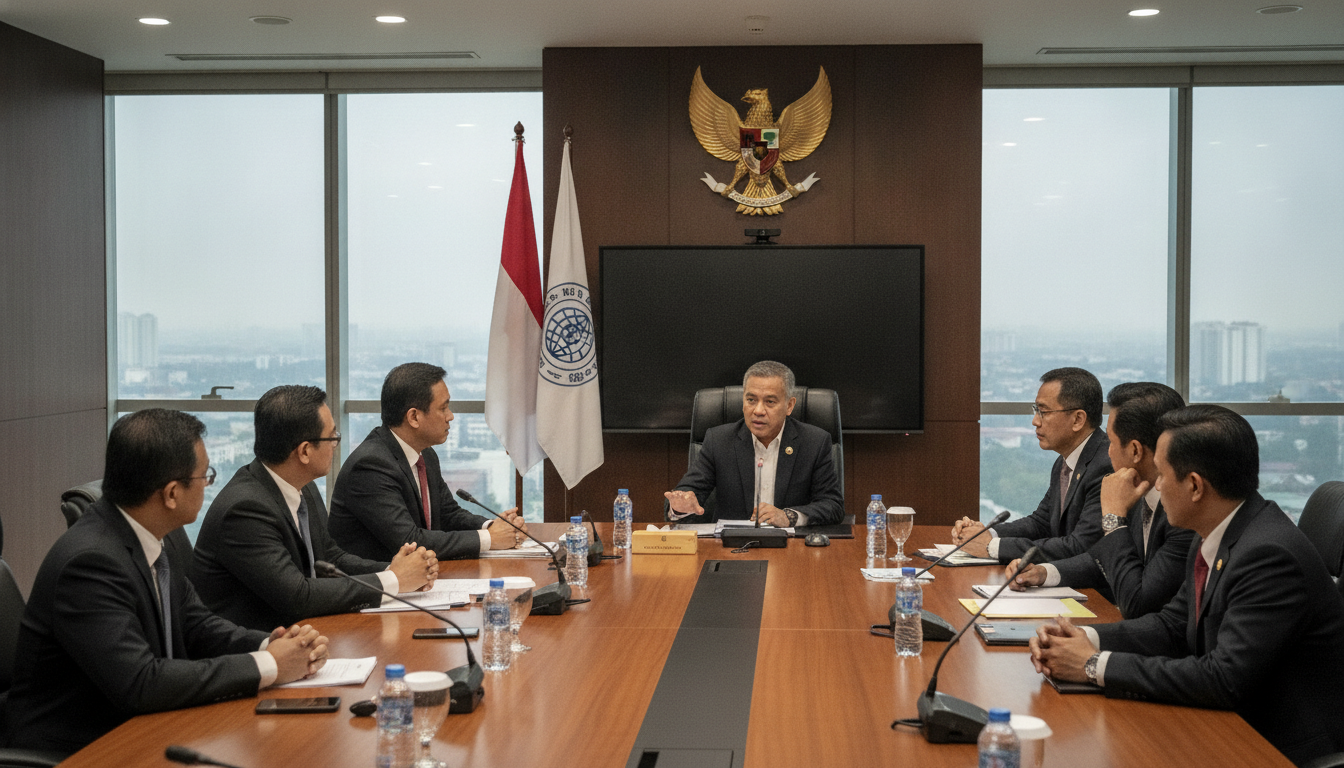
Prabowo Subianto’s sudden policy changes raise alarm as business council urges presidential “breakthrough office” to calm rupiah and markets
Indonesian Business Council warns that Prabowo Subianto’s abrupt policy shifts have created confusion in the private sector, calling for a presidential “breakthrough office” to stabilize the rupiah and restore market confidence.
Indonesia’s largest business lobby has sounded an alarm over what it describes as “sudden” policy changes by President Prabowo Subianto, saying the moves have generated confusion among corporate leaders and investors. The council’s chairman urged Jakarta to establish a presidential “breakthrough office” to coordinate clear, consistent communication and to address recent rupiah weakness and market volatility. The warning came during an interview on June 11, when business leaders pressed for faster, more transparent engagement with the executive branch.
Business Council Urges "Breakthrough Office"
The Indonesian Business Council proposed the creation of a dedicated presidential “breakthrough office” to streamline communication between the government and the private sector. Council leaders argued the office would act as a single point of contact to explain policy shifts and coordinate follow-up measures.
According to the council, such an office could reduce uncertainty by giving businesses timely access to policy rationales and implementation timetables. The proposal is positioned as a technical fix to prevent ad hoc announcements from disrupting markets.
Executives Report Confusion Over Sudden Policies
Corporate executives said recent announcements from the presidential office and ministries have sometimes arrived with little advance notice, complicating planning and investment decisions. Business leaders told the council that abrupt directives have required immediate operational changes that carry costs and risks.
The council highlighted cases where firms had to alter supply-chain arrangements or capital plans after unanticipated regulatory shifts. Those disruptions, the lobby said, amplified concerns about predictability for both domestic entrepreneurs and foreign investors.
Rupiah and Market Reaction
Financial markets have shown sensitivity to the policy uncertainty, with the rupiah experiencing bouts of weakness amid the latest announcements. Market participants said the lack of clear communication intensified speculative pressure and drove short-term currency and equity swings.
Analysts noted that when policy intentions are unclear, portfolio managers often reprice risk, leading to quicker adjustments in exchange rates and stock valuations. The council warned that sustained market volatility could raise financing costs for companies and slow new investment.
Details of the Proposed Office and Its Mandate
The proposed presidential “breakthrough office” would centralize messaging on economic policy and serve as a liaison with business associations, foreign investors, and financial institutions. Council officials suggested the office should issue pre-announcement briefings and follow-up guidelines to ensure orderly implementation.
Proponents said the office should not replace line ministries but rather coordinate cross-ministry responses, align policy timing with market realities, and provide a predictable channel for corporate feedback. They argued that clearer sequencing of measures—announcement, consultation, and phased implementation—would reduce disruptive surprises.
Government Communication Shortfalls Identified
Business leaders pointed to gaps in advance consultation and inconsistent technical guidance from agencies as key contributors to business unease. They said routine stakeholder engagement processes had, at times, been bypassed in favour of rapid presidential directives.
The council recommended reinstating standing consultation committees and strengthening the role of technical ministries in explaining enforcement details. Improved coordination could, they said, prevent misinterpretation and reduce enforcement discrepancies across regions and sectors.
Investor and Business Community Response
Investors and corporate boards signalled receptivity to steps that would increase policy transparency, while urging the government to pair better communication with concrete economic measures. Market participants said credibility depends not only on words but on consistent follow-through and measurable outcomes.
Some business leaders also urged the government to outline how the proposed office would interact with central bank policy and fiscal planning, stressing the importance of preserving central-bank independence while improving inter-agency coordination. Foreign investors, in particular, emphasized the need for clear legal texts and transition periods.
Closing moves by the executive to address the council’s concerns could shape investor sentiment in the coming months, with the rupiah and domestic equity markets sensitive to both policy clarity and macroeconomic fundamentals. The business lobby framed its proposal as a practical tool to align government messaging with market expectations and to reduce the economic cost of sudden, uncoordinated policy moves.

