
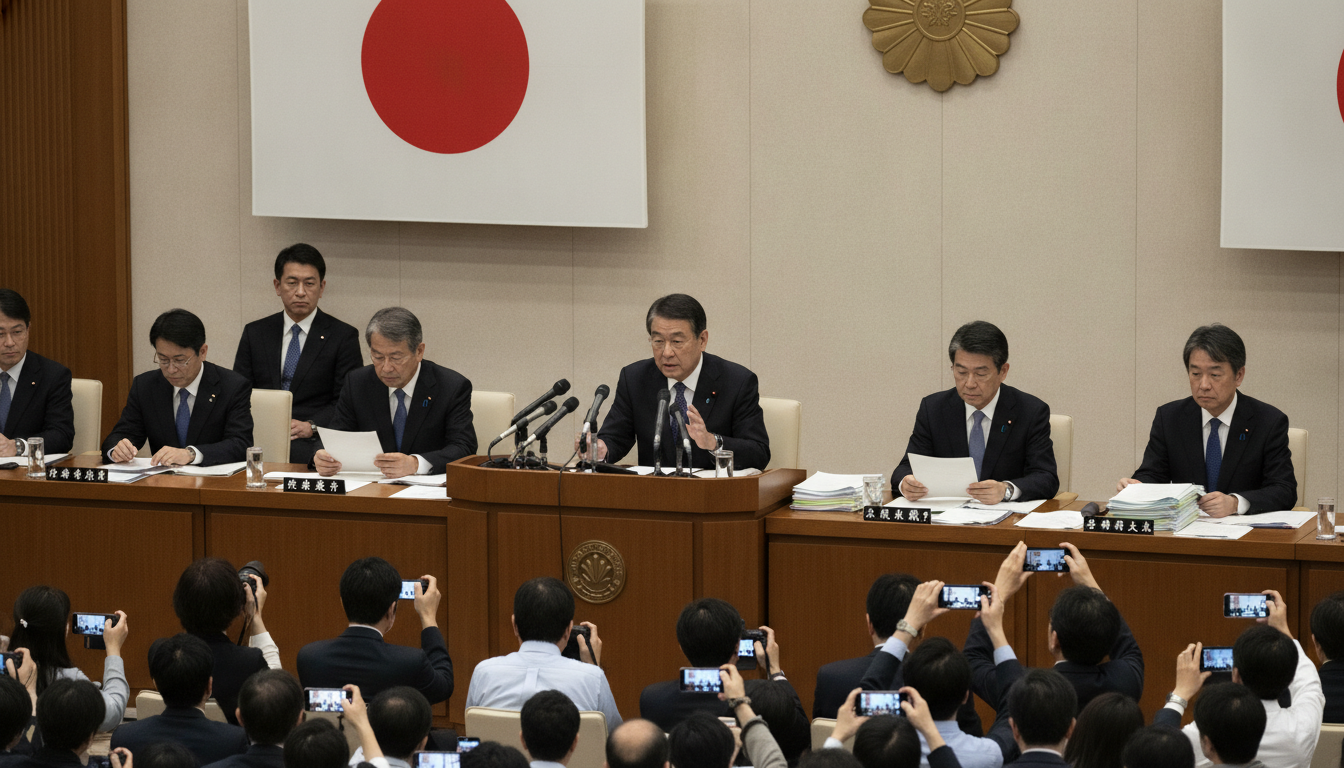
LDP to Narrow Flag Desecration Law, Excluding Social Media Posts from Punishment
The Liberal Democratic Party has agreed to narrow its proposed flag desecration law, removing criminal penalties for posting footage of one’s own acts against the national flag on social media. The decision, made on June 15, 2026, aims to secure parliamentary support while preserving criminal sanctions for public, provocative acts directed at the national flag. The move sets up a critical debate within coalition partners and opposition parties as lawmakers prepare for a vote in the Diet.
LDP Agrees to Exclude Social Media Posts from Punishment
The LDP announced on June 15 that it will revise its original draft to carve out SNS postings showing the act of damaging the national flag from the scope of punishment. Party sources said the change came after consultations with potential coalition partners and in response to concerns raised by the Democratic Party for the People, which asked that after-the-fact online posts not be criminalized. The adjustment is intended to make the bill more politically viable while retaining penalties for public acts seen as intentionally offensive.
Key Elements of the Draft and Proposed Penalties
Under the LDP’s initial proposal, the new offense would have punished anyone who publicly damages, removes or soils the national flag “in a manner that causes extreme discomfort or disgust” with up to two years’ imprisonment or a fine of up to 200,000 yen. The original text also covered the act of filming oneself committing the offense and later posting that footage online, but the party has moved to strip the post-publication element from the bill. The refined text will still criminalize public, overt acts against the flag when they meet the threshold of causing substantial public outrage.
Parliamentary Arithmetic Drives the Tactical Retreat
The legal revision reflects the fragile balance in the House of Councillors, where the ruling coalition lacks a guaranteed majority. To advance the bill as a member-sponsored (private member) bill, the LDP is seeking backing from smaller parties, including the Democratic Party for the People and Sanseitō. The Democratic Party for the People plans to discuss whether to support the legislation at a party meeting on June 16, and its stance could determine whether the bill can clear the upper chamber. Party strategists view the SNS carve-out as a necessary concession to win enough votes while preserving the bill’s symbolic intent.
Civil Liberties and Constitutional Questions Resurface
Civil liberties advocates and some opposition lawmakers had warned that the original wording risked chilling freedom of expression and could be vulnerable to constitutional challenge. Critics argued the phraseology around “causing discomfort or disgust” was vague and could be applied unevenly, potentially ensnaring nonviolent protest and artistic expression. Legal experts have signaled that the removal of penalties for social media posts addresses part of those concerns but does not eliminate broader constitutional questions about how the law would be interpreted in practice.
Enforcement Practicalities and Definitions Remain Unsettled
Even with the scope narrowed, enforcement agencies would face practical difficulties in distinguishing punishable public acts from permitted private or expressive behavior. Questions remain about what constitutes “publicly” in the digital age, how intent would be proven, and which contextual factors—such as location, audience, and accompanying speech—would determine culpability. Lawmakers are also weighing whether civil penalties or alternative measures could better balance respect for national symbols with protected speech rights.
Political and Social Reactions Expected Ahead of Vote
The revised proposal is likely to trigger intensified debate in coming days, with proponents emphasizing respect for national symbols and opponents warning of unintended consequences. Smaller parties will use their leverage to press for clarifications and safeguards, and public commentary on social media and from rights groups is expected to rise as the Diet schedules deliberations. The LDP’s tactical retreat on social media postings demonstrates how policy content is being shaped by parliamentary realities as much as by principle.
The immediate legislative path calls for the bill to be formally submitted as a private member’s bill and then discussed in committee, where further amendments and expert testimony are possible. Observers say that if the Democratic Party for the People announces support after its June 16 meeting, the government will likely proceed, but dissenting voices in both chambers could push for additional revisions before any final vote.

