
U.S. strikes on Iran after attack on merchant ship deepen Strait of Hormuz dilemma
U.S. strikes on Iran missile and drone sites on June 26, 2026, follow an attack on a merchant vessel and raise fresh questions about the durability of a recent memorandum and regional shipping security.
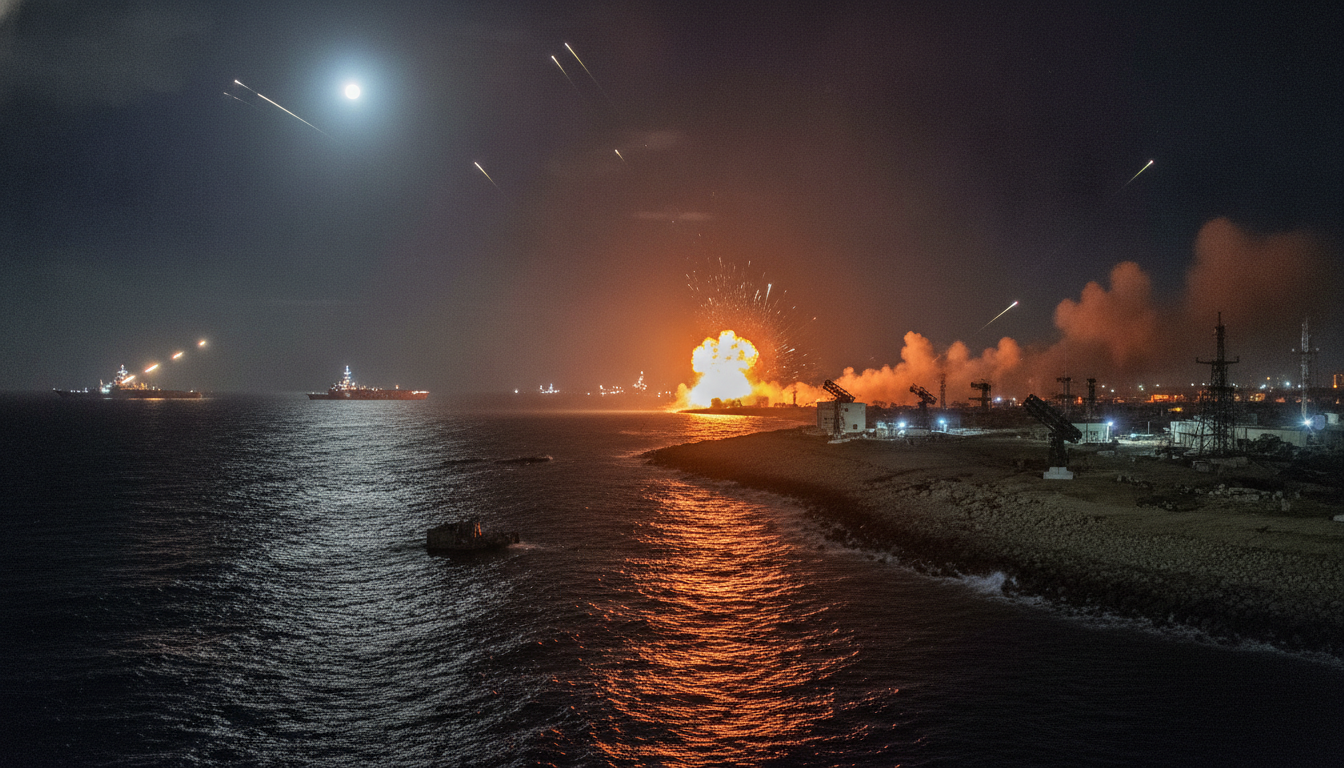
The United States launched airstrikes on Iranian missile and drone storage sites and coastal radar positions on June 26, 2026, in response to what U.S. forces say was a drone attack on a Singapore-flagged merchant ship the prior day. The action, described by U.S. Central Command as a limited retaliatory strike, came after President Donald Trump signaled to reporters that Iran “should not have done” the attack and warned of consequences. The U.S. strikes on Iran mark a significant reversal from a recent pause in military operations tied to a memorandum designed to normalize traffic through the Strait of Hormuz.
U.S. forces describe the targets and purpose
The U.S. Central Command said the strikes focused on facilities used to store missiles and unmanned aerial vehicles and on coastal radar sites believed to have supported the June 25, 2026, attack on the merchant vessel. Military officials characterized the operation as precise and intended to degrade Iran’s ability to conduct further strikes against commercial shipping. Pentagon statements framed the action as a punitive response to what it regarded as a clear violation of the memorandum governing a tacit standdown in the strategically vital waterway.
Trump’s memorandum and the strategic trade-offs
President Trump had recently signed a memorandum with Iran that prioritized restoring normal navigation through the Strait of Hormuz, a choke point for global oil shipments. That agreement had led to a temporary reduction in direct U.S. military action aimed at de-escalating tensions in the Gulf. The administration’s decision to strike nonetheless illustrates the strategic dilemma facing U.S. policy: tolerate attacks on commercial shipping and risk emboldening Iranian forces, or respond militarily and risk unraveling diplomatic progress intended to stabilize maritime transit.
U.S. officials say memorandum was breached
Alongside descriptions of the military operation, U.S. commanders accused Iran of breaching the terms of the memorandum by attacking the Singapore-flagged vessel on June 25, 2026. Senior administration officials told news outlets that the strikes on June 26 were a proportional response and insisted the overall ceasefire framework remained intact even as the United States carried out the operation. The conflicting tones between Washington’s political leaders and military spokespeople have added to uncertainty about how strictly the memorandum’s terms will be enforced going forward.
Impact on shipping and regional security
Maritime security experts warn that any resumption of strikes or reprisals in the Strait of Hormuz could quickly affect commercial traffic and insurance rates for ships traversing the Gulf. The waterway handles a substantial share of global oil exports, and repeated incidents raise the prospect of rerouted vessels and higher freight costs. Shipping companies and insurers are likely to reassess risk profiles for transits in the coming days, potentially amplifying economic consequences beyond the immediate military exchange.
Conflicting messages from Washington and allies’ concerns
The White House and Pentagon have offered differing emphases — one framing the June 26 strikes as necessary retaliation, the other stressing adherence to the memorandum’s broader aim of stability. That mixed messaging has worried regional partners and allies who rely on clear deterrence signals and predictable coordination. Diplomats in capitals across the Middle East and Europe are expected to press both Washington and Tehran for clarifications to avoid miscalculation and to preserve the fragile mechanisms that had reduced overt hostilities.
Structural weaknesses in negotiations exposed
Analysts point to deeper structural fragility underlying the recent negotiations between the United States and Iran, suggesting the memorandum lacked robust verification and enforcement mechanisms. Without clear processes for attributing attacks or resolving disputes, incidents such as the June 25 merchant-vessel strike can rapidly erode confidence. The current exchange underscores how operational decisions on the ground may outpace political frameworks, leaving both sides vulnerable to spirals of escalation despite nominal diplomatic commitments.
The strikes on June 26, 2026, have underscored the precarious balance between deterrence and diplomacy in the Gulf, leaving maritime operators, regional governments, and international markets braced for further developments as Washington and Tehran contend with the consequences of the latest confrontation.

