
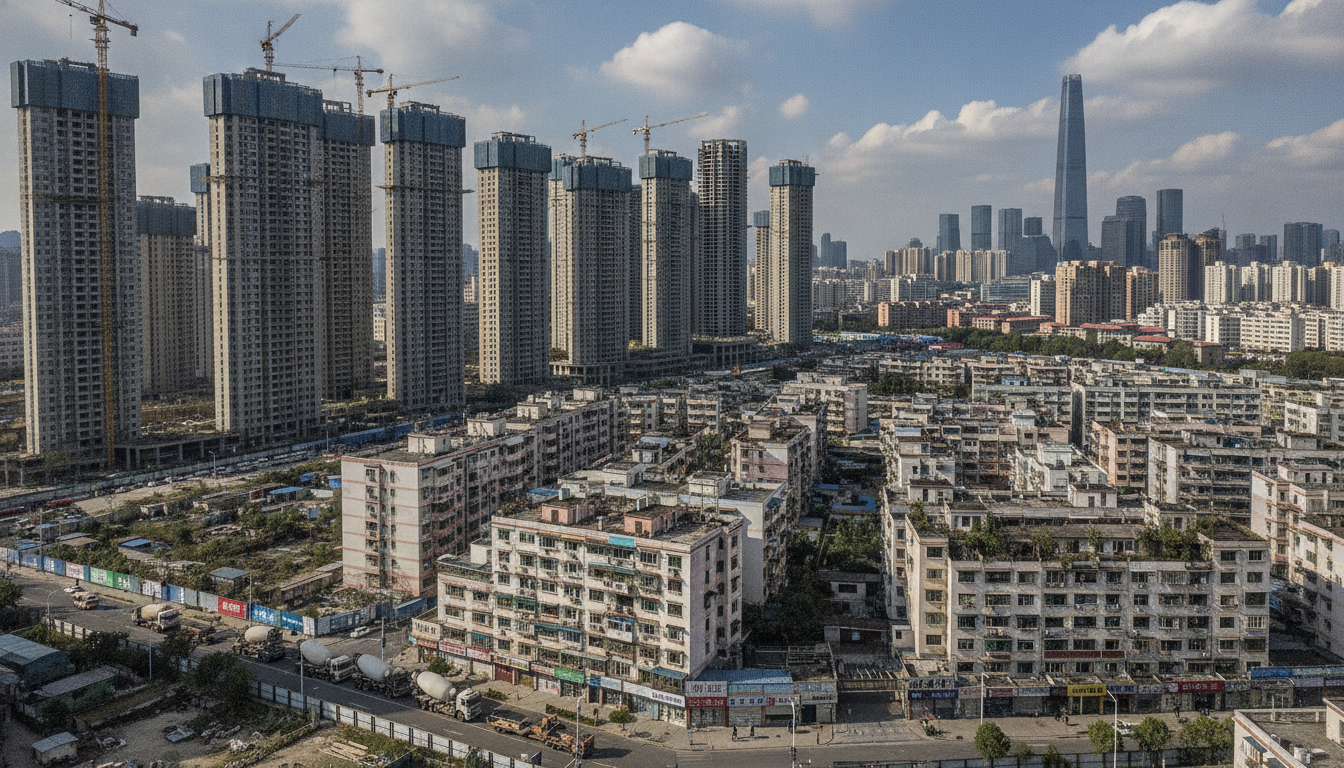
State-owned property developers drive building surge in Shenzhen as private sector stalls
State-owned property developers are leading a construction surge in Shenzhen, stepping in as private builders falter and reshaping Shenzhen’s property landscape.
State-owned groups accelerate projects across Shenzhen
State-owned property developers have become the dominant force behind major new projects in Shenzhen, moving quickly to fill gaps left by weaker private firms. Developers linked to state conglomerates are leveraging capital and political backing to launch mixed‑use and residential schemes across established districts.
The momentum is visible in large joint ventures and site activity, where state groups often secure prime parcels and begin construction soon after acquisition. This increased public‑sector presence is altering the profile of projects and the pace at which new supply is delivered to the market.
Private developers face tighter conditions and slowing sales
Private homebuilders in Shenzhen are showing signs of strain, with slower sales and tougher access to financing affecting their ability to start new developments. Market observers point to a combination of tightening credit, weaker buyer demand and lingering oversupply in some segments as factors constraining private activity.
As private companies defer launches and scale back, state‑owned developers are stepping into projects that require large capital outlays or complex approvals. The contrast has shifted market attention toward institutions perceived as more creditworthy and politically supported.
Major joint ventures highlight state backing
Several high‑profile projects in Shenzhen are now structured as collaborations between state‑owned enterprises, illustrating a strategic shift toward joint development. One notable example is Marivista, a coastal project developed through a partnership between China Merchants Group and China Resources, which has moved from planning into visible construction stages.
These alliances pool land, construction capacity and financing advantages to accelerate delivery on large sites that might be too risky or capital‑intensive for single private firms. The structure also offers local governments a partner that can deliver urban renewal objectives while preserving public oversight.
Policy signals and financing mechanisms underpin activity
Analysts say that policy signals and targeted financing have helped state‑owned developers maintain momentum even as private issuance slows. State groups often benefit from better access to government‑linked loans, bond markets and refinancing channels, which eases liquidity pressures during downturns.
Local authorities have also used land allocations and approval expedites to meet urban planning goals, favoring developers who can commit to complex, long‑term projects. Those administrative and financial levers combine to give state groups an operational edge in a cautious market.
Impact on land values and market composition
The growing role of state‑owned property developers is already affecting land transactions and the shape of new supply in Shenzhen. Sites acquired by state groups tend to be earmarked for large‑scale, mixed‑use developments that emphasize infrastructure and public amenities alongside housing.
This shift may recalibrate pricing in the short term, as well‑funded bidders set benchmarks at land auctions and developers plan projects geared toward higher‑quality finishes or integrated services. Over time, the market composition could favor projects with longer development horizons and stable institutional backers.
Response from investors, buyers and local authorities
Investors and buyers have reacted with measured interest to the state‑led expansion, seeing state involvement as a signal of reduced execution risk but also as a potential driver of higher competition for prime inventory. Some institutional investors are reallocating portfolios toward developments with state sponsorship, while retail buyers remain cautious amid broader affordability concerns.
Local authorities appear to view the trend as a pragmatic response to market weakness, relying on state players to maintain construction activity and employment. Officials balancing economic stability and urban planning are likely to continue facilitating deals that align with municipal objectives.
Construction activity in Shenzhen driven by state groups will shape the city’s housing and commercial landscape for years, with implications for pricing, land use and the balance between public and private sector roles in urban development.

