
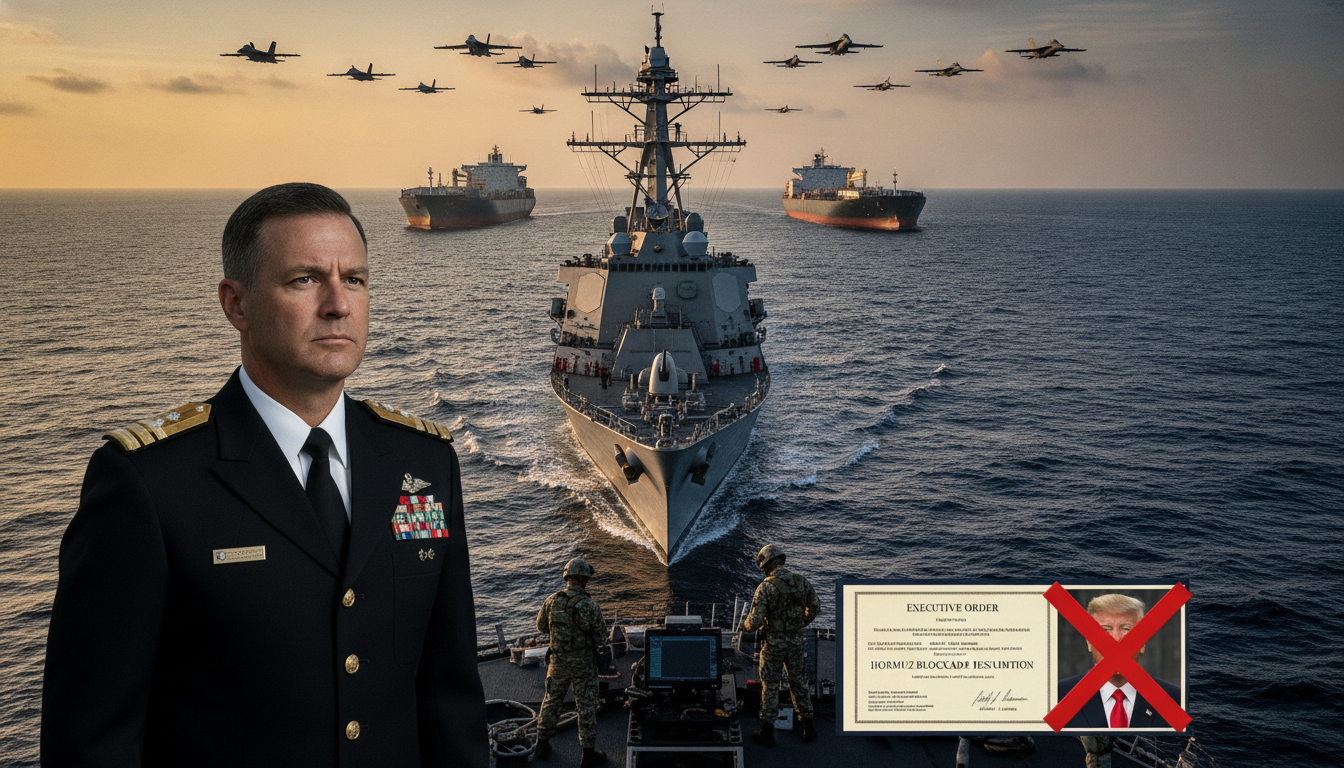
Strait of Hormuz blockade resumed as U.S. military restarts interception of ships; Trump abandons 20% toll plan
U.S. Central Command announced it would resume a Strait of Hormuz blockade, targeting vessels entering and leaving Iranian ports from July 15, 2026 at 05:00 Japan time, renewing concerns over a wider maritime confrontation. (newsweekjapan.jp)
U.S. Central Command announces blockade restart
Central Command said the blockade would apply to all maritime traffic to and from Iran’s ports and coastal terminals, following a period of heightened strikes and naval operations in the Gulf. (defensenews.com)
The announcement followed earlier U.S. activity in the region and echoes a prior interdiction campaign that ran from April to mid-June. The military framed the measure as necessary to prevent Iranian forces from threatening commercial shipping in the Strait of Hormuz. (newsweekjapan.jp)
Information distributed to mariners urged vessels to monitor navigational broadcasts and to communicate with U.S. naval forces on standard bridge-to-bridge channels while transiting the Gulf of Oman and approaches to the strait. The advisory stressed that compliance would be enforced. (defensenews.com)
Recent strikes and Iranian countermeasures
U.S. forces carried out additional strikes on Iranian military sites in the hours surrounding the blockade announcement, according to military statements and international reporting. Those strikes were described as aimed at degrading Iran’s missile, drone and maritime capabilities. (apnews.com)
Iranian state media reported explosions near several port cities and described retaliatory measures, escalating an exchange of attacks that regional officials warned could derail diplomatic efforts. Tehran has repeatedly asserted its own authority over the Strait of Hormuz, a claim that has fueled the current confrontation. (apnews.com)
Analysts say the renewed kinetic activity deepens mistrust between Washington and Tehran and complicates ongoing efforts to negotiate an end to the hostilities. Military officials on both sides appear to have intensified operations even as diplomats signal a desire to return to talks. (apnews.com)
Trump retreats from proposed 20% shipment fee
President Donald Trump earlier proposed a policy to seek reimbursement equal to 20 percent of cargo value for ships transiting the strait, framing it as compensation for U.S. protection of maritime routes. The proposal drew swift legal and diplomatic skepticism and raised questions about international law governing transit passages. (washingtonpost.com)
On July 14, however, the president announced he would withdraw that demand and instead pursue trade and investment arrangements with Gulf states, describing the shift as the result of “highly productive conversations” with regional leaders. The backtrack removed an acute flashpoint but did not reduce immediate military tensions. (axios.com)
Legal experts and allied officials had warned that imposing mandatory fees on passage would conflict with long-standing maritime norms and could provoke a broader international backlash. The administration’s reversal suggested recognition of those practical and legal constraints. (washingtonpost.com)
Effect on shipping routes and global energy markets
Shipping companies and insurers reacted quickly to the blockade announcement, with several carriers rerouting vessels to avoid the Gulf of Oman and the narrow approaches to the Strait of Hormuz. Commercial operators cited safety concerns and uncertainty over enforcement as drivers for altered voyage plans. (defensenews.com)
Markets responded to the higher perceived risk: oil prices climbed on renewed fears of supply disruptions, reflecting the strait’s role in moving roughly one-fifth of global oil trade. Traders said any prolonged interdiction or escalation could push prices further, adding strain to already volatile energy markets. (washingtonpost.com)
Port authorities and regional logistics firms warned that prolonged restrictions could ripple through supply chains, raising costs and slowing deliveries for exporters and importers across Asia and Europe. The economic implications extend beyond fuel to chemicals and other commodities that rely on Gulf shipping lanes. (washingtonpost.com)
Diplomatic responses and international law concerns
Allied capitals expressed concern over the unilateral resumption of a maritime blockade and emphasized the need for de-escalation and adherence to international law governing freedom of navigation. Diplomats called for renewed negotiation channels even as military actions continued. (apnews.com)
Legal scholars noted that charging transit fees on an international strait would have been unprecedented and likely challengeable under the United Nations Convention on the Law of the Sea, complicating the administration’s earlier public posture. The swift policy reversal removed an immediate legal confrontation but left broader questions unresolved. (washingtonpost.com)
Regional leaders, including Gulf monarchs and other coastal states, publicly urged calm and pushed for diplomatic engagement, while privately engaging U.S. officials on security arrangements and investment guarantees. Those behind-the-scenes discussions appear to have influenced the administration’s decision to pivot away from a toll regime. (axios.com)
The blockade’s resumption and the rapid reversal on the toll proposal have together underscored how volatile the security, economic and diplomatic environment around the Strait of Hormuz remains. Continued military actions, shifting policy signals from Washington, and Tehran’s responses make a negotiated end to the fighting less certain than it was a month ago.

