
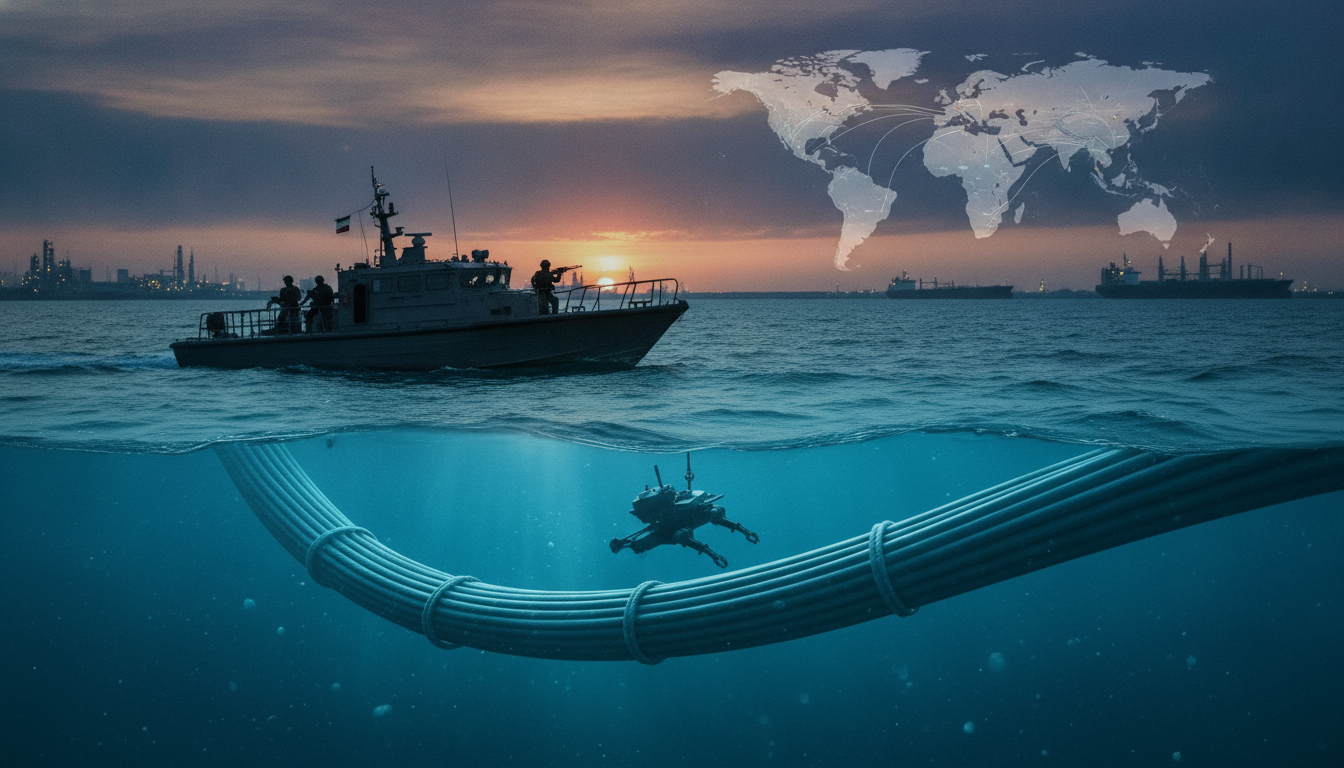
Iran Signals Threat to Undersea Cables, Raising Global Connectivity Concerns
Iran’s warning to target undersea cables in the Persian Gulf has heightened fears over the security of international data routes that carry critical internet traffic.
DUBAI — Iran has publicly hinted at the possibility of damaging or monetizing undersea cables running through the Persian Gulf amid heightened tensions with the United States, a development that threatens a region responsible for a significant share of global internet traffic. The threat puts at risk infrastructure that links continents and supports finance, communications and cloud services worldwide.
Iran Signals Threats to Undersea Cables
Iranian officials have framed undersea cables as strategic assets and potential leverage points in their dispute with the U.S., according to statements circulated in regional outlets and observed by international analysts. The comments suggested both sabotage and the prospect of extracting economic value from cable access, raising alarm among operators and governments that rely on uninterrupted connectivity.
The signals follow a broader pattern of targeting critical infrastructure in geopolitical conflicts, where undersea cables — despite being largely out of public view — are increasingly recognized as vulnerable nodes. Experts warn that any deliberate disruption could have cascading effects on data flows, financial markets and national security.
Concentration of Traffic Through the Persian Gulf
The Persian Gulf region is a major conduit for undersea cables linking Europe, Asia and Africa, and carriers estimate that a significant portion of global internet traffic transits these waters. Industry data indicate that some 500 submarine cables worldwide carry roughly 99 percent of international data, and routes through the Gulf account for a notable share of connections between Asia and Europe.
Because undersea cables often cluster near chokepoints and port facilities, damage or interference in the Persian Gulf could force rerouting that increases latency and costs while reducing network resilience. Service providers say alternative routes exist but would require time and investment to scale up to displaced traffic levels.
Possible Tactics and Technical Risks
Disruption to undersea cables can occur through several mechanisms, including deliberate cutting by vessels, tampering at shore landing stations, and interception of data at branching units. Remotely executed attacks are difficult but not impossible; physical access by ships or divers remains a primary risk vector in shallow coastal waters.
Repairing damaged cables is technically complex and time-consuming, involving specialized vessels and neutral weather windows for undersea operations. Even a partial outage of a major trunk cable could disrupt high-frequency trading, corporate cloud services and cross-border communications until repairs are completed.
Economic and Security Implications Worldwide
The potential targeting of undersea cables carries immediate economic implications for businesses and governments that depend on low-latency links for transactions, remote operations and data replication. Financial centres and cloud-dependent industries could face higher risk premiums, insurance costs and contingency spending to mitigate exposure.
From a security perspective, states and telecom companies are likely to reassess redundancy plans and accelerate investments in diversified routes and terrestrial backbones. Intelligence and defence agencies will also weigh the need for enhanced maritime monitoring, threat detection, and coordination with private cable operators.
Industry and Government Responses Under Consideration
Telecommunications firms and cable consortia are already examining measures to bolster physical security at landing sites and improve rapid-repair readiness, according to industry sources. Suggested steps include harderening shore infrastructure, expanding route diversity, and prepositioning repair assets in strategic locations.
Governments in Europe, Asia and the Gulf have signalled concern and are discussing diplomatic and regulatory responses. Options on the table range from increased naval patrols near critical cable corridors to multilateral agreements protecting submarine infrastructure under international law.
Legal, Diplomatic and Insurance Challenges
Targeting undersea cables would raise complex legal questions under the United Nations Convention on the Law of the Sea and other maritime statutes, particularly concerning state responsibility and the protection of neutral infrastructure. Diplomats may seek to frame any damage as a violation of international norms to build political pressure and support for protective measures.
Insurers are monitoring the risk closely, as claims stemming from deliberate damage could trigger contentious disputes over coverage and act as a catalyst for higher premiums or exclusions for geopolitical perils. Corporations dependent on cross-border data flows may be forced to reassess contractual protections and business continuity plans.
Recent comments from Tehran have put the spotlight on an often-overlooked layer of global telecommunications: the undersea cables that carry nearly all international internet traffic. The possibility of disruption in a corridor that channels a large share of connections between Asia and Europe has pushed operators and states to revisit contingency strategies and to weigh more aggressive protective measures.
As the situation evolves, providers and policymakers will face difficult trade-offs between openness of maritime infrastructure and the need for stricter security. The coming weeks are likely to see intensified diplomatic engagement, technical assessments by cable operators, and contingency planning by industries that depend on uninterrupted global connectivity.

