
China-U.S. tensions over Iran rise as Beijing rebukes Hormuz blockade and faces claims of arms and satellite support
China-U.S. tensions over Iran intensify after a U.S. blockade of the Strait of Hormuz, Chinese rebukes to arms and satellite claims, and high-stakes diplomacy in Beijing.
Beijing’s tone shifts after Strait of Hormuz measures
China initially avoided direct confrontation with the United States over the Iran conflict, seeking to preserve wider diplomatic openings, including a planned U.S. presidential visit to Beijing in mid-May. That restraint eased after Washington put a blockade into effect in the Strait of Hormuz, prompting Beijing’s foreign ministry to call the move “dangerous and irresponsible” and Xi Jinping to warn against a return to a “law of the jungle.” The remarks, given during a visit by Abu Dhabi Crown Prince Khaled bin Mohamed bin Zayed Al Nahyan, signaled a harder line from Chinese leadership.
Xi frames a four-point peace proposal
In public remarks, Xi presented a four-point proposal aimed at stabilizing the Middle East, emphasizing national sovereignty, adherence to international law and the central role of the United Nations. Beijing framed the initiative as an appeal for multilateral rules and de-escalation, positioning itself as an alternative interlocutor amid growing violence. Chinese spokespeople also praised Pakistan’s mediation efforts toward a temporary ceasefire between the United States and Iran, describing Islamabad’s role as “fair and balanced.”
Allegations emerge of Chinese military and satellite support to Iran
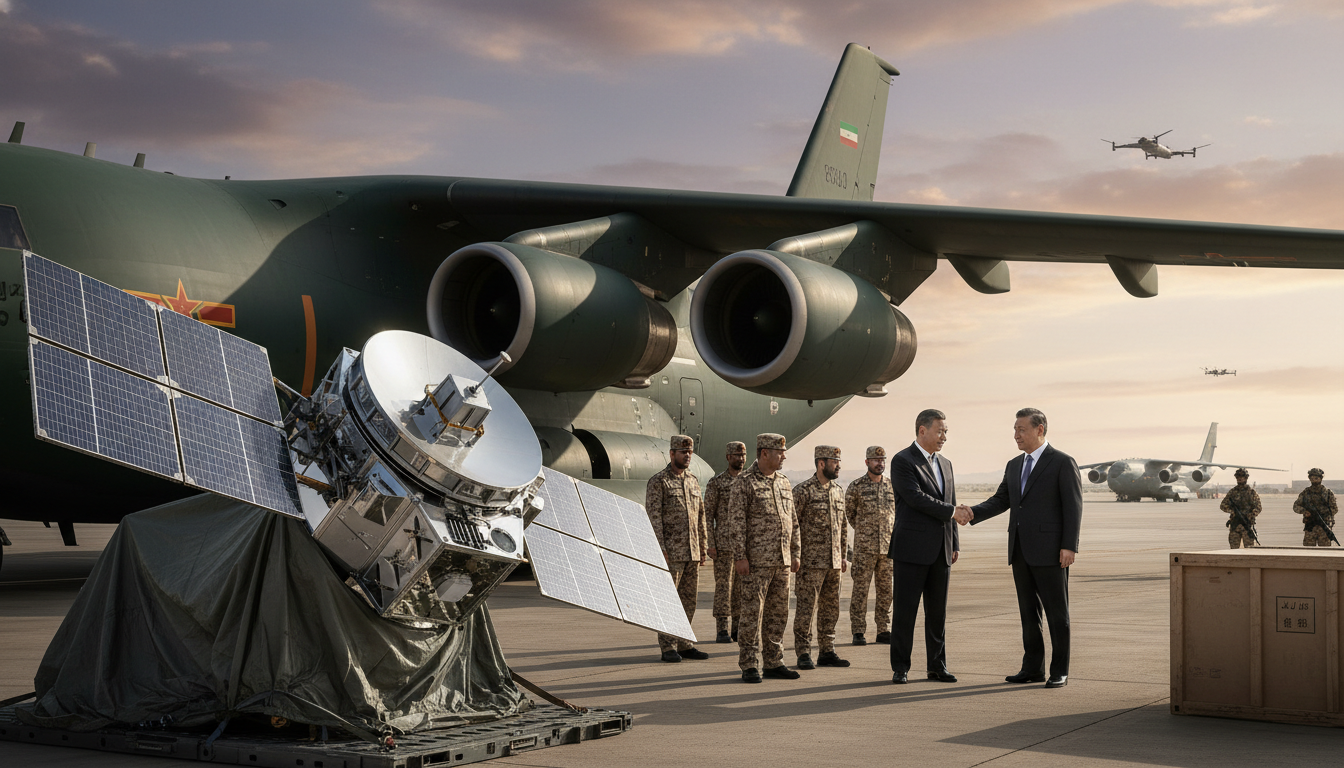
Reports from international media allege that China may have provided or enabled military and intelligence support to Iran. U.S. officials cited by U.S. outlets said intelligence suggested Beijing explored transfers of shoulder-fired missiles, a claim that drew a public tariff threat from the U.S. president should the allegations be confirmed. Separate reporting in the Financial Times alleged that Iran acquired a Chinese surveillance satellite late in 2024, which was subsequently operated by the Islamic Revolutionary Guard Corps and used to monitor U.S. military sites in the region.
Beijing rejects claims and warns of retaliation
Chinese foreign ministry spokespeople dismissed the reports as unfounded, calling them “fabrications” and warning that punitive U.S. measures would prompt reciprocal steps. Officials highlighted export controls and asserted that any satellite exports had received requisite approvals from the relevant Chinese authorities, citing statements by the commercial operator involved. The public exchange underscored the risk that intelligence accusations could spill over into trade and diplomatic retaliation between the two powers.
Energy security and Moscow’s role in the calculus
China’s exposure to disruptions from the Gulf conflict has been tempered by large strategic oil reserves, a heavy reliance on coal, and alternative suppliers, leaving Beijing better positioned for a prolonged standoff than many import-dependent states. U.S. financial officials pressed China to release reserves to ease global supply strain, but Chinese leadership has resisted substantial adjustments to import patterns. At the same time, Russian officials in Beijing said Moscow could help offset energy shortfalls, and Moscow’s push to expand pipeline links through Mongolia was reiterated during talks between Xi and Russian Foreign Minister Sergei Lavrov.
Strategic signaling ahead of reciprocal state visits
The timing of diplomatic visits adds a layer of strategic signaling: Russia’s head of state is scheduled to visit Beijing in May, and China has been in “constant exchange” with the United States about a potential state visit by the U.S. president. Chinese leaders appear to be balancing multiple objectives—deterring unwanted pressure, preserving leverage with Moscow, and keeping open the possibility of high-level engagement with Washington. Analysts say that hosting both Moscow and a prospective U.S. presidential visit in close succession allows Beijing to demonstrate alternatives and underscore its independent diplomatic posture.
Public exchanges and presidential claims on arms and diplomacy
After Chinese officials publicly warned against unilateral action, the U.S. president posted in English and Chinese that Beijing was “very satisfied” with U.S. efforts to reopen the Strait of Hormuz and had agreed not to supply weapons to Iran. The post forecast a warm personal reception in Beijing while coupling the message with a reminder of U.S. military readiness. The assertion and the ensuing rhetoric reflect how public diplomacy, social media and trade threats are being used in parallel to formal diplomatic channels.
The combination of military posturing, contested intelligence claims and competing diplomatic initiatives has driven China-U.S. tensions over Iran into a more confrontational phase. With state visits and high-level exchanges imminent, both capitals face a choice between negotiated restraint and reciprocal measures that could widen the rift.

