
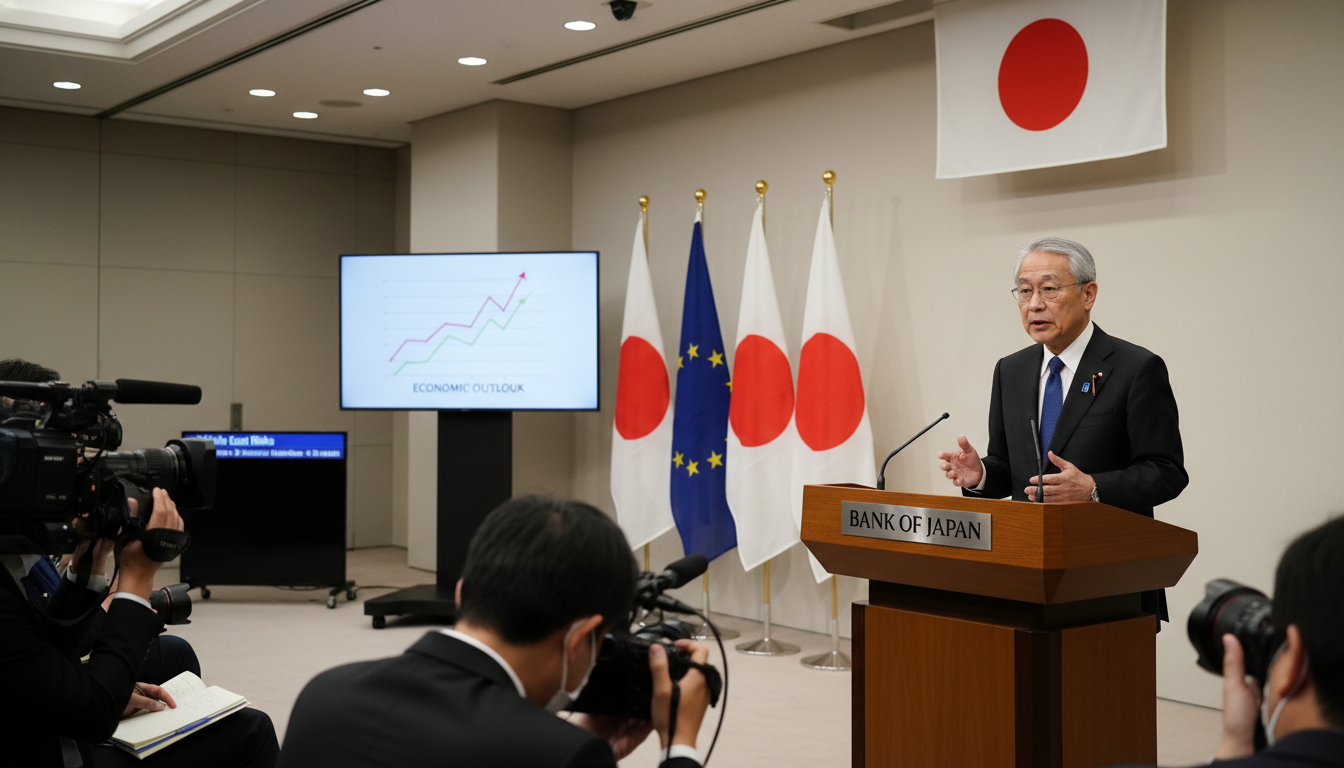
Bank of Japan Signals Possible June Rate Hike Amid Middle East Risks
BOJ Governor Ueda said on June 3 the Bank of Japan could consider a rate hike at its mid‑June meeting if Middle East unrest raises inflation upside risks.
On June 3, 2026, Bank of Japan Governor Kazuo Ueda told a Tokyo audience that the central bank may need to discuss a possible rate increase at its mid‑June policy meeting if geopolitical tensions in the Middle East boost upside risks to inflation. The governor framed the decision as conditional, saying that persistent uncertainty abroad would not automatically preclude tightening if domestic price pressures were judged to be rising. His remarks put the spotlight on whether the BOJ will pivot toward higher interest rates at the meeting scheduled for mid‑June.
Ueda’s Conditional Approach to Policy
Ueda emphasized a data‑driven, risk‑sensitive approach to monetary policy in his June 3 speech, linking the decision process to inflationary developments rather than to the mere presence of external shocks. He said that if the outlook shows a clear increase in upside risks to prices, the board must “firmly discuss” the case for a rate rise. That language signaled openness to action even while acknowledging the complex external environment.
June Monetary Policy Meeting Takes Center Stage
The Bank of Japan’s policy meeting in mid‑June has become the immediate focal point for markets and policymakers following Ueda’s comments. Officials will weigh incoming domestic CPI data, wage trends and global energy prices before deciding on the policy path. Several board members have recently made remarks interpreted as more favorable toward tightening, increasing the likelihood that the issue will be actively debated at the upcoming session.
Geopolitical Pressure and the Inflation Channel
Officials singled out the Middle East as a key source of uncertainty because disruptions there can quickly feed into global energy and commodity markets. A sustained rise in oil and commodity prices would increase import costs for Japan and could accelerate headline inflation. That potential pass‑through to consumer prices is the specific channel Ueda flagged as capable of prompting a policy response.
Growing Pro‑Hike Sentiment Inside the BOJ
Sources within the Bank of Japan say multiple monetary policy members have recently signaled readiness to consider higher rates if inflation risks materialize. That shift reflects concern that prolonged external shocks combined with domestic price momentum could push inflation above the BOJ’s tolerance for prolonged accommodation. Yet some board members remain cautious, arguing that Japan’s recovery and wage dynamics still warrant a gradual approach.
Market Reactions and Financial Conditions
Markets quickly priced in an increased chance of tightening after Ueda’s remarks, with short‑term money markets and bond yields reflecting a higher probability of a June move. The yen showed sensitivity to the changing outlook as traders reassessed the divergence between Japan’s policy and those of other major central banks. Financial institutions and corporate treasuries will be watching for signals that borrowing costs may start to rise.
Potential Impact on Households and Businesses
A Bank of Japan rate hike would raise borrowing costs across the economy, affecting mortgage rates, corporate loans and the cost of refinancing. Households with variable‑rate debt would feel the impact sooner, while firms depending on external funding could see higher financing expenses. At the same time, policymakers must balance the risk of tightening against the need to sustain the nascent recovery and support wage growth.
Global Central Bank Context
Ueda’s conditional openness to a rate increase comes as other major central banks continue to adjust policy to evolving inflation dynamics and geopolitical risks. Any move by the BOJ would narrow the policy gap that has separated Japan from peers and could prompt adjustments in global capital flows. Observers note that convergence in policy stances would also influence exchange rates and cross‑border investment decisions.
Markets, policymakers and businesses will now turn their attention to the data flow ahead of the mid‑June meeting to judge whether inflation risks have risen sufficiently to justify a policy shift. The Bank of Japan’s internal debate appears to be intensifying, and Ueda’s comments on June 3 made clear that a rate increase is no longer off the table if the economic picture changes.

