
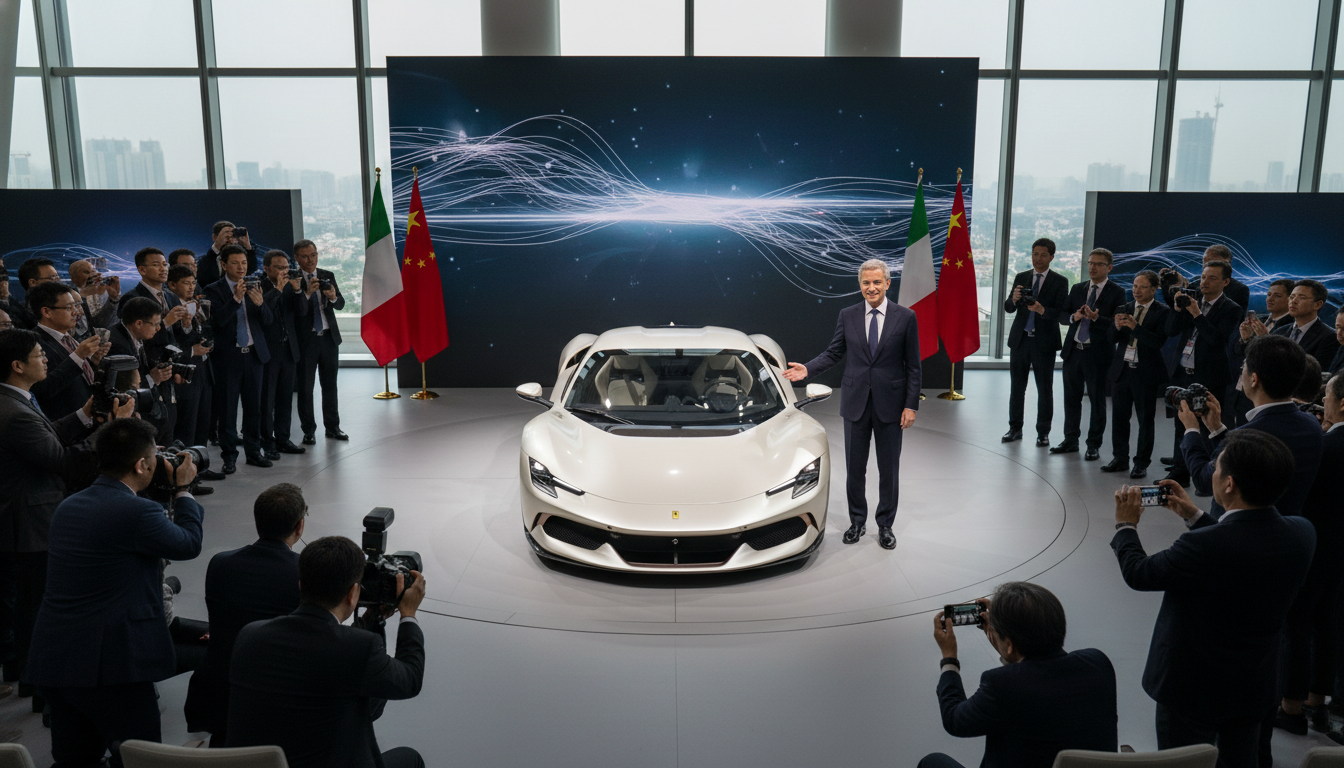
Ferrari electric car Luce launched to revive China sales amid analyst skepticism
Ferrari electric car Luce debuts as the marque’s first all‑electric model to revive China sales, but analysts are now skeptical of luxury EV transitions.
Ferrari has introduced its first fully electric model, the Luce, in a move the company hopes will arrest a sales downturn in China and signal a deeper shift toward electrification across its lineup. The Ferrari electric car is positioned as a flagship reinvention of the brand’s design language, with senior executives publicly tying the model’s success to restoring momentum in the ultraluxury market. Market observers say the launch marks a pivotal moment for legacy performance marques wrestling with changing consumer tastes and stricter emissions expectations.
Ferrari unveils Luce as brand’s first all‑electric model
The Luce represents Ferrari’s formal entry into the battery‑electric vehicle segment after years of developing hybrid technologies. Company leadership framed the model as both a technical milestone and a strategic response to global shifts in demand.
Benedetto Vigna, Ferrari’s chief executive, has said the car is central to the marque’s plan to adapt to a rapidly evolving marketplace. The Luce’s introduction is designed to test whether Ferrari can translate its petrol‑era prestige into electric appeal without eroding brand cachet.
China sales slump cited as strategic priority
Ferrari executives have pointed to weakening sales in China as a key reason for accelerating the company’s electric push. The Chinese market, once a relatively insulated source of growth for ultraluxury automakers, has shown signs of disruption that have hit even top‑tier brands.
The decision to centre the Luce’s commercial expectations on China highlights how critical the market has become for high‑end vehicle makers. Observers say success in China is now a near‑term determinant of financial performance for many luxury automakers.
Design shift highlights balancing act for heritage brand
Observers note the Luce departs from familiar Ferrari proportions and styling cues, signaling a conscious attempt to marry heritage design with electric packaging constraints. That break from tradition is intended to demonstrate Ferrari’s willingness to evolve while retaining an unmistakable visual identity.
Designers face the challenge of ensuring the car still reads as a Ferrari to long‑standing collectors while appealing to a new segment of buyers who prioritise electric range and modern cabin technology. The balance will be closely watched by dealers and enthusiasts alike as early customer feedback emerges.
Analysts raise doubts about luxury EV conversions
Industry analysts have expressed skepticism about whether legacy luxury marques can replicate their combustion‑engine desirability in electric form. Concerns center on whether core customers will accept changes to driving sound and feel, and whether younger EV buyers will value traditional brand premiums.
Some analysts argue the reputational and emotional capital tied to internal‑combustion performance cannot be easily transferred to silent electric propulsion. Others point to the high costs of developing bespoke electric platforms and the difficulty of achieving competitive economies of scale in limited‑volume supercar segments.
Production strategy and market positioning remain cautious
Ferrari’s approach to producing the Luce appears to be conservative, prioritising craftsmanship and exclusivity over mass‑market volume. Company strategy documents and statements indicate a continued focus on preserving brand scarcity while exploring new technology.
This positioning suggests Ferrari will seek to command premium pricing and limited allocation for the Luce, targeting collectors and high‑net‑worth individuals who treat electric adoption as a status symbol rather than a commodity choice. Such an approach aims to protect margins while testing consumer appetite for an electric Ferrari.
Wider implications for the ultraluxury car market
The Luce launch will serve as a bellwether for other established marques contemplating accelerated electrification. A successful transition could encourage peers to invest more heavily in bespoke electric platforms tailored to high‑performance segments.
Conversely, if the Luce fails to resonate with buyers, it may prompt a reassessment of timelines and technology investments across the ultraluxury sector. Competitors will be watching sales, pricing dynamics and secondary‑market indicators to gauge whether the shift to electric models can preserve the prestige that underpins their businesses.
Ferrari’s debut of the Luce places the company at the forefront of a fraught but unavoidable industry shift, one that will test both engineering ingenuity and brand stewardship as legacy automakers navigate the transition to electric mobility.

