
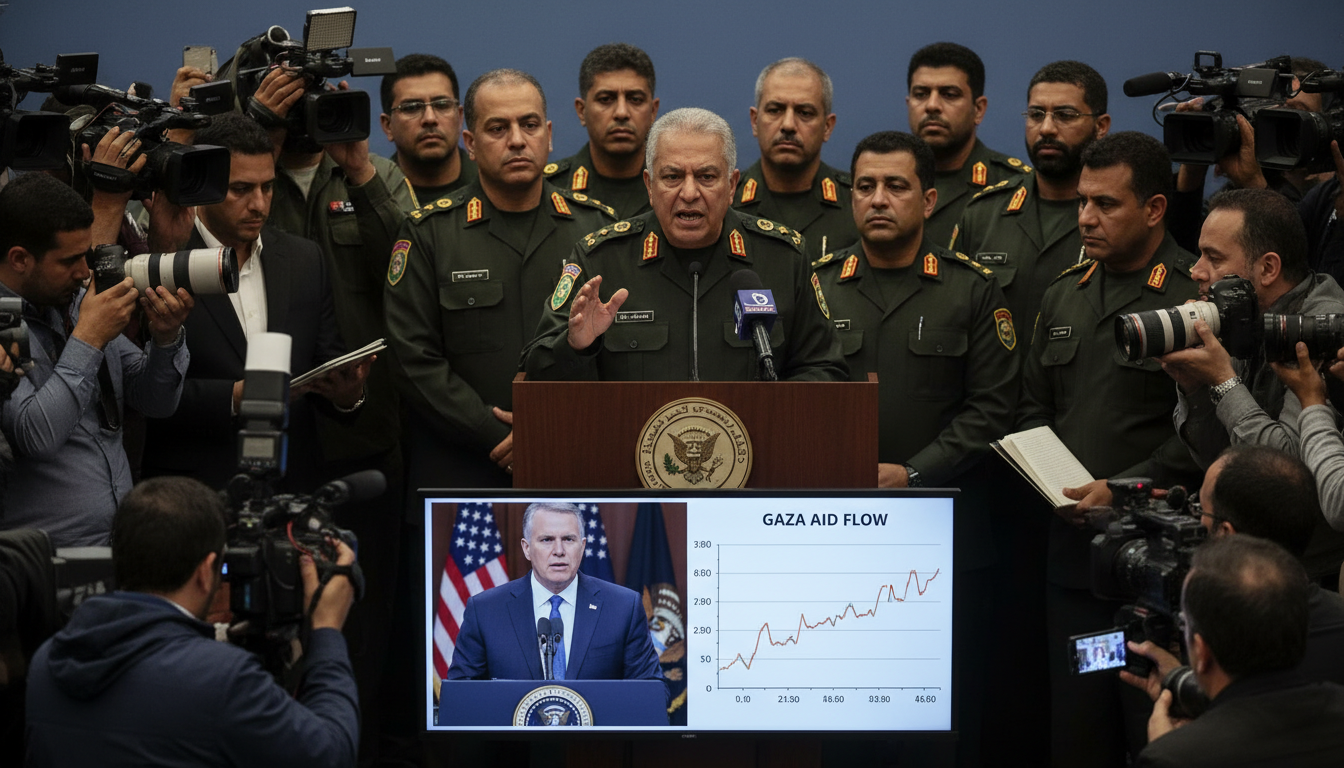
Gaza aid figures disputed after US Vice‑President JD Vance claims record deliveries
Gaza aid is disputed after US Vice President JD Vance claimed record levels; Gaza officials and UN data say truckloads still remain far below agreed terms.
US Vice‑President’s Gaza aid claim sparks immediate rebuttal
Gaza aid became the subject of a sharp dispute after US Vice‑President JD Vance told a Turning Point USA event that more humanitarian assistance is entering the Gaza Strip now than at any point in the past five years.
The claim, delivered on stage, prompted an immediate response from Gaza’s Government Media Office, which described the statement as “inaccurate and misleading” and at odds with verified field data.
Gaza officials said Vance’s remarks obscure the continued restrictions on supplies and the sustained humanitarian deficit facing civilians.
The disagreement highlights mounting tensions over how aid flows are measured and reported since the ceasefire agreement brokered by the United States took effect in October.
Gaza Government Media Office presents average truck figures
The Government Media Office provided detailed truck-entry figures to challenge the vice‑president’s assessment, saying the average number of trucks since October has been about 227 per day.
That number, the office noted, is only 37 percent of the 600 trucks per day that were stipulated in the ceasefire arrangement and includes both humanitarian and commercial consignments.
Officials pointed to specific daily tallies to illustrate the gap, citing 9 April when 207 trucks entered Gaza but only 79 of those carried humanitarian aid.
The office warned that presenting lower aid needs as higher deliveries risks normalizing restrictions and diminishing accountability for parties obligated to facilitate relief.
Ceasefire terms and reported shortfalls in agreed aid levels
Under the October agreement, Israel was required to lift restrictions and permit up to 600 trucks per day carrying food, fuel, medical supplies, shelter materials and commercial goods.
Gaza authorities and other observers say those terms have not been met, leaving a humanitarian crisis that the ceasefire was intended to alleviate largely unresolved.
Officials emphasised that the agreed throughput was a central component of the deal and that sustained shortfalls have tangible effects on food security and health.
They argued that continued limitations on truck entries amount to a failure to meet legal and moral obligations toward civilians in the territory.
UN and NGO data show sustained decline in aid truck entries
United Nations data cited by Gaza authorities and aid groups indicate a marked drop in truck entries compared with pre‑conflict levels, undermining the assertion of record deliveries.
Between 2021 and 2023, prior to the escalation, as many as 12,000 trucks per month — about 400 daily — entered Gaza, mainly carrying commercial goods, according to the figures referenced by officials.
Since the eruption of hostilities and related restrictions, some months have recorded totals as low as roughly 600 trucks in the entire month, averaging around 20 per day.
In the weeks after the October ceasefire the UN recorded months with 5,670 trucks at peak for one month and later lower monthly totals of 4,282 and then declining monthly counts into the new year, culminating in only 586 trucks reported so far this month.
Medical and humanitarian organisations monitoring conditions have echoed concerns.
Doctors Without Borders (MSF) said relief operations continue to face “deliberate obstruction” and warned that the constraints are translating into preventable deaths, while UN agencies have repeatedly flagged shortages of fuel, medical supplies and food.
Local residents describe acute shortages and rising prices
On the ground in Gaza City, residents reported deepening shortages of staple goods and surging prices for basic items as commercial and humanitarian inflows lag.
One resident quoted in field reporting said many people fear the territory is “heading towards famine,” describing severe scarcity of bread, fuel and essential medicines.
Markets have seen vegetable shortages and spike in costs, while items such as eggs, chicken and meat have become scarce or have vanished from shelves, according to multiple accounts.
Aid groups and local officials have warned that without a reliable and sustained increase in both humanitarian and commercial deliveries, malnutrition and secondary health crises will continue to escalate.
The dispute over Gaza aid highlights a widening gap between public statements by international officials and on‑the‑ground data collected by Gaza authorities, the UN and relief organisations.
As debate continues over the scale and pace of assistance, aid monitors say transparent, verifiable reporting and expedited, unhindered access for both humanitarian and commercial consignments are essential to prevent further deterioration of civilian living conditions.

