
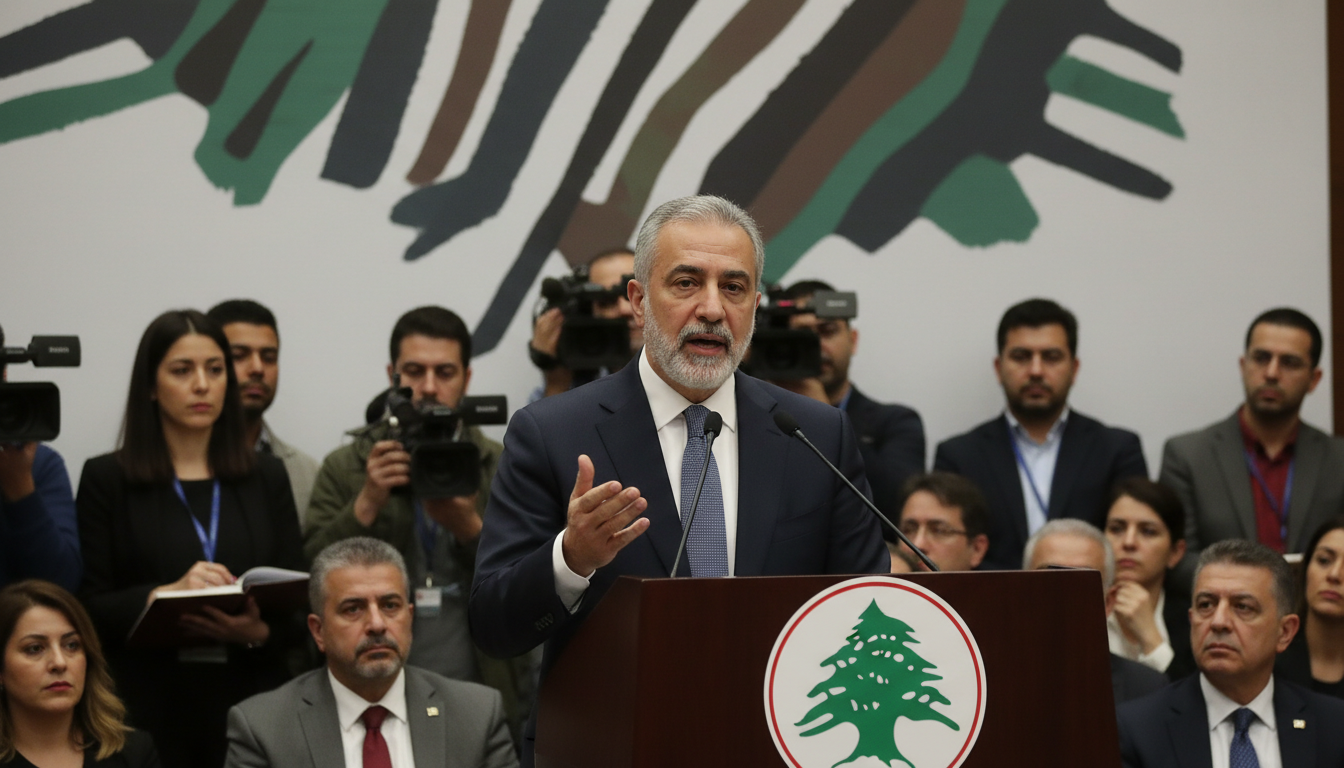
Hezbollah rejects direct negotiations with Israel, urges Lebanon to seek national consensus
Hezbollah rejects direct negotiations with Israel, MP Hassan Fadlallah told AFP on April 20, 2026, urging Beirut to pursue a national consensus rather than bilateral talks. The statement signals a hardening of the group’s stance on any process that could yield concessions to Israel. Beirut faces renewed pressure to reconcile competing political currents as regional actors monitor the fallout.
Hezbollah statement and demands
Hezbollah framed its position as a matter of national interest and stability for Lebanon. The party’s parliamentary delegation urged state institutions to abandon direct bilateral negotiations with Israel and instead seek a broad domestic agreement on how to proceed.
The stance emphasized that any concessions perceived as imposed on Lebanon would be met with resistance. Hezbollah warned it would reject measures that it views as politically costly for the country, framing its posture as protective of sovereignty and public sentiment.
Parliamentary voice: Hassan Fadlallah’s remarks
Hassan Fadlallah, a Hezbollah member of parliament, made the remarks in an interview with AFP on April 20, 2026. He presented the shift away from direct talks as aligned with the interests of the presidency, the cabinet, and the wider Lebanese state.
Fadlallah argued that returning to a national understanding reflects Lebanon’s internal political realities and the need to avoid solutions that could deepen domestic divisions. His comments underline Hezbollah’s continued influence over foreign policy debates despite Lebanon’s fragmented political landscape.
Implications for Lebanon-Israel negotiations
The rejection of direct negotiations complicates any diplomatic efforts to resolve contested issues between Lebanon and Israel. Negotiations have historically involved third-party mediation, technical committees, and intermittent international facilitation on maritime and border disputes.
If major Lebanese factions coalesce around Hezbollah’s demand for a national consensus, formal talks could stall or be reframed through multilateral formats. That dynamic raises the prospect of prolonged diplomatic deadlock and continued uncertainty over resource development and border management.
Responses within Lebanon’s political landscape
Lebanon’s political scene remains divided among parties that favor different approaches to Israel and foreign engagement. Some pro-government and centrist figures have previously shown willingness to engage in mediated talks to address practical matters such as maritime boundaries and energy resources.
Other parties and civil society groups stress the need for a unified national strategy that addresses sovereignty and economic concerns. The debate now centers on whether Lebanon can forge a cross-sectarian agreement capable of reconciling security imperatives with the economic benefits of resolving outstanding disputes.
Regional security and diplomatic ripple effects
Hezbollah’s position will be watched closely by regional capitals and international mediators involved in eastern Mediterranean energy talks. A rejection of direct bilateral negotiation with Israel could slow efforts to develop offshore gas fields that have been central to recent diplomacy.
Regional actors that have acted as intermediaries may need to recalibrate their approach if Lebanon insists on a domestically negotiated framework. The situation also adds another layer to already tense relations across the Lebanon-Israel border, where localized clashes and reciprocal exchanges periodically occur.
Next steps for Beirut and international mediators
Lebanese institutions face pressure to convene consultations that can produce a coherent national policy. Officials in Beirut could call parliamentary or presidential-led dialogues to seek the wider consensus Hezbollah is demanding.
International mediators and neighboring states will likely continue quiet diplomacy aimed at creating conditions for talks that respect Lebanese sensitivities. Their efforts may focus on technical confidence-building measures and incremental steps that avoid the appearance of imposing terms on any party.
The coming weeks will test whether Lebanon’s political factions can bridge deep divisions and present a unified negotiating stance. Without such a consensus, diplomats warn, progress on border and resource issues will remain limited and the risk of renewed tension along the frontier could increase.

