
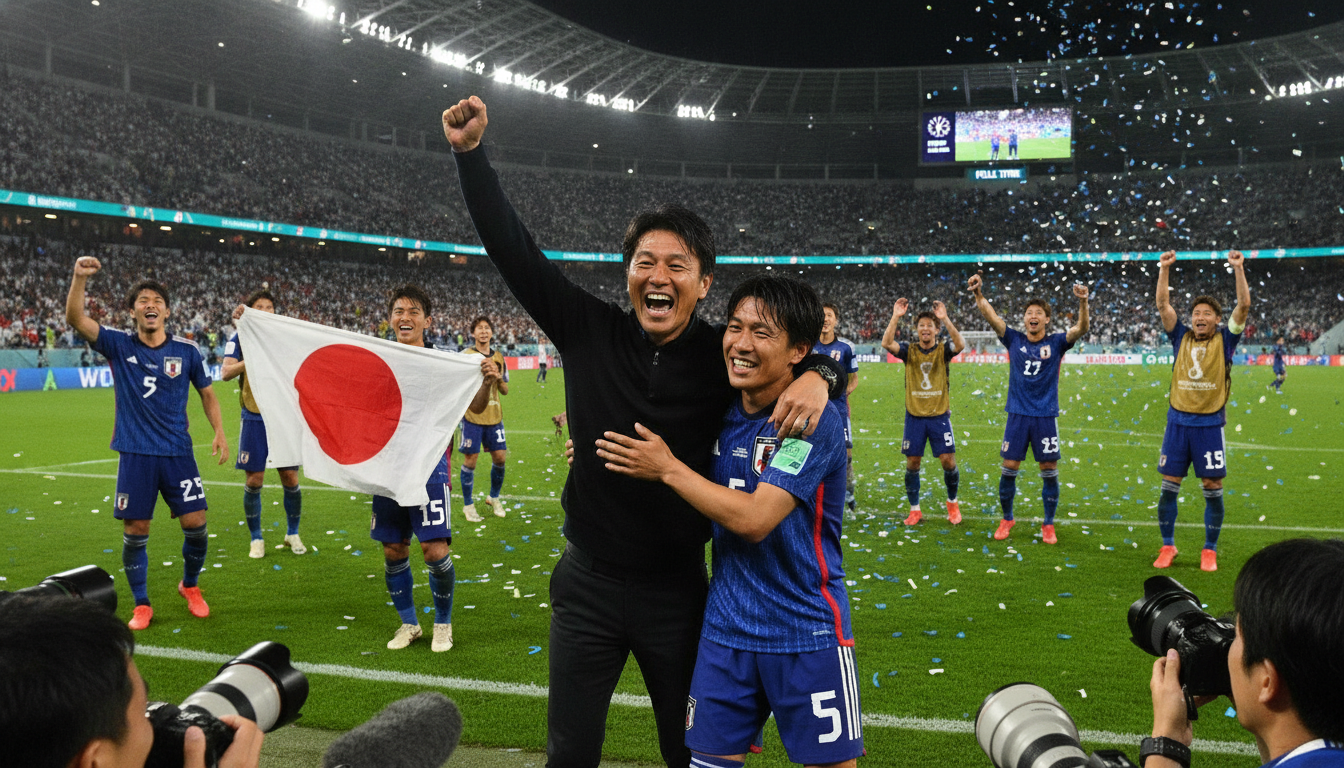
Japan World Cup: Moriyasu’s Late Substitution Helps Japan Advance Unbeaten, Sets Up Brazil Clash
Japan advances through the World Cup group stage undefeated after a 1-1 draw with Sweden on June 26, 2026, with coach Hajime Moriyasu’s late substitution sending a clear tactical message. The winless draw secured Japan’s place in the round of 16 and sets up a high-profile match against five-time champions Brazil.
Moriyasu’s tactical signal
In the 75th minute of the match, Moriyasu brought on veteran fullback Yuto Nagatomo and defender Watanabe (Feyenoord) to reinforce Japan’s shape and inject experience. The move, seen by analysts as a deliberate attempt to steady a game that had swung in momentum, underscored Moriyasu’s focus on defensive composure as the team pursued an unbeaten group finish. Nagatomo’s entry carried symbolic weight beyond the tactical switch: his presence signaled leadership and calm in the closing stages.
Nagatomo marks fifth World Cup appearance
Yuto Nagatomo’s introduction marked his fifth consecutive World Cup, a rare milestone that reflects both longevity and trust from the national team staff. His career has spanned top-level domestic and international clubs, and his return to the pitch drew visible attention from teammates and fans alike. The substitution showcased how experience is being prioritized alongside younger talents as Japan navigates high-stakes knockout football.
Match turning points and key moments
The match remained tight throughout, with both sides finding chances but failing to pull decisively ahead until the later stages of play. Japan’s equalizer and Sweden’s earlier goal illustrated a contest of narrow margins, where small tactical adjustments influenced possession and tempo. Moriyasu’s substitutions were framed as responses to those shifting dynamics and aimed at preserving a result that ensured progression.
Defensive balance and midfield management
Japan’s approach combined a measured defensive structure with selective pressing from midfield, designed to limit Sweden’s transitional opportunities. The coaching staff adjusted spacing in central areas to deny through-balls and to force opponents into wide areas. Those changes, together with the late addition of seasoned defenders, helped Japan absorb pressure in the final quarter of the match.
Unbeaten group-stage finish and implications
Finishing the group stage without defeat gives Japan momentum and a psychological edge entering the round of 16. An unbeaten record also validates squad selection choices and the balance between experience and youth that the coaching staff has cultivated. Progressing in this manner raises expectations at home and places extra emphasis on tactical preparation for the next phase.
Next test: Brazil awaits in the round of 16
Japan will meet Brazil in the round of 16, a matchup that poses a significant tactical and technical challenge given Brazil’s attacking pedigree. Moriyasu will face pressure to refine his strategy to counter Brazil’s pace and creativity while preserving the defensive discipline that carried Japan through the group stage. The upcoming fixture is likely to demand both strategic courage and careful roster management from Japan’s coaching team.
Japan enters the knockout rounds with confidence built on an unbeaten group run, but the looming encounter with Brazil will be the clearest test yet of whether experience and tactical discipline can overcome one of world football’s most storied sides.

