
How to Get a Japanese Phone Number Before and After You Move: Practical Guide to SIMs, eSIMs and Contracts
Practical guide to getting a Japanese phone number before or after you move to Japan, with options for SIM, eSIM, voice-and-data plans, costs, and set-up tips.
If you are moving to Japan or setting up long-term life here, obtaining a Japanese phone number quickly will smooth many essential tasks. A Japanese phone number is often required to open a bank account, sign a lease, register utilities, and receive deliveries, so planning how to secure one should be part of your arrival checklist. This guide explains the main pathways to a Japanese phone number, the differences between data-only and voice-and-data services, estimated costs, and steps to take both before and after you arrive.
Why a Japanese phone number matters for new residents
A local mobile number is frequently requested by banks, landlords, employers, and government services as part of routine identity checks and contact details. Without a working Japanese number you may face delays when applying for a bank account, enrolling in health insurance, or completing rental paperwork. Food delivery apps, ticketing services and many domestic apps also rely on SMS or voice verification tied to a Japanese mobile number.
For short-stay visitors who only need internet, prepaid data SIMs or eSIMs may be sufficient, but these often lack native voice capability and can be rejected by services that require a mobile number for verification. If you plan to stay and formalize residency or employment, a voice-and-data SIM tied to a Japanese number will be the safest option for official procedures. Planning ahead—ordering a SIM or eSIM before departure—can cut stress and ensure you can use local services immediately on arrival.
Order a voice-and-data SIM from abroad: recommended providers and what to expect
Ordering a voice-and-data SIM online before you travel is generally the fastest way for overseas arrivals to obtain a Japanese phone number. Specialist international providers offer English-language customer support, worldwide shipping or airport pick-up, and plans designed to activate when you land. Two widely used options aimed at newcomers include services that supply both physical SIMs and eSIM profiles with voice capability and monthly billing flexibility.
When choosing an online provider, check which domestic network the SIM will use; some providers route voice-and-data SIMs through major carriers like SoftBank or Docomo, while certain 5G-ready eSIMs may operate on alternative networks. Pricing for these entry-level voice-and-data plans typically ranges from modest monthly fees for low-data plans to higher tiers for heavier usage, and many suppliers charge a one-off SIM activation fee. Confirm whether the vendor requires a credit card to place the order and whether activation is timed to your arrival in Japan.
Providers that offer a “phone number plus minimal data” option are particularly useful if you only need a Japanese mobile number for identity verification or short-term contracts. These pared-back plans are cheaper than full data packages and often activate in line with your travel schedule. If you expect to stay long term, consider ordering an initial plan online for immediate access and then switching to a domestic carrier or MVNO later if that provides better value or coverage for your needs.
What to expect when setting up a phone number after you arrive in Japan
If you prefer to arrange service in person, mobile carrier shops and large electronics retailers around major stations and shopping districts will set you up with either a contract plan or a prepaid option. The major domestic carriers—Docomo, au (KDDI) and SoftBank—operate city-centre stores where staff can complete registration, though English support varies by location. Applying in person may require additional documentation such as proof of address, a Japanese bank account or an employment contract, depending on the plan and store.
Contract lengths have relaxed in recent years; one-month minimum commitments are now common, though some promotional offers or device instalment plans still include longer obligations. Be aware that staff may add optional services like security apps or mailboxes during sign-up, and these should be checked and removed if you do not want them. For newcomers without Japanese language skills, arranging an appointment with an English-speaking counselor or bringing a Japanese-competent friend will save time and reduce misunderstandings.
If you choose to apply through a domestic mobile virtual network operator that piggybacks on the big carriers, the documentation requirements are usually similar to those of the primary carriers. It is advisable to allocate at least half a day for in-store registration to accommodate paperwork, plan selection, and any device configuration required to activate the service. Preparing photocopies of your residence card, passport, and proof of address will help expedite the process.
Comparing plan features: voice-and-data, data caps, throttling and call charges
When selecting a plan, the key elements to review are whether the service provides a genuine Japanese mobile number with voice capability, the monthly data allowance, any throttling policy after the cap is reached, and domestic call rates. Voice-and-data plans provide an authentic mobile number suitable for official verification, while data-only plans do not support standard incoming or outgoing calls except via internet apps. Data-only options therefore risk being rejected for bank or government verifications that require an SMS-capable Japanese number.
Many providers offer tiered data allowances—ranging from small monthly bundles suitable for light users to large allowances for those who stream or work remotely. Some services use a speed-throttling approach when a user exceeds their monthly data limit, reducing bandwidth to a limited rate rather than cutting data completely. Domestic call rates are typically billed per minute and vary by carrier and plan; incoming domestic calls are commonly free but confirm the terms with your provider.
Payment methods differ among providers and can include credit or debit cards, PayPal, and convenience-store payment at major chains. If you expect to switch providers later, find out whether the plan allows monthly changes or suspensions, and whether there are one-off activation fees or early-termination charges to factor into your budgeting. For travelers who will be in and out of the country, the ability to suspend service temporarily without losing the number can be a useful option.
Temporary numbers, verification-only plans, and why VoIP numbers can be problematic
For people who only need a Japanese number to pass verification checks—for example, to set up a bank account or verify an app—some carriers offer low-cost voice-lite plans that provide a real mobile number with limited data. These verification-focused plans are cheaper than full consumer packages and are intended for applicants who need a domestic number for identity checks rather than heavy data usage. Ordering and completing ID verification online prior to travel is often possible, but activation commonly occurs to coincide with arrival in Japan.
Virtual numbers provided by VoIP services are not equivalent to SIM-based Japanese mobile numbers and can be rejected by banking apps, government portals, and some commercial services. Those virtual services may not receive carrier-controlled SMS messages or pass strict phone-number validation steps required by official institutions. If the application you are completing specifies a “mobile phone number” or insists on SMS-based verification, choose a SIM-based voice-and-data number to avoid delays.
Before you travel, verify that your phone is unlocked and compatible with Japanese network frequencies if you plan to use your existing handset. Unlocked phones typically accept foreign SIM cards; if your device is carrier-locked it will need to be unlocked by your original provider prior to departure. If buying a device in Japan, major electronics retailers and branded stores sell phones outright, but contract-based device purchases may require confirmation of a Japanese mobile number and language capability to complete.
How to switch, port, and manage your Japanese mobile number long term
If you plan to move between providers while keeping the same number, ask about “porting” procedures and whether your chosen carrier supports number transfer without interruption. Portability rules allow users to retain a mobile number when switching carriers in most cases, but the process requires coordination and sometimes a short service overlap to prevent calls or messages from being lost. Request the specific steps and any applicable fees from your current and prospective providers before initiating the transfer.
Many newcomers start with an internationally oriented provider for immediate arrival connectivity and then transition to a domestic MVNO or carrier for cost savings and local perks. When changing providers, check cancellation policies, whether you can pause service when traveling abroad, and how billing cycles align to avoid double charges. Keep copies of all account details, activation receipts, and the mobile telephone number reservation codes you receive, since these are often needed for administrative processes like number porting.
If maintaining a continuous Japanese number is important for employment or long-term contracts, select a plan with monthly flexibility and clear suspension rules so you can temporarily pause service without permanently losing the number. For those with frequent international travel or dual-residency arrangements, explore international roaming terms and whether your provider offers low-cost roaming or temporary pausing to reduce fees while abroad.
Practical tips, required documents and common pitfalls for newcomers
Bring the right documents to a store or to complete online verification: a valid passport, your residence card or visa documentation, and a Japanese address are typically required. Some carriers may insist on a Japanese bank account for monthly billing, while others accept international credit cards or convenience-store payment for the initial setup. Check the provider’s ID requirements closely before you go to avoid wasted trips.
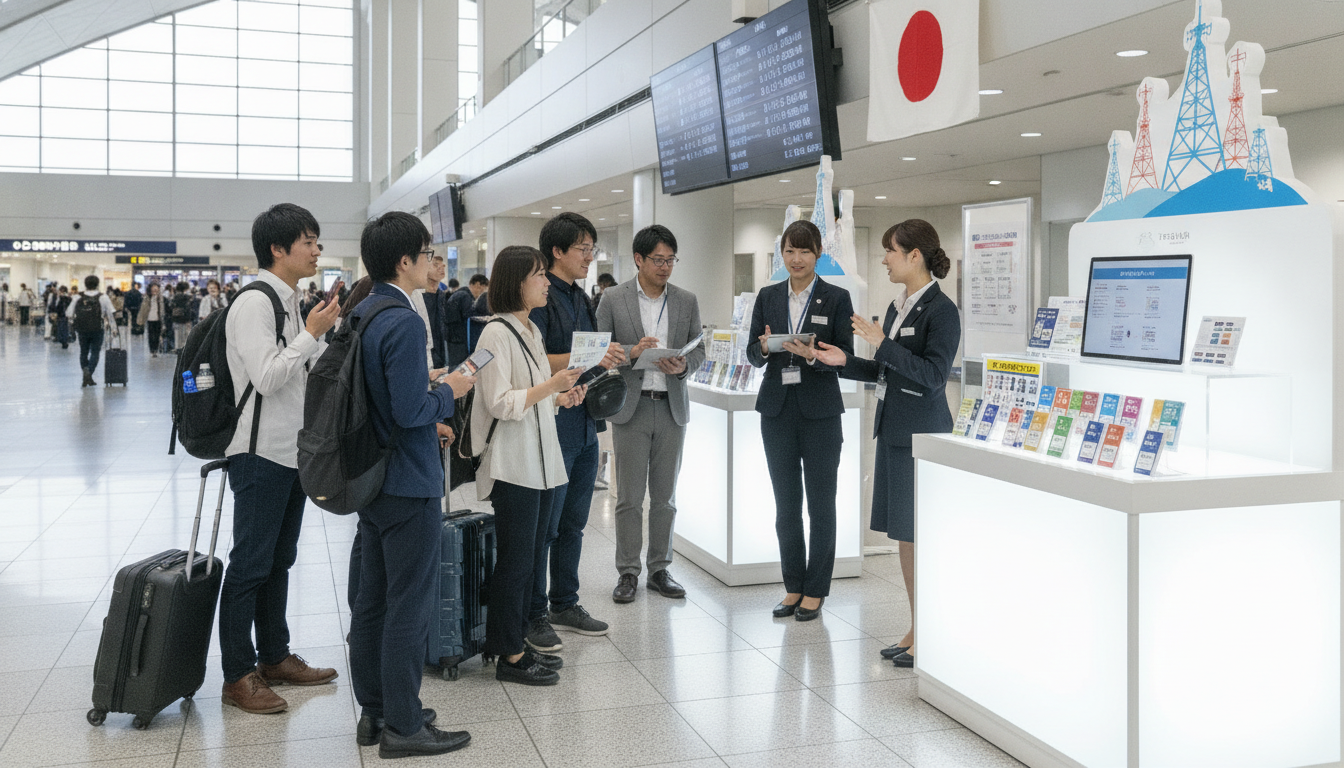
Be cautious of aggressive in-store add-ons that can increase your monthly cost; routinely ask staff to itemize charges and to remove any optional services you do not want. If you lack Japanese fluency, arrange to have a Japanese-speaking friend with you or seek stores and airport kiosks that advertise English support. Allow extra time for set-up—paperwork, identity verification and device configuration can take several hours in busy outlets.
If you intend to buy a phone in Japan, large electronics chains and brand stores are convenient choices, but be aware that instalment device plans may tie you to a provider or a longer contract. Finally, maintain proper records of your account details and know how to contact customer service in English or through the provider’s international support channels should issues arise.
For many foreign residents, setting up a Japanese phone number is a straightforward early step that unlocks a host of services and simplifies daily life. Whether you order a voice-and-data SIM before you leave or arrange service in a local store after arrival, prioritize a SIM that supplies a genuine Japanese mobile number for verification and official use.
Securing a Japanese phone number early will save time and avoid administrative delays when opening accounts or signing contracts, and careful plan selection will help control costs while ensuring reliable connectivity in Japan.

