
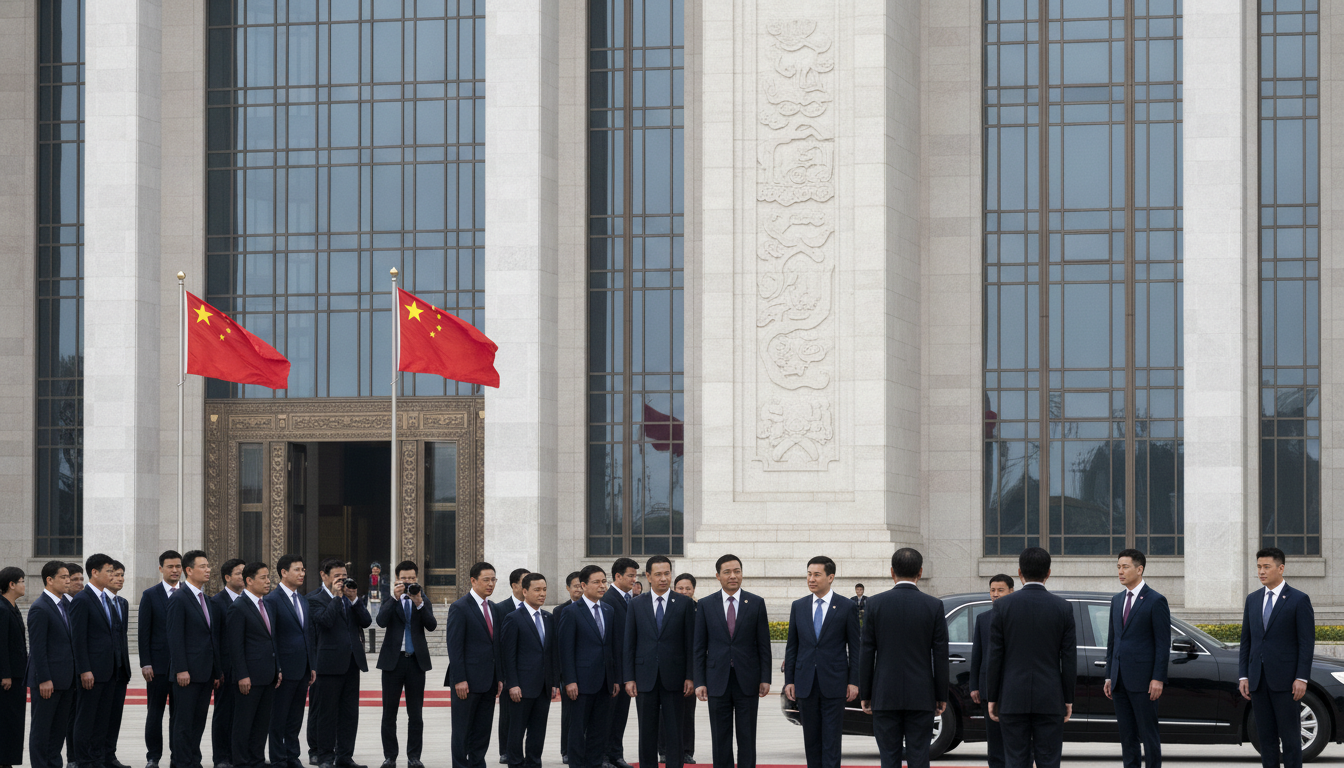
Min Aung Hlaing China visit to Beijing aims to secure cash, arms and diplomatic backing amid controversy
Min Aung Hlaing China visit: Myanmar president travels to Beijing to request investment, military support and political cover while a U.S. researcher’s detention casts a shadow.
Myanmar’s new president, Senior General Min Aung Hlaing, arrived in Beijing on the second leg of his first regional tour, seeking Chinese investment, military hardware and diplomatic protection, officials said. The Min Aung Hlaing China visit is unfolding at a tense moment after Chinese authorities detained a U.S. researcher working on China‑Myanmar relations, an episode that has sharpened international scrutiny of the trip.
Min Aung Hlaing begins talks in Beijing
Min Aung Hlaing opened his program of meetings with senior Chinese officials focused on bilateral cooperation across economics and security. Delegation members said the visit follows a recent stop in New Delhi and is intended to cement China’s central role in Myanmar’s foreign and economic policy.
Diplomatic sources indicate Myanmar will press Beijing for immediate financial relief to stabilize the economy and for longer‑term commitments to infrastructure projects. Observers note that any deals struck in Beijing will have direct implications for domestic politics and Myanmar’s international standing.
Detention of U.S. researcher clouds the visit
The trip has been overshadowed by Beijing’s detention of a U.S. academic researching links between China and Myanmar, an event that has drawn criticism from Washington and human rights groups. The incident has injected a sensitive human rights and freedom‑of‑research element into what would otherwise be a state‑to‑state visit.
Analysts say the detention complicates diplomatic optics for both Beijing and Min Aung Hlaing, forcing discussions about academic freedoms, legal transparency and the limits of cooperation. For Myanmar’s leadership, the episode risks associating its outreach with broader concerns about China’s treatment of foreign nationals.
Economic demands and investment priorities
Myanmar faces urgent financing needs after years of economic contraction, and Chinese loans and investment are expected to form the backbone of Min Aung Hlaing’s pitch in Beijing. Energy, minerals and transportation corridors are likely priorities, with negotiators seeking both immediate liquidity and project commitments.
Chinese state firms have previously invested in Myanmar’s extractive sectors and infrastructure, and officials in Yangon want accelerated work on stalled projects. Economic analysts caution that new borrowing or concessions could deepen dependence on China and complicate Myanmar’s fiscal outlook.
Security cooperation and arms options
Military and security cooperation will be a central pillar of the Min Aung Hlaing China visit, with Myanmar seeking access to equipment, training and logistical support. The Myanmar armed forces have long relied on Chinese platforms for air defence, artillery and naval systems, and recent diplomatic signals point to an attempt to broaden that relationship.
Foreign policy experts say any expansion of military ties will alarm Western capitals and neighbouring states, potentially prompting renewed sanctions or diplomatic pressure. Beijing, however, typically frames security assistance as stabilizing cooperation rather than a force‑projection partnership.
Regional balancing after India stop
The China trip follows a brief visit to India two weeks earlier, underlining Min Aung Hlaing’s attempt to balance relations between two regional powers. In New Delhi he sought to secure mineral and rare‑earth agreements, and the scheduling suggests Yangon is pursuing parallel options to avoid overreliance on a single patron.
India and China both have strategic interests in Myanmar, from resource access to connectivity projects, and Myanmar’s leadership appears intent on leveraging that competition. Diplomats say the success of this balancing act will depend on how effectively Myanmar negotiates terms and manages external perceptions.
International response and human rights concerns
Western governments and rights organisations have reiterated concerns about democratic backsliding and violations since the 2021 coup, framing any deepening of China‑Myanmar ties as fraught with human rights implications. The detention of the U.S. researcher has intensified calls for accountability and for clearer legal protections for foreign nationals.
Despite criticism, Beijing has signalled a willingness to engage, viewing Myanmar as a critical partner in broader regional infrastructure and security networks. The degree to which China publicly confronts Myanmar’s domestic record is expected to remain limited in official statements.
Min Aung Hlaing’s meetings in Beijing will test whether Myanmar can secure rapid economic relief and military support without further isolating itself internationally. The outcome of the Min Aung Hlaing China visit will shape Myanmar’s trajectory for months ahead, influencing economic recovery, security alignments and regional diplomacy.

