
Peru presidential election delayed to mid-May as challenged ballots keep runoff race undecided
Peru presidential election delayed to mid-May as officials review more than 15,000 challenged ballots, leaving a narrow battle for the second-round spot and legal probes under way.
Peru’s presidential election result will not be finalised until mid-May as the National Jury of Elections and its partner bodies continue reviewing ballots contested after last Sunday’s vote. With 93 percent of ballots tallied, the right‑wing contender Keiko Fujimori holds the lead but no candidate has secured an outright mandate, keeping the outcome in flux. Electoral authorities say the count and verification process is ongoing while candidates and parties press their claims and call for scrutiny. The delay elevates tensions in a country long marked by political turnover and institutional fragility.
Final result postponed to mid‑May
The National Jury of Elections (JNE) has set a provisional timetable that pushes certification of the vote into mid‑May while challenged ballots are examined. Officials say the extended review reflects the need to adjudicate disputes and ensure votes are properly recorded before moving to the next stage. Election bodies emphasised that the timeline aims to preserve the integrity of results despite public frustration over the wait. The announcement effectively leaves Peru without a confirmed presidential runoff field for several weeks.
Fujimori leads with 93 percent counted, second‑place fight remains tight
Provisional tallies with roughly 93 percent of precincts reporting show Keiko Fujimori in first place with about 17 percent of the vote. The contest for the second runoff slot is narrowly contested, with left‑wing candidate Roberto Sanchez polling near 12 percent and ultra‑conservative Rafael López Aliaga at roughly 11.9 percent. The gap between Sanchez and López Aliaga has fluctuated in recent updates and was reported to have widened to about 13,600 votes on Saturday. That slim margin, combined with outstanding challenged ballots, means the identity of the second‑round opponent remains uncertain.
More than 15,000 challenged ballots under formal review
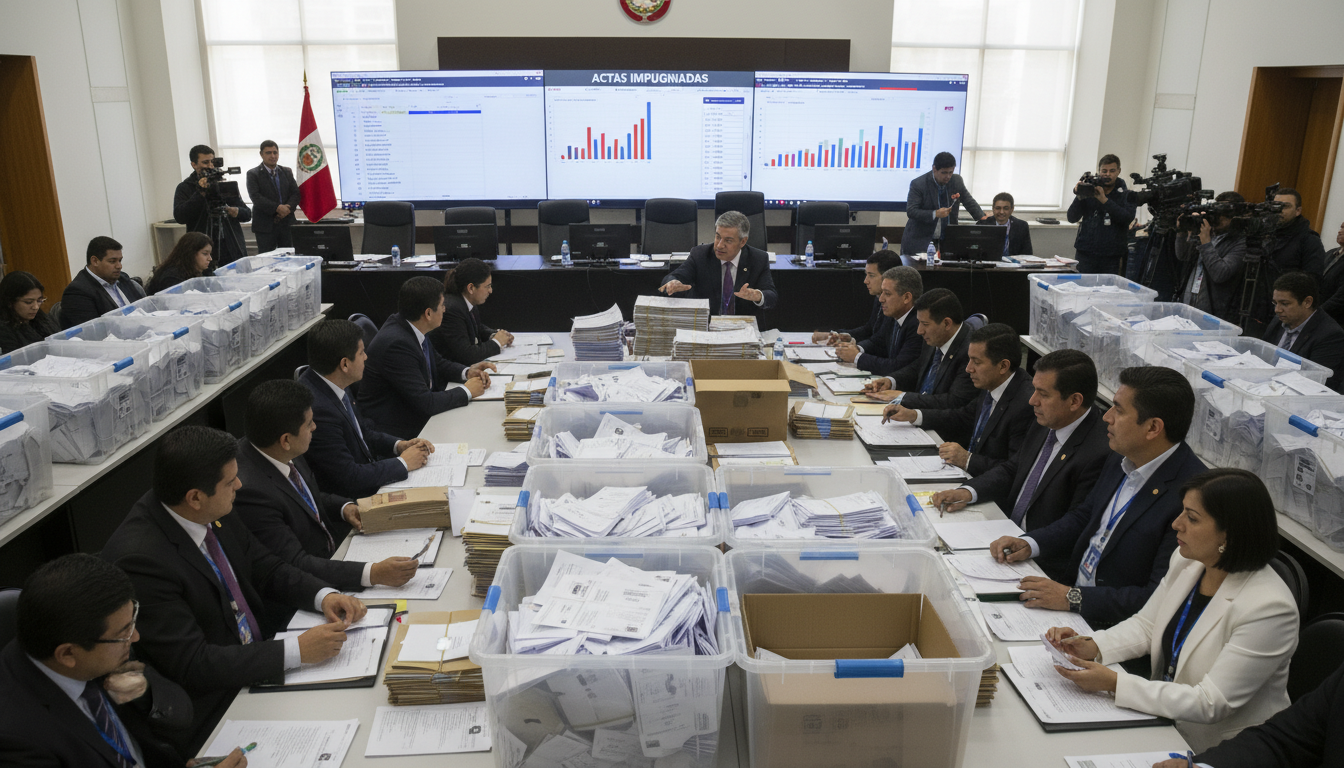
Election officials say more than 15,000 ballots have been formally challenged and are undergoing verification, with roughly 30 percent affecting the presidential tally and the remainder tied to legislative contests. JNE officials, including Secretary General Yessica Clavijo, have described the procedural review as the reason for the certification delay and stressed that disputed papers must be resolved before final results are declared. The review process will involve examination of ballots, polling station records and procedural compliance, according to the electoral authority. Observers note that such reviews are common in close contests but can prolong finalisation when margins are narrow.
Candidates issue accusations and mobilise supporters
Rafael López Aliaga, a former mayor of Lima and leader of the Popular Renewal Party, has been the most vocal critic of the delay, publicly alleging irregularities and calling for annulment of the vote without presenting documented evidence. He urged supporters to mobilise in protest on Sunday, heightening concerns about street demonstrations in the capital. Roberto Sanchez has also criticised organisational problems and demanded investigations and sanctions for failures he says undermined the process. Keiko Fujimori and her campaign have called for calm and for the legal mechanisms to run their course while asserting confidence in the electoral count.
Operational failures prompt extended voting and legal probes
Voting was disrupted in parts of Lima and other areas by delays in delivery of election materials, forcing authorities to extend polling into Monday where balloting could not be completed on the scheduled day. On Friday prosecutors executed a raid on a warehouse run by the National Office of Electoral Processes (ONPE), the body responsible for organising polling logistics, and four ONPE officials have been formally reported to the JNE over alleged offences related to voting procedures. Electoral managers and prosecutors have said investigations seek to determine whether administrative lapses or misconduct contributed to the disruptions. The combination of logistics failures and ongoing probes has raised questions about preparedness and accountability.
European Union observers say vote met democratic standards despite issues
The European Union election observation mission assessed that, overall, the vote met democratic standards even as it documented procedural shortcomings and logistical delays. International observers noted that the electoral framework and institutional safeguards remain in place, while recommending improvements to operations and transparency. Local and international organisations have urged that legal channels be used to resolve disputes and that protests remain peaceful. The EU statement has been cited by officials as a stabilising reference point amid competing domestic claims.
Peru’s ballot featured a record 35 presidential contenders and takes place against a backdrop of recurrent political instability; four of the last eight presidents have been removed from office by Congress. The delayed certification and contested run for the second‑round berth extend a period of uncertainty that will shape campaigning, alliances and the tone of the runoff stage. Political analysts say the weeks ahead will be critical for legal appeals, vote verification and efforts to reassure voters that the outcome will be legitimate and binding.

