
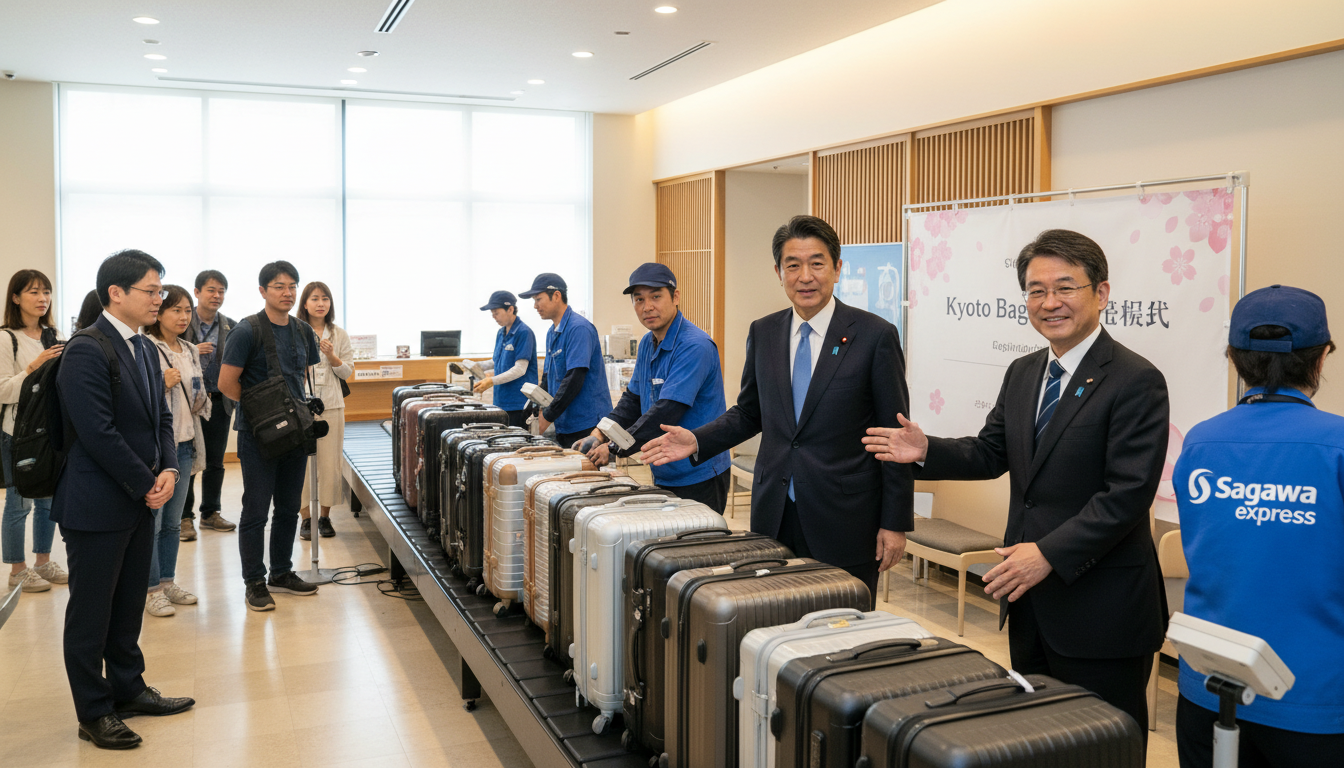
Sagawa and MUFG Launch Kyoto Luggage Drop-Off Hub Inside Bank Branch to Tackle Overtourism
Sagawa Express and MUFG open a Kyoto luggage drop-off hub inside a bank branch in central Kyoto to provide secure short-term storage and help ease overtourism.
KYOTO — Sagawa Express and Mitsubishi UFJ Financial Group (MUFG) have opened a Kyoto luggage drop-off hub located within an MUFG bank branch, a collaboration designed to give visitors a convenient place to store suitcases and free up public space. The Kyoto luggage drop-off hub is part of a pilot initiative aimed at reducing street congestion and improving the sightseeing experience in the city’s busiest districts. Officials and company representatives described the move as a practical, low-impact measure to address pressure on public areas caused by rising visitor numbers.
Location and partnership details
The new hub is housed inside an MUFG branch in Kyoto, combining the bank’s city-centre footprint with Sagawa’s logistics and storage expertise. The arrangement leverages existing branch security and customer access to provide short-term holding for luggage and oversized items. Both companies said the initiative is intended as a complementary option to traditional coin lockers and commercial luggage services.
How the Kyoto luggage drop-off hub operates
Visitors can hand over bags at a designated counter inside the bank branch during operating hours, where items are logged and secured before temporary storage. Sagawa’s staff manage the collection and retrieval processes, while the branch provides a staffed, indoor location that is easier for many travelers to find than standalone lockers. The service is designed to integrate with Sagawa’s wider delivery network so that, where appropriate, luggage can be forwarded to stations, hotels or other pick-up points.
The hub emphasizes speed and security, with tamper-evident tagging and identity checks at handover to ensure accountability. Companies involved say they are mindful of privacy and local regulations and will monitor demand patterns to refine booking, pricing and time limits. The pilot is also testing digital booking options to reduce queuing and manage peak periods more effectively.
Aimed at easing overtourism pressure
City officials and local stakeholders have been seeking practical measures to address overtourism in Kyoto, where narrow streets and historic districts are often crowded with visitors carrying large suitcases. By offering the Kyoto luggage drop-off hub within a bank branch, the project aims to remove one common source of footpath obstruction and encourage more comfortable mobility for pedestrians. Organizers argue that freeing sidewalks and transit corridors of luggage will also reduce wear on heritage streets and make the urban environment safer.
The initiative is framed as one component of a broader effort to distribute visitor flows more evenly across time and place. Authorities and operators hope that making luggage storage more accessible near transport hubs and commercial centres will reduce the incentive for tourists to bring suitcases into congested temple precincts and shopping streets.
Local business and tourist response
Local retailers and hospitality providers have expressed cautious optimism, saying the hub could make streets more navigable and encourage longer, more spontaneous shopping and dining visits. Service-sector representatives noted that reducing luggage clutter outside businesses could improve storefront visibility and make walking routes more inviting for families and older visitors. Some smaller operators, however, urged that any new service be coordinated with existing options to avoid fragmentation and added costs for customers.
Early responses from tourists who used the service reported relief at not having to haul suitcases between train stations and attractions. Visitors appreciated the convenience of an indoor, staffed drop-off point during rainy or hot weather, and pointed to shorter walking distances as a tangible benefit. Companies monitoring usage say customer satisfaction and repeat use will be key indicators for whether the hub is adopted more widely.
Pilot scope, monitoring and possible expansion
Sagawa and MUFG describe the current opening as a pilot and say they will evaluate demand, operational challenges and public feedback before deciding on wider roll-out. Data points under review include average storage duration, peak hours, security incidents and any effects on nearby pedestrian flows. The partners have indicated that a successful pilot could lead to similar services in other urban branches or to partnerships with different property operators.
City planners and business groups will be involved in the assessment to ensure any expansion aligns with local tourism strategies and infrastructure priorities. If the concept scales, it could be adapted to seasonal demand spikes or coordinated with transport providers to offer bundled services for inbound and outbound travellers.
This bank-based approach to luggage storage reflects a broader trend of using existing urban footprints to provide visitor services while minimizing new street-level infrastructure. Observers say its success will depend on seamless integration with travel patterns, clear pricing and robust security measures to build trust among both local residents and international visitors.

