
Itochu Expands Intellectual Property Push with Viral Character Opanchu Usagi
Itochu promotes Opanchu Usagi to grow its IP business, unveiling a Yokohama exhibition preview on April 24, 2026, as the forlorn pink rabbit gains social media traction.
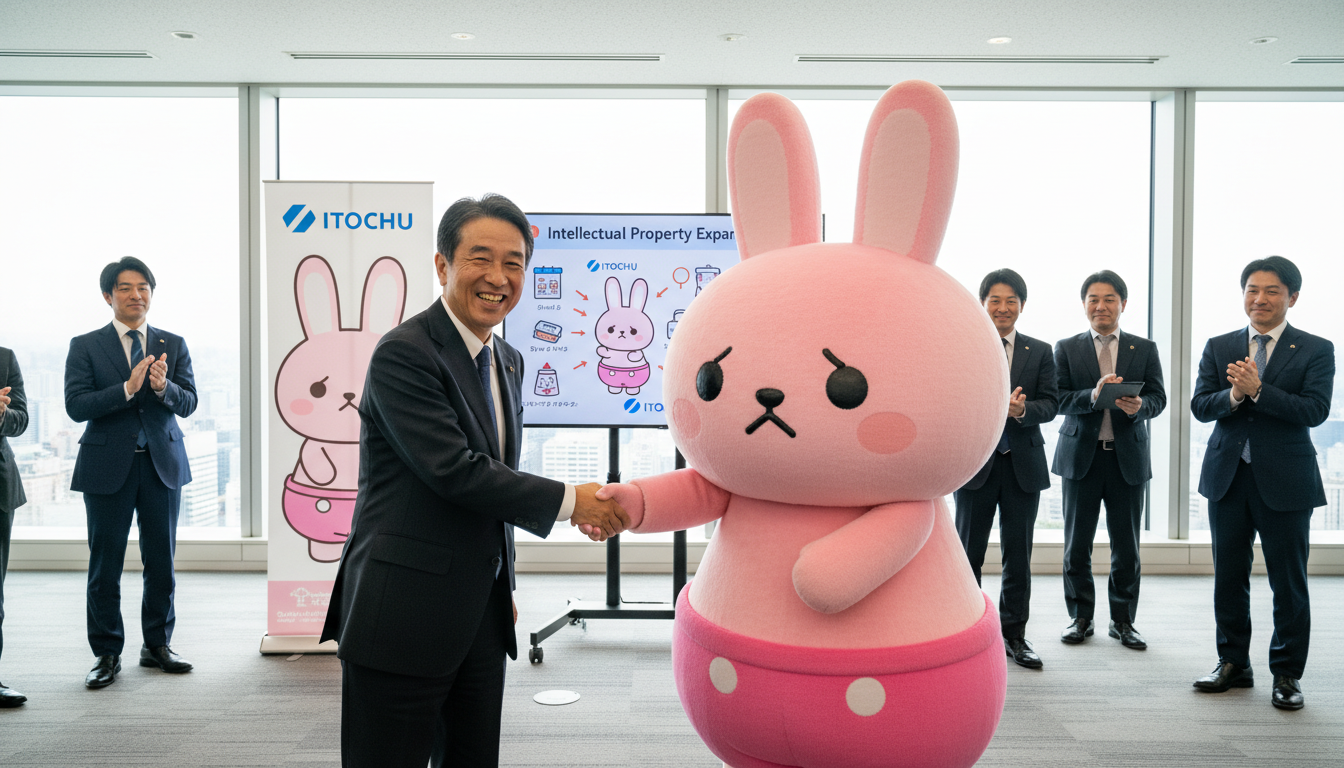
Japanese trading house Itochu has begun promoting Opanchu Usagi, a wistful pink rabbit character that rose to prominence online, as part of a broader effort to expand its intellectual-property business. The company staged a preview event in Yokohama on April 24, 2026, showcasing costumed characters and exhibition plans aimed at turning the social-media favorite into a licensed franchise.
Preview in Yokohama Draws Early Attention
The Yokohama preview introduced Opanchu Usagi to a public audience with a small, media-facing event that included several costumed characters. Photographs from the event, taken by Yui Sato, show the central Opanchu Usagi figure alongside supporting characters, offering a glimpse of the visual direction Itochu plans for the brand.
Organizers described the preview as an initial public step to test merchandise concepts and exhibition layouts. The event appeared designed to gather consumer reactions and to generate press interest ahead of wider commercial rollouts.
From Social Media to Corporate Strategy
Opanchu Usagi began as a character that resonated on social platforms, where its melancholic design and simple narratives attracted followers. Itochu’s decision to adopt the character reflects a growing trend among corporations to source culturally relevant intellectual property from digital communities.
The trading house is positioning the character within a controlled licensing framework, seeking to convert online popularity into products, exhibitions, and potential collaborations. This strategy aims to tap fan engagement while building multiple revenue streams from a single creative asset.
Itochu’s Broader Intellectual-Property Ambitions
Itochu has publicly signalled a desire to diversify earnings beyond traditional trading activities, and the Opanchu Usagi initiative fits within that strategy. The company is pursuing intellectual-property development across merchandising, experiential events, and possible media tie-ins to create recurring income sources.
Executives view character licensing as a way to leverage brand partnerships and retail channels without the capital intensity of larger infrastructure projects. The approach allows Itochu to test demand and scale up investment if the character achieves sustained commercial traction.
Merchandising, Licensing and Exhibition Plans
Early indications suggest merchandising will be a primary avenue for monetizing Opanchu Usagi, with prototypes and concept goods shown at the Yokohama preview. Plans discussed by event organizers emphasize small-batch releases and limited-run items to cultivate collector interest.
Licensing agreements are likely to follow, targeting apparel, stationery, and lifestyle collaborations that align with the character’s aesthetic. The exhibition preview also pointed to a touring or pop-up format, which would enable Itochu to reach regional audiences without permanent venue commitments.
Market Reaction and Consumer Appeal
Industry observers note that characters with strong social-media origins can translate into profitable IP if managed carefully. Opanchu Usagi’s melancholic charm and clear visual identity give it distinctiveness in a crowded character market, but converting online affection into commercial spending will require consistent storytelling and product quality.
Early public reception at the Yokohama event appeared positive, with attendees engaging with displays and photo opportunities. The scale of conversion from fans to paying customers will be a key metric as Itochu moves from preview to full launch phases.
Risks and Opportunities for a Trading House
Adopting a digital-born character introduces risks, including oversaturation and the challenge of maintaining authenticity as commercial offerings expand. Itochu must balance fan expectations with revenue goals to avoid alienating the core audience that created the character’s initial momentum.
At the same time, successful IP development offers a relatively low-capital path to diversified income and brand extension. If Itochu secures licensing partners and executes a phased merchandising plan, Opanchu Usagi could become a visible example of how trading houses are adapting to cultural trends.
Final testing and rollout timelines were not disclosed at the Yokohama preview, but the event on April 24, 2026, signalled Itochu’s intent to move beyond observation and into active management of character-driven intellectual property.

