
Taiwan Defense Spending Face-Off Raises Risk to Drone Programs, Lawmaker Warns
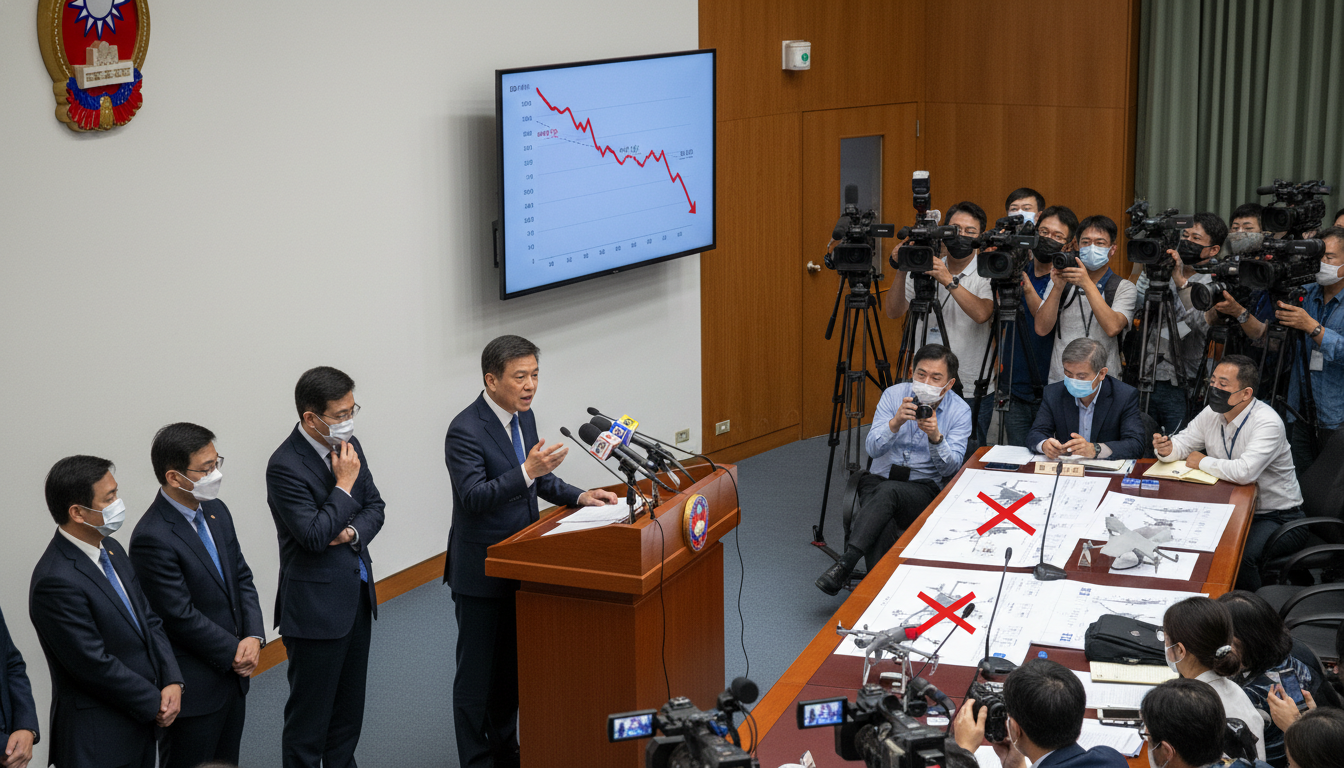
Taiwan defense spending is under intense political scrutiny as a battle in the legislature over budget cuts threatens to reduce funding for drone programs that officials say are central to the island’s asymmetric deterrence strategy.
Legislative Standoff Over Defense Budget
A senior legislator who leads the parliamentary defense committee warned that proposed cuts promoted by opposition lawmakers could significantly scale back procurement and development of unmanned systems. The dispute pits the ruling party’s priorities for strengthening asymmetric capabilities against the opposition’s push for fiscal restraint ahead of broader budget negotiations.
Debate in the legislature has grown increasingly public, with party leaders framing the dispute as both a domestic fiscal matter and a question of national security posture. Lawmakers on both sides have signaled they will make defense allocations a bargaining chip in upcoming committee votes and plenary sessions.
Drone Spending Seen as Vulnerable
Sources close to the defense committee say drones and other unmanned platforms are among the most vulnerable line items if the budget is trimmed. These programs, often smaller in headline cost than major platforms, are built from multiple development projects and can be quietly reduced through delayed contracts or smaller procurement batches.
Officials and industry representatives argue such incremental reductions would have outsized effects, slowing technology maturation, shrinking production runs and raising unit costs. They warn that a piecemeal approach to cutting drone budgets could leave Taiwan with fewer, less-capable systems when adversaries are rapidly fielding similar technologies.
Operational Lessons from Iran and Ukraine
The legislator emphasized that recent conflicts in Iran and Ukraine have underscored the tactical and strategic value of unmanned systems on modern battlefields. Forces in those theaters have used drones for surveillance, strike roles and electronic warfare, reshaping how militaries approach layered defenses and force projection.
Taipei’s defense planners have been watching those developments closely and incorporated unmanned systems into training and procurement plans. Reducing investments now, critics say, risks slowing the integration of lessons learned on tactics, sensor fusion and networked operations that are proving decisive abroad.
Asymmetric Strategy Relies on Unmanned Systems
Taiwan’s broader defense policy focuses on asymmetric warfare—using mobile, survivable and relatively low-cost systems to impose high costs on a superior adversary. Drones, loitering munitions, coastal defense missiles and distributed sensors are core elements of that approach, officials note.
Industry events on the island in recent months have showcased locally produced unmanned aerial vehicles and sea drones intended to support that strategy. Defense planners argue that a sustained procurement pipeline is essential to achieve mass, redundancy and rapid iteration—qualities that ad hoc spending cuts would undermine.
Political Signal to China and the United States
The lawmaker warned that cutting defense spending now would send an ambiguous message to both Beijing and Washington about Taiwan’s resolve. In the legislator’s view, reduced funding could be interpreted by Beijing as waning deterrence, while U.S. partners could see it as lessening Taipei’s commitment to shared regional security responsibilities.
Opposition legislators counter that fiscal prudence is necessary and that defense readiness can be maintained through re-prioritization and efficiency measures. The debate is shaping not only the size of the defense budget but the narrative Taiwan presents to external partners at a time of heightened regional tensions.
Budget Trade-Offs and Industry Impact
Defense procurement officials caution that even small cuts cascade through suppliers, affecting research and development, production lines and workforce retention. Small and medium-sized defense firms, which develop many of the unmanned systems, are particularly exposed to contract instability.
Long-term industrial capacity depends on predictable orders and stable investment in prototyping and testing. A stop-start funding environment could prompt suppliers to shift resources away from defense, slowing innovation and making Taiwan more reliant on foreign technology in the future.
Next Steps in the Legislative Calendar
Parliamentary procedures mean the outcome will be decided through a mix of committee sessions and plenary votes, with party negotiations shaping compromise options. Observers expect further hearings where defense officials will be pressed to detail the operational effects of proposed cuts and to justify each program’s priority.
Stakeholders from industry and civil society could increase lobbying in the coming weeks as lawmakers prepare final allocations. The timing of budget approvals will be critical for contractors and for scheduled deliveries of systems planned for this fiscal year.
The budget dispute underscores a deeper policy question for Taiwan: how to balance fiscal pressures with the need to invest in capabilities that policymakers say are essential to deterring aggression.

