
Minamata disease patients accuse ministry staff of saying they are "well-off"; minister pledges probe
Minamata disease patients say an Environment Ministry official told them they are "well-off," prompting groups to demand expanded support and an investigation by Minister Ishihara.
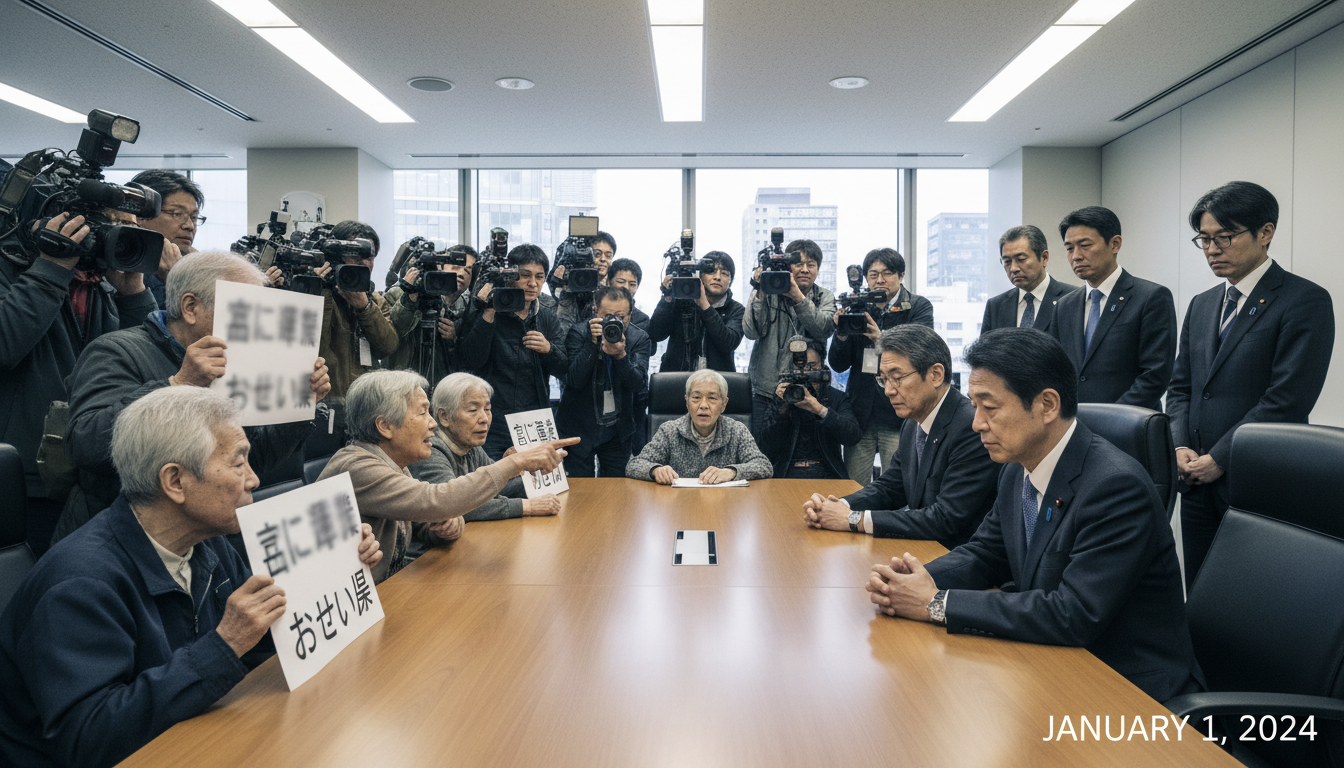
The Minamata disease patients’ federation and the Shishijima victims’ association met Environment Minister Hirotaka Ishihara in Minamata City on May 1, 2026, and accused a ministry official of making remarks suggesting patients were "better off" than other pollution sufferers. The groups said the comment was made during April talks about expanding and increasing treatment allowances and that it implied questioning the legal basis for benefits could lead to cuts. Minister Ishihara said he would investigate the factual details and offered an apology if remarks were perceived as hurtful.
Details of the allegation
The victims’ groups said the contested comments occurred in mid‑April, at discussions focused on widening and raising the treatment allowance paid to Minamata disease patients. According to the groups, a ministry official told attendees that Minamata patients were "well-off compared with other pollution victims" and added that the ministry and the Finance Ministry were "in tacit agreement," warning that probing the basis of the system could prompt a review that made benefits worse. The groups described the remarks as threatening to patients who depend on national medical and welfare support.
Demand for expanded support and formal submission
At the May 1 meeting the two organizations submitted a written request seeking concrete expansion of support, including higher and broader treatment allowances. Representatives told Ishihara that many patients face severe, chronic symptoms and age‑related decline, and that uncertainty about benefits exacerbates anxiety. They urged the ministry not to minimize victims’ rights and demanded guarantees that any review would not reduce existing support.
Minister Ishihara’s response and promise to verify
Minister Ishihara responded to the groups by saying that if remarks were interpreted in a way that caused offense he wished to apologize, and that the ministry would check the facts. He later told reporters he intended to confirm the details of the exchange with officials involved. Ishihara stopped short of acknowledging the exact wording alleged by the groups, saying the ministry would investigate "from now on" to determine what was said and by whom.
Context: 70 years since official confirmation and recent tensions
The meeting came on the 70th anniversary of the official confirmation of Minamata disease, a milestone marked in Minamata City on May 1, 2026. Survivors and relatives used the anniversary events to reiterate long‑standing demands for full redress and better medical care. The groups also referenced earlier controversies, including a widely reported incident two years ago when a ministry employee cut a microphone during a public discussion, which left many victims distrustful of ministry conduct.
Victims’ concerns about language and power dynamics
Patient representatives told the minister that phrasing implying relative privilege or suggesting benefits might be withdrawn is more than insensitive — it can be frightening for those reliant on government medical aid. They said such comments echo historical patterns in which victims have had to fight to have their suffering recognized, and argued that the Environment Ministry must take care with public messaging and internal briefings. The groups asked for clear, written assurances that any policy review would not reduce current support without full consultation.
Next steps and potential scrutiny
The Environment Ministry said it would conduct an internal check to establish the facts and report back to the patients’ groups; the timeline for that inquiry has not been announced. Victim organizations signaled they will monitor the ministry’s follow‑up and continue pressing for concrete policy changes, including prompt increases to treatment allowances. Legal experts and advocates for pollution victims said the episode could spur greater parliamentary and public scrutiny of how the government manages compensation and assistance for those affected by industrial pollution.
As the ministry investigates, victims and advocates emphasized that the episode underlines a broader need for respectful, transparent dialogue between officials and those living with the long‑term consequences of Minamata disease. They warned that casual or offhand remarks by public servants can deepen distrust and urged swift, plain commitments to both improve support and to safeguard the dignity of patients going forward.

