
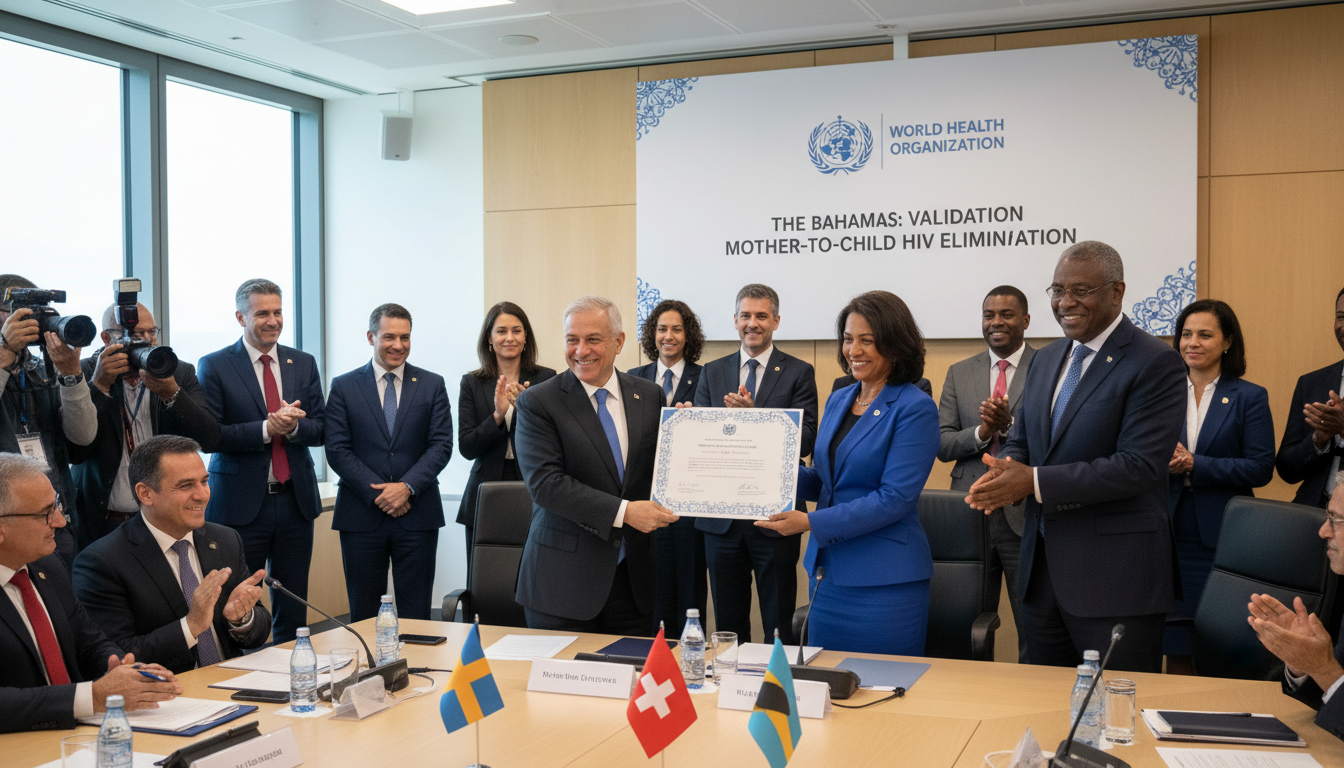
Bahamas certified by WHO for elimination of mother-to-child transmission of HIV
The Bahamas has been certified by the World Health Organization for the elimination of mother-to-child transmission of HIV, marking a major public health milestone and regional achievement in EMTCT.
WHO and regional leaders hail the milestone
Dr. Tedros Adhanom Ghebreyesus, WHO Director-General, applauded the Bahamas’ achievement as the result of years of political commitment and sustained health-sector effort. Leaders at the Pan American Health Organization and UNICEF described the recognition as both a national triumph and a catalyst for broader efforts across the Caribbean and the Americas. International agencies highlighted the role of health workers and community partners in ensuring that children are born free of HIV.
Key policies and universal antenatal coverage
The Bahamas reached certification by embedding EMTCT strategies within routine antenatal care and applying universal access policies across public and private providers. Pregnant women are offered HIV testing at their first antenatal visit and again in the third trimester, ensuring early diagnosis and timely intervention. Health officials emphasized that care is available regardless of nationality or legal status, removing barriers that can delay treatment for mothers and infants.
Clinical protocols and continuity of care
Integrated protocols ensured that HIV-positive pregnant women received antiretroviral therapy promptly and that exposed infants were closely monitored after birth. The health system uses a coordinated Maternal and Child Health programme working with the National Infectious Disease Programme to provide testing, treatment, and follow-up. Multi-month dispensing of antiretroviral medicines and free STI treatment and family planning services strengthened adherence and reduced the risk of transmission.
Laboratory networks and surveillance standards
A robust laboratory network underpinned the Bahamas’ ability to meet WHO validation criteria, supporting accurate screening and confirmatory testing for mothers and infants. Continuous surveillance and data systems tracked outcomes such as transmission rates and pediatric HIV incidence, which are essential for certification. Authorities reported that the country met the thresholds set by WHO, including sustained low transmission rates and high coverage of antenatal services.
Regional context and the EMTCT Plus Initiative
The Bahamas now joins a group of countries in the Region of the Americas recognized for EMTCT achievements, following early examples such as Cuba and more recent certifications in other nations. This progress is framed within the broader EMTCT Plus Initiative, which expands focus to congenital syphilis, hepatitis B and other perinatal infections. Regional agencies say the initiative aligns with PAHO’s goal to eliminate multiple communicable diseases and related conditions across the Americas by 2030.
Voices from government and global partners
Bahamas’ Minister of Health and Wellness, Dr. Michael Darville, credited nurses, doctors and clinic staff across the archipelago for delivering services that made certification possible. UNICEF and UNAIDS representatives underlined the importance of political will, steady investment in primary health care, and the engagement of people living with and affected by HIV. Officials also noted that offering pre-exposure prophylaxis and integrating STI services into maternal care were important components of the country’s strategy.
Sustaining elimination status will require maintaining high coverage levels for antenatal care, testing, and treatment, and continuing surveillance to quickly identify and respond to any resurgence. Health authorities have indicated plans to preserve integrated primary care services and ongoing monitoring to uphold the standards that led to certification.
The Bahamas’ recognition by WHO for the elimination of mother-to-child transmission of HIV is a tangible example of how policy, clinical practice and community engagement can combine to protect newborns and families from HIV. This milestone adds momentum to regional efforts aimed at ending perinatal transmission and advancing broader public health goals across the Caribbean and the Americas.

