
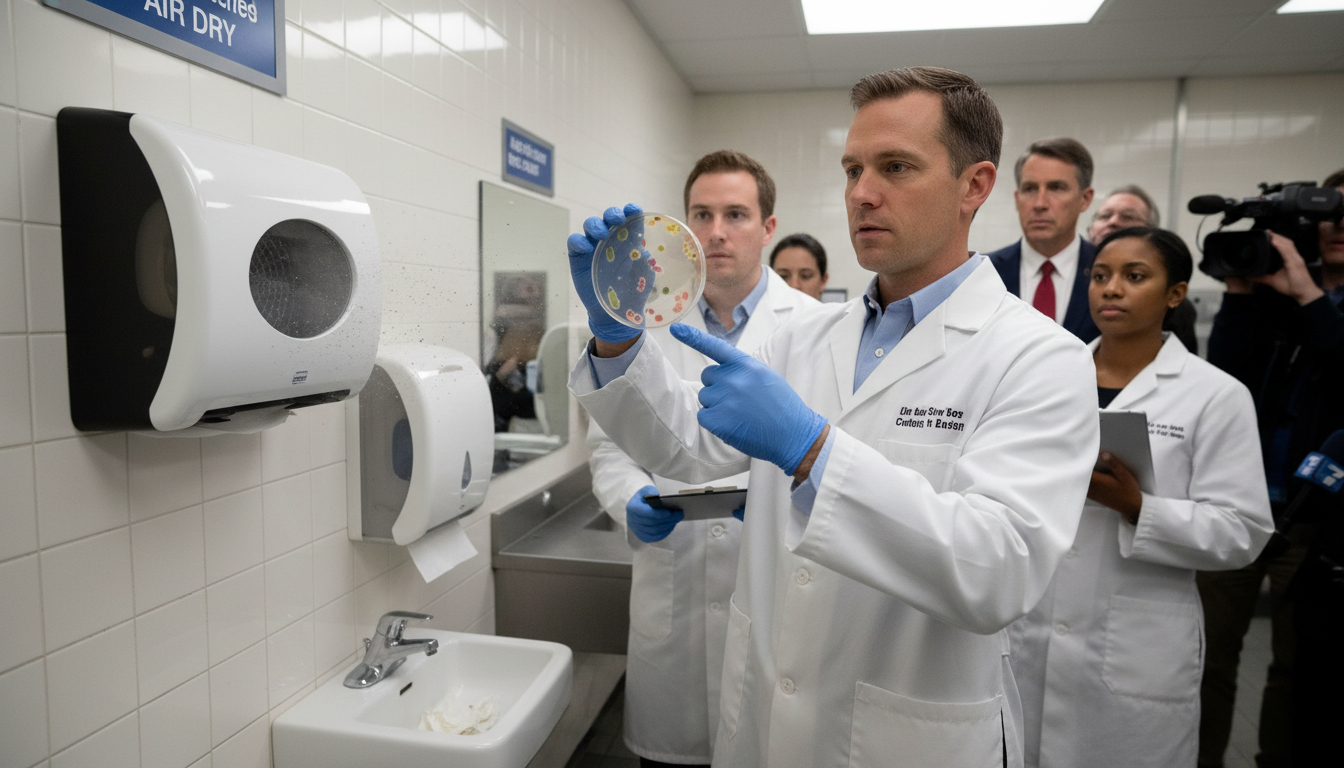
Hand dryers under scrutiny as studies link jet models to increased airborne bacteria
New studies show hand dryers, especially high-speed jet models, can disperse more bacteria than paper towels and have prompted hygiene reviews in hospitals.
Public health researchers and institutions are revisiting the use of hand dryers after multiple studies found that high-speed “jet” hand dryers can disperse more microbes into restroom air than paper towels. The discussion over hand dryers centers on infection risk, device design and where towel-based systems remain preferable, especially in clinical settings.
2011 Mayo Clinic Review Favored Paper Towels in Clinical Settings
A 2011 review led by Mayo Clinic researchers compared multiple studies and concluded that paper towels are superior to electric air dryers from a hygiene perspective.
The review recommended paper towels in places where controlling infection is essential, a finding that has been cited by hospitals and health systems when deciding restroom fixtures.
Paper towels reduce airborne dispersion because they remove moisture directly from skin without generating a forceful air current.
That practical difference has influenced policy decisions in medical facilities and other high-risk environments seeking to limit pathogen spread.
University of Westminster Study Shows Jet Dryers Spread More Viruses
Laboratory work at the University of Westminster tested how different drying technologies project particles into the surrounding air.
Researchers reported that jet dryers could send substantially more viral-sized particles into the room than warm-air models and paper towels, with particles remaining suspended for minutes after use.
The study highlighted that jet dryers work by forcing air at high speed around a user’s hands, which can aerosolize water droplets and any microbes they contain.
Those droplets can linger at child-face height and in other breathing zones, creating a pathway for potential exposure in busy restrooms.
University of Connecticut Sampling Finds Elevated Bacterial Counts
Independent tests in university restrooms have produced similarly concerning results for some high-speed units.
One sampling project at the University of Connecticut placed sterile culture plates near jet dryers and found tens of bacterial colonies developed after short exposure times, including some species associated with human illness.
Comparative air sampling without dryers running produced far fewer colonies, suggesting that the dryers themselves contributed to increased counts.
Researchers also noted that rubbing hands together or drying on clothing can bring microbes to the skin surface and enhance dispersal when air is moved by a machine.
How Warm and Jet Dryers Differ in Airflow and Contamination
Hand dryers are not a single technology: older warm-air models blow a directed stream downward while newer jet units use opposing high-speed air jets to strip water off hands.
The architecture matters because directed warm air tends to concentrate flow onto the skin, whereas jet systems create turbulent streams that push mist outward into the room.
Manufacturers argue jet dryers are faster and more energy-efficient, but studies show these performance gains can come with increased aerosolization of contaminants.
Installing HEPA filtration in some dryers has reduced bacterial counts in tests, yet filters do not eliminate dispersion entirely and add cost and maintenance requirements.
Costs and Carbon Claims Drive Hand Dryer Adoption
Facility managers often choose hand dryers for long-term cost savings; proponents point to lower operating expenses compared with ongoing paper towel purchases and waste handling.
Industry calculations show that a dryer’s electricity costs per dry can be lower than the per-sheet cost of towels when usage is frequent, influencing decisions in high-traffic buildings.
Environmental arguments also support dryers: manufacturer-funded life-cycle analyses have found hand dryers can produce fewer emissions than paper towels once manufacturing, transport and disposal are considered.
Those studies are frequently commissioned by makers of drying equipment, which has led some independent observers to call for more neutral assessments of environmental impact and hygiene together.
Hospitals and Institutions Adjusting Policies After Evidence
Some institutions that reviewed the evidence moved to towel-only systems in critical areas such as operating suites and clinical wards.
Medical schools and hospitals have cited infection-control priorities in choosing paper towels for locations where hygiene cannot be compromised.
At the same time, universities, airports and commercial venues weigh cost, space and waste logistics when deciding which dryers to install in public restrooms.
Policy choices increasingly reflect a balance between microbiological data, user preference and operational economics rather than a single industry argument.
Public restroom users can reduce risk through consistent handwashing and thorough drying, whichever method is available.
Drying hands completely with a paper towel or using an appropriately maintained dryer reduces the chance of transferring microbes by touch or aerosol.
Consider avoiding rubbing hands vigorously during drying, and do not dry on clothing; both actions can bring bacteria to the skin surface and increase dispersal when air is moved.
Where possible in clinical or high-risk settings, opt for paper towels and follow posted hygiene guidance.
As research continues and facilities reassess priorities, the debate over hand dryers versus paper towels is likely to shape restroom design and infection-control policy for years to come.

