
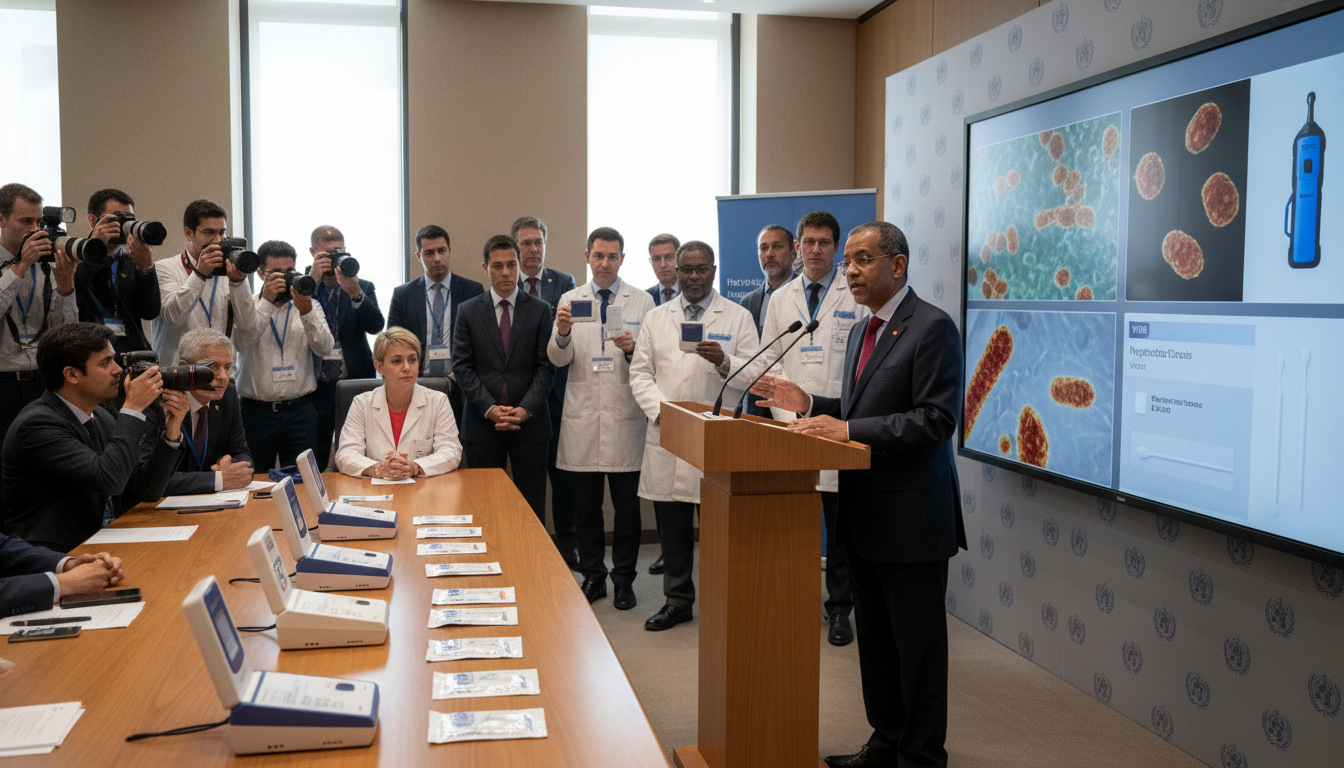
WHO urges countries to scale up near point-of-care TB tests and tongue swabs
WHO urges scale-up of near point-of-care TB tests, tongue swabs and sputum pooling to expand diagnosis, reduce costs and speed treatment worldwide now.
The World Health Organization on World TB Day called for rapid expansion of near point-of-care TB tests to accelerate diagnosis and treatment of tuberculosis. The new WHO guidance promotes portable, battery-powered diagnostics and easy-to-collect tongue swabs as ways to reach people where they seek care. Officials said these approaches could lower cost, shorten time to results and help identify cases that are currently missed.
WHO issues new guidance for near point-of-care TB tests
The agency’s guidelines recommend low- and moderate-complexity devices that can be deployed close to clinics and community settings. These portable tests can deliver results in under an hour and operate on battery power, making them suitable for remote or resource-limited areas. WHO stressed that wider adoption could reduce reliance on centralized laboratories and shorten the time between testing and treatment initiation.
Tongue swabs and sputum pooling recommended to increase reach
The guidance also endorses tongue swab sampling for adults and adolescents who cannot produce sputum, enabling testing of populations previously hard to reach. Sputum pooling, where several samples are combined and tested together, is recommended as a cost-saving strategy when resources are constrained. Both approaches aim to expand testing coverage and improve detection of rifampicin-resistant TB.
Faster, cheaper diagnostics expected to cut delays and transmission
WHO highlighted that many of the near point-of-care devices cost less than half of existing molecular diagnostics, which could make large-scale deployment more affordable. Rapid onsite results allow clinicians to start treatment the same day, reducing transmission and the risk of severe outcomes. The agency also noted these tools can be adapted to test for other pathogens, potentially integrating TB screening into broader one-stop diagnostic services.
Funding shortfalls and logistical barriers risk reversing progress
Despite progress, the agency warned that cuts in global health funding and persistent diagnostic bottlenecks threaten gains made since 2000. TB remains a leading infectious killer, with thousands of deaths and tens of thousands of new cases each day, according to WHO figures cited at the event. Uptake of rapid diagnostics has been limited in many settings by cost, supply constraints and dependence on sample transport to central labs.
World TB Day 2026 theme reinforces country and community leadership
Under the theme Yes We can end TB Led by countries powered by people, WHO urged governments to integrate these diagnostics into national testing networks. The agency called for people-centered care, community leadership, resilient health systems and multisectoral action to address the social drivers of TB. WHO recommended protecting essential TB services even amid competing health priorities and global crises.
Research investment and vaccine efforts must accelerate
WHO cautioned that diagnostic innovation alone will not end the epidemic and highlighted a persistent funding gap for TB research. Annual global investment for TB research remains well below the estimated need, leaving shortfalls in new diagnostics, drugs and vaccines. The agency said it is coordinating initiatives such as a vaccine accelerator to align governments, researchers and funders and to fast-track equitable access to new tools.
The WHO appeal on World TB Day frames near point-of-care TB tests and simpler sample methods as practical steps to close diagnostic gaps and save lives. Scaling up these technologies will require political commitment, sustained financing and coordinated rollout within national health systems. If countries act quickly to adopt the guidance, the agency believes testing can become faster, more equitable and more integrated into primary health care, helping to drive down TB deaths and transmission in the years ahead.

