
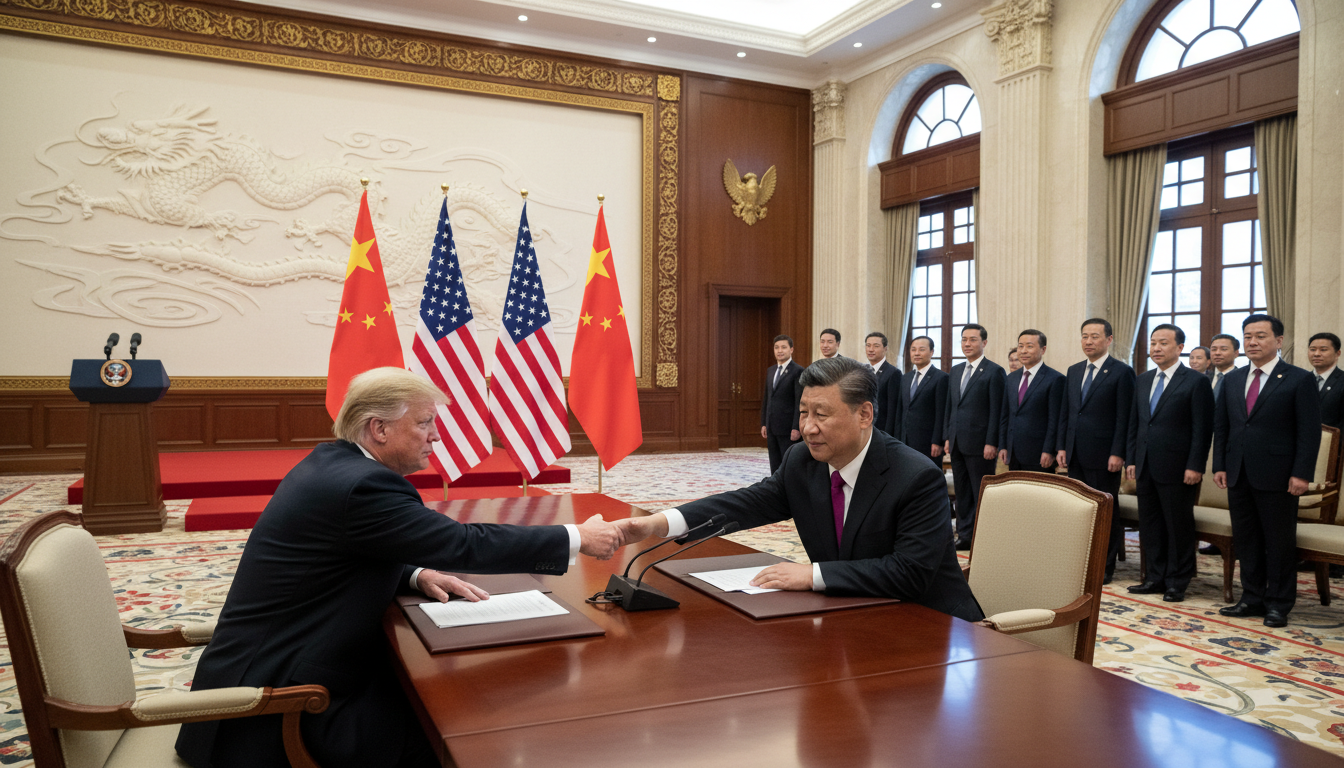
Trump-Xi Summit in Beijing: Xi Issues Taiwan Warning as Leaders Pledge to Reset U.S.-China Relations
At the Trump-Xi Summit in Beijing on May 14, 2026, Chinese President Xi Jinping delivered a stark warning on Taiwan as both leaders sought to present a calmer bilateral tone while acknowledging deep policy differences. The meeting opened with a ceremonial handshake and conciliatory language aimed at stabilizing strained ties between the world’s two largest economies. The summit is being watched closely for concrete steps on trade, technology and security that could shape regional dynamics across Asia.
Leaders Begin Bilateral Talks in Beijing
President Donald Trump and President Xi Jinping met at a formal bilateral session in Beijing on May 14, 2026, signaling an intention to reset communications after months of tension. The opening moments were marked by a warm handshake and public praise, with Mr. Trump calling his counterpart a “great leader” and promising that relations would improve. Officials framed the summit as a chance to rebuild predictability even as divergent strategic aims remained evident.
Diplomatic aides said the agenda combined high-profile economic issues with sensitive security matters, reflecting both sides’ interest in reducing volatility. Early exchanges emphasized restoration of channels for crisis management and information-sharing to prevent miscalculation.
Xi Issues Direct Warning on Taiwan
During opening remarks, President Xi issued a clear warning regarding Taiwan, reiterating longstanding Chinese red lines and the centrality of the island issue to Beijing’s core interests. Xi framed Taiwan’s status as non-negotiable and cautioned against actions that might alter the status quo, signaling expectations for U.S. restraint. The comments were a reminder that despite upbeat rhetoric, deep policy clashes persist on matters of sovereignty and regional security.
U.S. officials responded with carefully measured language, stressing commitment to peace and stability in the Taiwan Strait while underscoring continued support for Taipei’s defensive needs. Analysts say the public exchange reflects a balancing act: each leader aimed to reassure domestic constituencies without closing off diplomatic space.
Economic and Trade Issues Dominate Agenda
Trade, investment, and technology decoupling were central components of the summit agenda, with both sides describing economic stability as a priority for global markets. Talks focused on tariffs, export controls, and supply-chain resilience, and negotiators signalled interest in targeted steps to ease tensions in sectors where mutual dependence remains high. Business groups from both countries had urged leaders to seek predictable rules that would reduce the economic costs of rivalry.
Observers noted that while sweeping trade accords were unlikely, smaller confidence-building measures—such as resuming regulatory dialogues and clarifying restrictions on sensitive technologies—could emerge as tangible outcomes. Markets reacted cautiously to the summit’s opening, awaiting detailed announcements on specific economic measures.
Security Differences Remain Central
Beyond Taiwan, officials touched on a range of security concerns that have strained U.S.-China relations, including naval activity in the South China Sea, cyber threats, and regional alliances. Both sides affirmed an interest in preventing unintended incidents at sea and in the air, with proposals to expand military-to-military communication channels. Yet mutual suspicion over strategic intentions continued to shape the tenor of discussions.
Analysts warned that institutional gaps and diverging threat perceptions mean confidence-building will be incremental and challenging. Military planners on both sides are expected to monitor the implementation of any agreed protocols closely, as trust remains limited.
Public Messaging and Domestic Politics
The summit’s public choreography underscored each leader’s need to signal strength at home while managing international perceptions abroad. Mr. Trump’s effusive praise and pledge that ties would be “better than ever” aimed to project control and diplomatic achievement to his domestic audience. President Xi’s firm stance on Taiwan reinforced his commitment to sovereignty issues that are central to Beijing’s political legitimacy.
Political commentators noted that both leaders face internal pressures that constrain flexibility, making carefully calibrated messaging—and limited, verifiable actions—more likely than sweeping concessions. The interplay between domestic audiences and strategic objectives will shape follow-up diplomacy in the coming weeks.
Outcomes, Follow-up and Regional Implications
Officials indicated that detailed outcomes would be announced after working-level meetings and that the summit was intended to produce both symbolic and practical steps. Possible next moves include reopening trade and regulatory dialogues, establishing hotlines for crisis prevention, and negotiating narrow agreements on technology transfers and export controls. Any such measures would be scrutinized for their durability and enforcement mechanisms.
Regional capitals from Tokyo to Canberra and capitals in Southeast Asia will watch the summit’s aftermath for signs of altered behavior in Beijing or Washington. Stability in U.S.-China ties carries direct implications for supply chains, defense planning, and diplomatic alignments across East Asia.
The Trump-Xi Summit in Beijing on May 14, 2026, therefore combined a display of diplomatic rapprochement with a reminder of enduring strategic cleavages, particularly over Taiwan and security policy. How the leaders translate summit rhetoric into verified actions will determine whether the meeting marks a genuine turning point or a temporary easing of tensions.

