
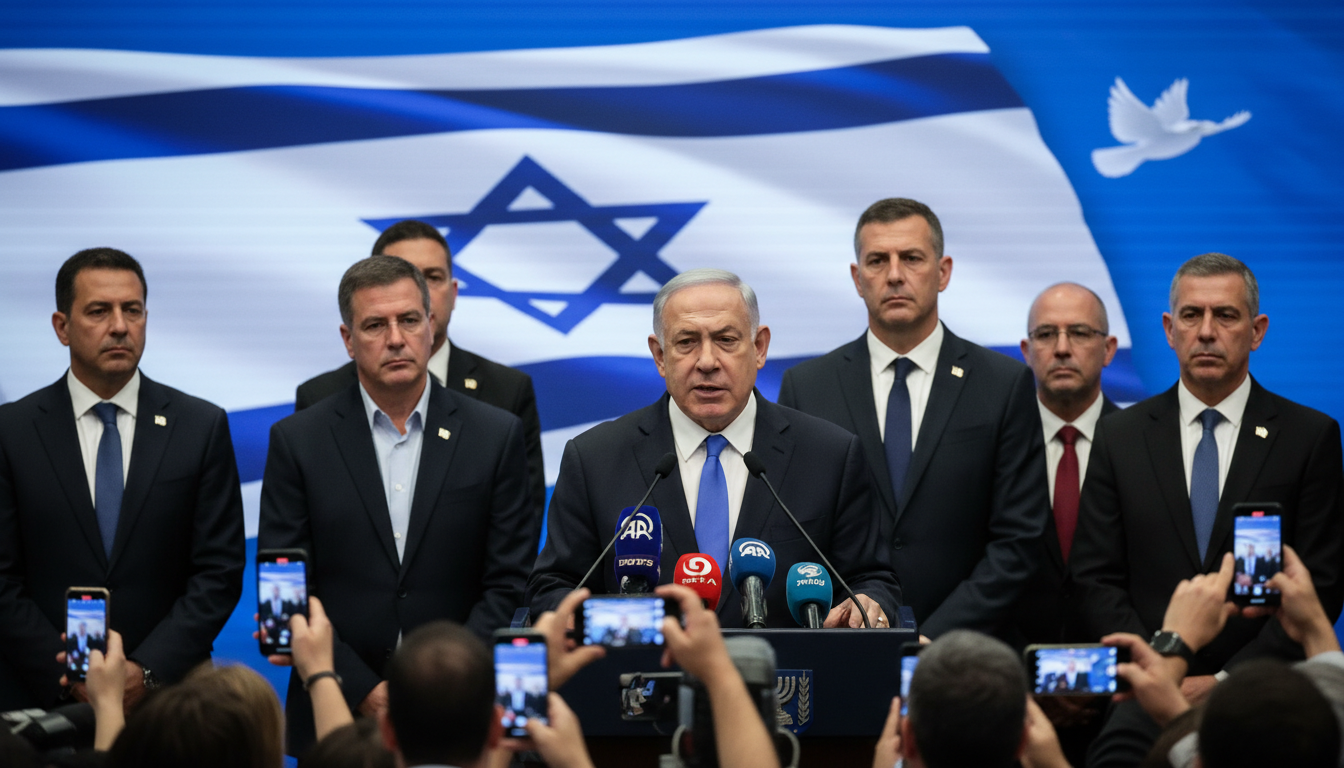
Israel ceasefire with Hezbollah triggers domestic backlash as Netanyahu vows to press on
Israel ceasefire with Hezbollah accepted under U.S. pressure, but Prime Minister Netanyahu says he will continue efforts to disarm Hezbollah and hold newly created buffer zones. (apnews.com)
Netanyahu Accepts U.S.-Backed 10-Day Ceasefire
Netanyahu announced that Israel would accept a 10-day truce with Hezbollah after President Donald Trump publicly declared a temporary halt to hostilities between Israel and Lebanon. The announcement, framed by U.S. mediation, took effect amid heavy international attention and relief along parts of the border. (apnews.com)
Prime Minister’s Claim of Major Military Gains
In a video address following the ceasefire announcement, Netanyahu asserted that Israeli operations had degraded Hezbollah’s missile and rocket capacities and that Israeli forces had created an expanded “security zone” inside southern Lebanon. He framed the campaign as producing significant battlefield gains while acknowledging that full disarmament of Hezbollah would require prolonged efforts. International reporting described his remarks as emphasizing military achievements even as the government accepted the temporary pause. (newsweek.com)
Domestic Backlash and Polling Shifts
The ceasefire has prompted criticism at home from opposition figures and segments of the public who see the pause as imposed rather than earned. Analysts and local polling reported a dip in public confidence in the government’s ability to translate military operations into lasting strategic gains, fueling sharper scrutiny of the prime minister’s performance. Commentators say that political opponents have seized on the agreement as evidence of diplomatic overreach that undercut Israel’s aims. (aljazeera.com)
Election Clock and Legal Pressure on Netanyahu
Netanyahu faces the coming national election, scheduled by law to be held no later than October 2026, while also contending with long-running corruption cases that have shadowed his premiership. The political calculus is acute: critics warn that appearing to be sidelined by an externally brokered truce could depress support among core right‑wing voters, even as allies argue public security must take priority. Observers note that legal and electoral timelines will shape how long-term strategy toward Hezbollah and Iran is debated in Jerusalem. (investing.com)
Security Posture: Buffer Zone and Continued Operations
Israeli military and political leaders say forces will retain positions in southern Lebanon to consolidate what they describe as a buffer zone meant to keep anti‑tank teams and rocket launchers away from border communities. Officials maintain that halting active combat does not mean abandoning the objective of degrading Hezbollah’s operational capabilities, and they have warned of resuming strikes if violations occur. Military statements and analysts emphasize that the pause offers space for diplomacy but not necessarily a permanent cessation of military pressure. (newsweek.com)
Ceasefire’s Regional Diplomatic Ripple Effects
U.S. mediation of the truce was closely linked to broader diplomatic moves aimed at pausing the wider conflict with Iran and opening channels for negotiation, according to reporting on the agreement’s diplomatic context. The temporary pause along the Lebanon frontier has already been cited by officials as an opening for further talks, but regional actors and analysts caution that the arrangement is fragile and dependent on rapid follow-up diplomacy. The U.S. role in pressing both sides to agree has become a focal point of debate in capitals across the region. (apnews.com)
Netanyahu’s public framing of battlefield gains and a continued commitment to disarming Hezbollah leaves Israel at a diplomatic crossroads: the 10‑day ceasefire provides breathing room for talks, but also exposes the prime minister to intensified domestic political risk if voters conclude strategic objectives were not met. Observers say the coming days will test whether the pause becomes a pathway to a durable agreement or a brief interlude before a return to violence. (apnews.com)

