
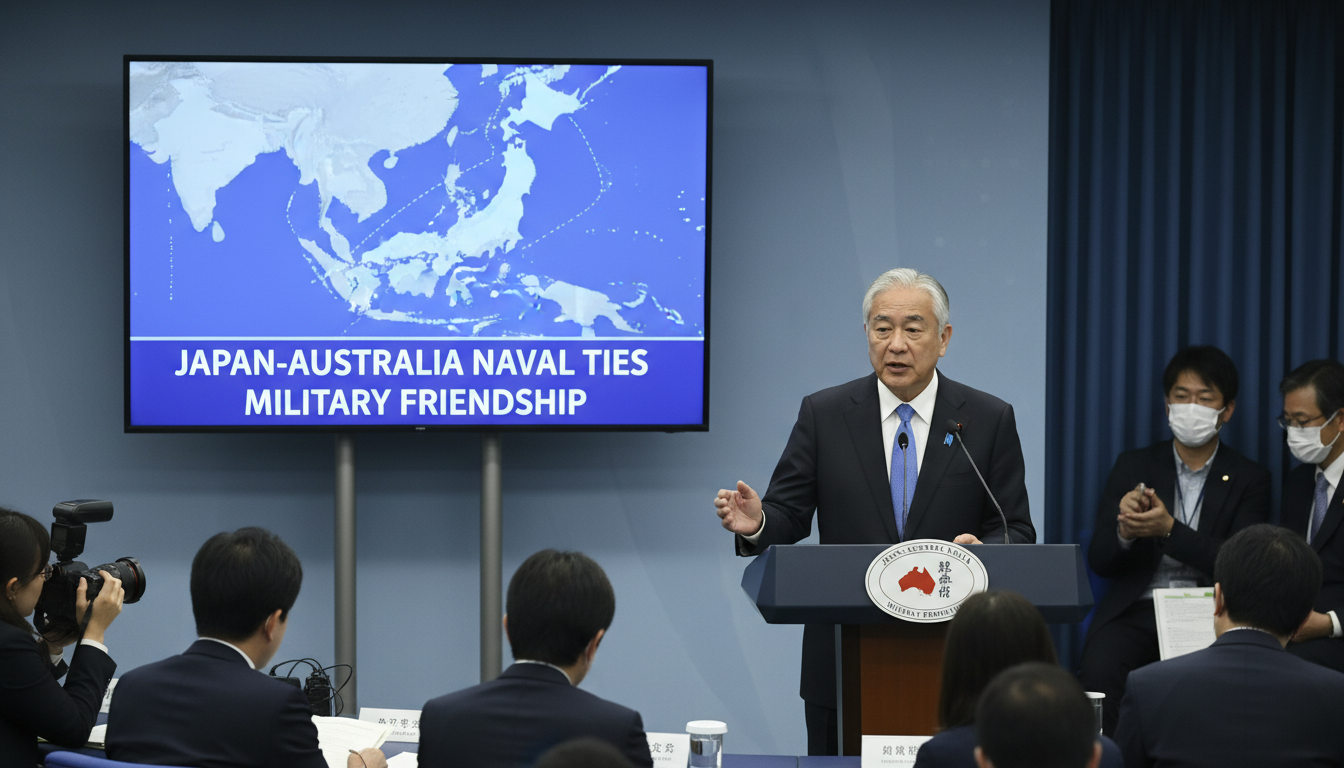
Japan Defense Minister Frames Japan-Australia Military Ties as “Friendship Between Soldiers”
Government clarifies Self-Defense Forces stance after Koizumi’s X post; he says term was used to explain top-level cooperation and exchanges.
Japan’s defense minister, Shinjiro Koizumi, sparked debate after posting on X on April 19 that the relationship between Maritime Self-Defense Force Chief Saito Satoshi and a senior Australian navy officer reflected “friendship between soldiers,” a phrase Koizumi said on April 21 he used to describe Japan-Australia military ties in clear terms. The post, which accompanied photos from an official visit to Australia, prompted questions because the government has long maintained that the Japan Self-Defense Forces differ from conventional militaries.
Koizumi’s X post and its wording
Koizumi’s social media update described the interaction between Saito Satoshi, the Chief of Staff of the Maritime Self-Defense Force, and a senior Australian naval officer as a “close relationship” and referred to “friendship between soldiers.” The post included images from the recent bilateral visit and emphasized personal rapport at senior levels.
The wording drew attention because the term “soldiers” is not commonly used in official descriptions of the Self-Defense Forces, where careful language has been deployed historically to reflect Japan’s postwar constitutional constraints. Koizumi later addressed the wording at a press conference, saying his intent was to make the nature of high-level exchanges and unit cooperation easier for the public to understand.
Government position on the Self-Defense Forces and terminology
The Cabinet’s longstanding line is that the Self-Defense Forces are not identical to typical military forces long used as a standard term in international discourse. Officials have repeatedly explained that legal and historical considerations shape the way Japan refers to its defense institutions.
At the April 21 briefing, Koizumi acknowledged that government statements maintain that the Self-Defense Forces differ from conventional militaries, but he also pointed out that the forces possess attributes recognized under international law. He said his post aimed to convey practical cooperation built through exchanges and joint training rather than to redefine legal status.
Details of the Japan-Australia defence relationship
Japan and Australia have expanded defense cooperation in recent years at multiple levels, from ministerial visits to maritime exercises and information sharing. Koizumi cited top-level exchanges and joint unit drills as concrete examples of the relationship he sought to describe in lay terms.
Officials on both sides have emphasized interoperability and coordination in areas such as maritime security and disaster response. Koizumi’s use of the phrase reflected an attempt to capture both personal ties between senior officers and institutional collaboration between the two navies.
Political sensitivity and recent social media history
Koizumi’s social media activity has previously provoked scrutiny. On April 12, during a Liberal Democratic Party convention, he posted a photograph with an Earth Force unit member who had sung the national anthem at the event; that post was deleted shortly afterward. Critics and opposition lawmakers have pointed to such incidents as evidence of the political risks inherent in rapid social media commentary by sitting ministers.
The April 19 post reignited debate about how ministers should communicate sensitive subjects involving the Self-Defense Forces. Some lawmakers and commentators have argued that imprecise language can blur important legal and constitutional distinctions, while supporters say plain language can help the public grasp otherwise technical aspects of defense cooperation.
Implications for public perception and diplomacy
The episode underscores how terminology matters domestically and internationally when discussing the Self-Defense Forces and alliances. Word choice by high-profile officials can shape public perceptions about the nature and direction of Japan’s security policy, especially amid broader regional tensions.
From a diplomatic standpoint, describing ties in personable terms reinforces the message of close cooperation with partners such as Australia. At the same time, Tokyo must balance that message against longstanding domestic sensitivities about the role and characterization of the Self-Defense Forces.
Koizumi’s clarification on April 21 stressed communication rather than a policy shift, but the exchange is likely to prompt renewed attention to ministerial language and the expectations for official statements on defense matters.
Koizumi said he used the phrasing to make visible the results of top-level engagement and unit-level cooperation, and he reiterated that his intention was explanatory rather than doctrinal. The government’s official view remains that the Self-Defense Forces occupy a distinct legal position, and the minister vowed to be mindful of wording in future public communications.

