
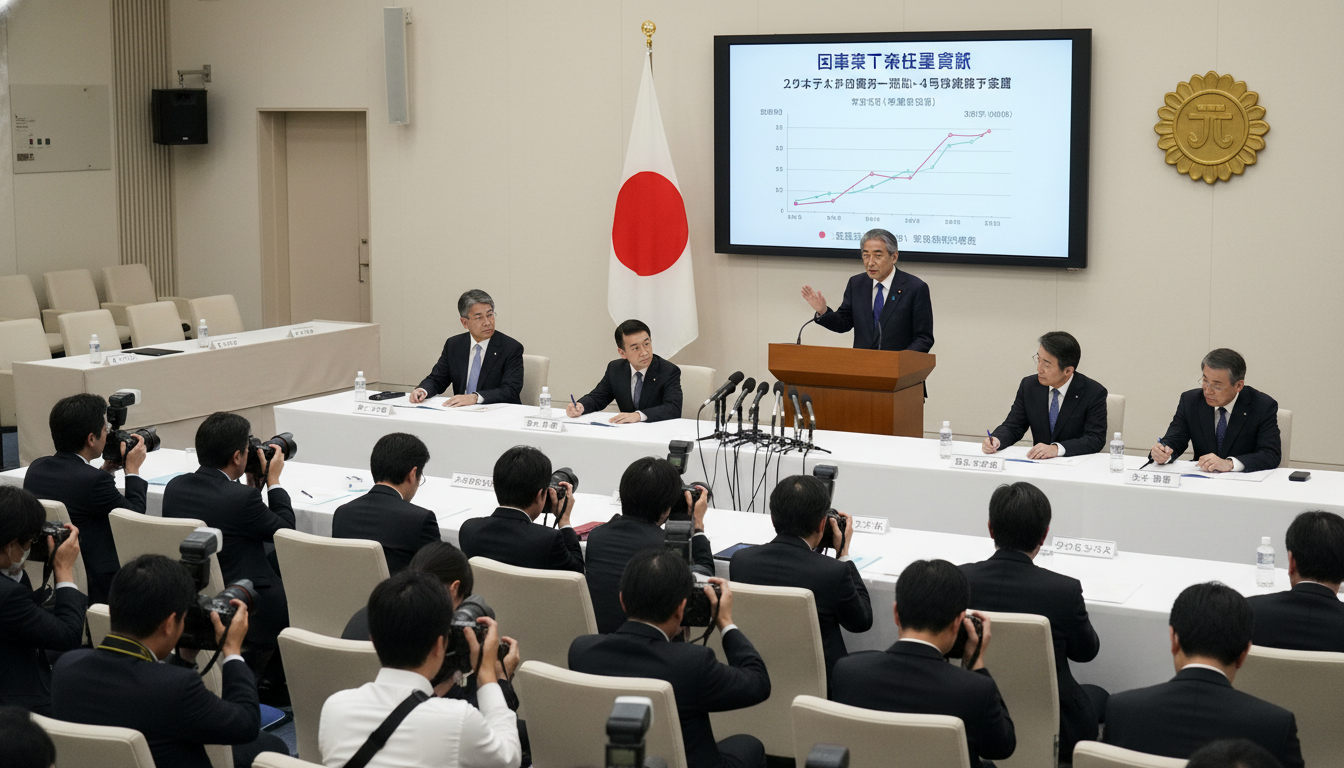
3.11 Trillion-Yen 2026 Supplementary Budget Passes Diet, Earmarks ¥2.5 Trillion for Middle East Response and Fuel Aid
Japan’s 2026 supplementary budget was approved by the House of Councillors on June 5, allocating ¥3.1135 trillion in general-account spending to address energy price surges, with ¥2.5 trillion placed in a new contingency fund for Middle East-related responses and fuel subsidies.
Diet Approves 3.1135 Trillion-Yen Supplementary Budget
The House of Councillors passed the 2026 supplementary budget on June 5 by a majority vote, enacting measures to shield households and businesses from rising energy costs linked to tensions in the Middle East. The package sets general-account expenditures at ¥3.1135 trillion and establishes a new ¥2.5 trillion contingency fund labeled for response to the Middle East situation and related needs. Lawmakers signaled that a primary use of the fund will be to secure financing for continued gasoline subsidies and other short-term relief measures.
The supplementary budget also includes a separate ¥513.5 billion allocation to the general contingency reserve, intended to plug gaps and smooth payments for electricity and gas bill subsidies planned for July through September. Government officials indicated the extraordinary spending will be covered entirely by deficit-covering government bonds, reflecting the administration’s priority to provide immediate relief despite fiscal trade-offs.
Breakdown of Key Allocations and Policy Priorities
The new ¥2.5 trillion contingency fund is positioned as a flexible reserve to respond to energy supply and price shocks arising from international instability. Officials have signaled the cash will be available to sustain gasoline subsidies, which the government views as a politically sensitive instrument to curb inflationary pressure at the pump. The ¥513.5 billion in general contingency funds is described as a reserve to ensure planned electricity and gas bill supports for summer months can be paid in full.
Beyond fuel and utility relief, the budget contains smaller, targeted allocations to assist vulnerable households and maintain economic stability as energy costs ripple through supply chains. Cabinet sources say the measures are designed to be temporary and contingent on developments in global energy markets, but they stop short of specifying triggers for withdrawal or further replenishment of the funds.
Voting Alignments and Parliamentary Debate Dynamics
The vote saw the ruling Liberal Democratic Party and coalition partner Nippon Ishin no Kai (Japan Innovation Party) backing the bill, with unexpected support from opposition groups including the Democratic Party for the People and Team Mirai. Opponents included the Constitutional Democratic Party, Komeito, Sanseitō and the Japanese Communist Party, which criticized both the scale of bond-financed spending and the decision to preserve gasoline subsidies rather than redirect resources to long-term energy transition measures.
Debate on the supplementary budget was unusually brief, with only one day of deliberation in each chamber of the Diet, a procedural pace that drew criticism from some opposition figures. Lawmakers who opposed the accelerated timetable argued it limited scrutiny of fiscal assumptions and the design of support schemes, while proponents said swift action was necessary to stabilize prices ahead of summer demand peaks.
Fiscal Impact and Financing by Deficit Bonds
The government plans to finance the entire supplementary package through issuance of deficit-covering bonds, a decision that raises questions about medium-term fiscal sustainability. Officials acknowledged that reliance on bond financing will widen the fiscal deficit for the 2026 fiscal year but emphasized the measures target an urgent and temporary shock to domestic energy costs. Economists and budget watchdogs are expected to press the administration for a clear plan to consolidate public finances once global energy volatility subsides.
Treasury ministry sources say issuance schedules and bond maturities will be managed to avoid market disruption, but analysts warn that repeated emergency bond issuance could constrain fiscal flexibility and increase interest costs over time. The government faces a balancing act between immediate relief and preserving fiscal credibility ahead of longer-term priorities such as social security reform and demographic-driven spending pressures.
Prime Minister’s Remarks During Budget Committee Session
During the House of Councillors budget committee session, Prime Minister Sanae Takaichi addressed a separate controversy involving a report that one of her local aides was implicated in social media posts disparaging other candidates during the LDP leadership contest. The prime minister disputed the authenticity of a recording cited in the report and said she had not confirmed any direct connection between her office and the video’s production. Her comments came as lawmakers questioned ties between political staff and online disinformation, underscoring how personnel matters intersected with the budget debate.
Government defenders argued the urgent need to pass the supplementary budget outweighed the timing of the personnel controversy, while critics said the episode highlighted governance risks that merit fuller investigation. The prime minister’s remarks did not alter the course of the vote, and the supplementary budget passed as scheduled.
The supplementary budget’s passage marks the latest in a series of fiscal interventions as Tokyo navigates external shocks and domestic pressures to protect consumers and industry. The measures will take immediate effect as the government begins administrative implementation and disbursal of funds.

