
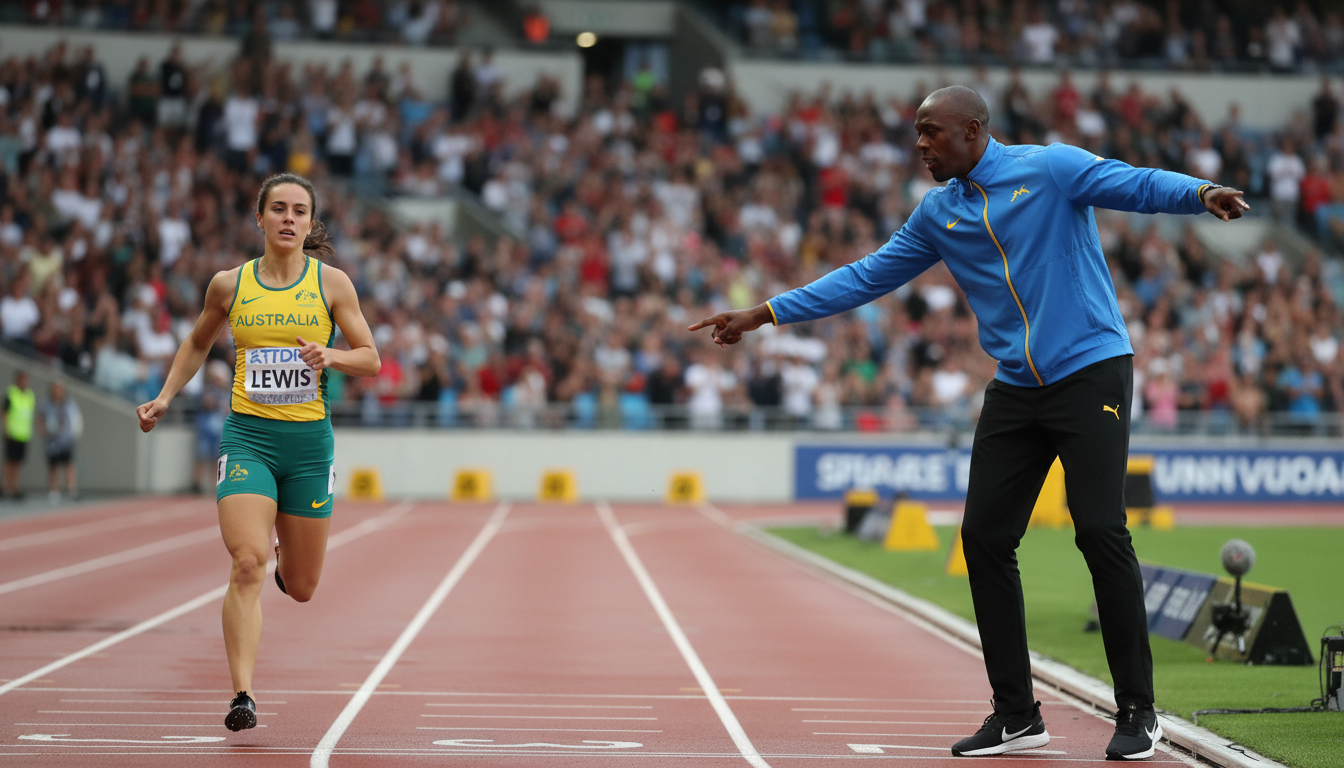
Usain Bolt Urges Strong Support Team for Gout as Australian Sprint Sensation Prepares for Diamond League Debut
Usain Bolt urges Gout to build a strong support network to stay focused after his national wins, as the Australian sprint sensation readies for a Diamond League debut in Oslo.
Gout, the 18-year-old Australian sprint prodigy, has been urged by eight-time Olympic champion Usain Bolt to surround himself with a dependable support team as he navigates rising fame. Bolt warned that distractions can derail promising careers and stressed the importance of guidance at an early stage. The call for structure follows Gout’s standout performances at the national championships, where he posted 19.67 seconds for the 200 metres and 10.21 seconds in the under-20 100m.
Bolt’s caution and counsel for Gout
Usain Bolt, holder of the 100m and 200m world records, remarked that young athletes face intense attention that can shift their focus away from the track. He advised that the right advisers, coaches and family around Gout will be crucial to maintaining progress. Bolt’s comments underline a pattern familiar in elite sprinting, where early acclaim must be balanced with careful long-term planning.
Bolt’s argument is not only about avoiding distractions but about preserving the athlete’s primary advantage—consistent training and competition focus. He emphasized that external opportunities and pressures will always exist, and that missteps off the track can quickly erase on-track gains. The message was framed as practical mentorship rather than criticism.
National championship results that elevated Gout
Gout’s recent victories at the Australian Athletics Championships captured national attention and provided the statistics that now underpin the comparisons to global greats. His 19.67 in the 200m secured the senior title and showcased an ability to sustain speed across the curve and straightaway. The under-20 100m win, clocked at 10.21 seconds, added confirmation of his range and speed over shorter distances.
Those times, achieved while still a teenager, are notable in Australia’s sprinting landscape and have prompted discussions about his potential on the world stage. Observers have pointed to his physical profile, technical poise and race composure as signs that he can transition from national standout to international contender. Supporters also highlight his background as the son of South Sudanese immigrants, a detail that adds to the narrative of rapid ascent.
Brisbane 2032 prospects and national expectations
Talk of Gout as a potential Brisbane 2032 medallist has already entered public conversation, reflecting both optimism and the weight of expectation. Australia will host the Olympics in Brisbane, and the prospect of a home-grown sprint star competing for gold intensifies scrutiny from media, sponsors and selectors. For Gout, a measured development path remains the primary recommendation from coaches and former champions alike.
Meeting such expectations will demand incremental progress, targeted competition exposure and careful workload management. National athletics authorities and Gout’s personal team will need to coordinate long-term planning, including season targets, recovery protocols and international racing experience. The pathway to 2032 is long; consistent year-to-year improvement will be the clearest indicator of medal potential.
Diamond League debut in Oslo scheduled for June 10
Gout is scheduled to make his Diamond League debut in Oslo on June 10, lining up against an elite field that includes reigning Olympic champion Letsile Tebogo of Botswana. The Diamond League stage represents a significant step up in competition depth and media attention, offering both a test of form and an opportunity to refine race execution. For a young athlete, the meeting is as much about learning to manage race-day conditions as it is about placement.
Coaches view the Diamond League appearance as a controlled exposure to world-class competition rather than a do-or-die assignment. Performance metrics from that race—start reaction times, drive phase efficiency and finish speed—will provide concrete data for training adjustments. The experience should also clarify how Gout performs under intense international scrutiny.
Technical strengths and comparisons with elite sprinters
Analysts note Gout’s combination of speed endurance and top-end velocity as key attributes that have drawn comparisons to sprinting legends. While external comparisons to Usain Bolt underscore public fascination, technical evaluators point to distinct differences in running economy and biomechanics that Gout must refine. Incremental gains in strength, turnover and race strategy will determine whether those comparisons become more than headlines.
Bolt’s world records—9.58 for 100m and 19.19 for 200m—remain the benchmark, but contemporary sprinting depth means emerging talents must progress through staged improvements. Gout’s current times place him among the fastest young sprinters globally, yet translating junior success into senior podium finishes requires adaptation to faster fields and tactical races.
Management, support structures and career sustainability
Experts recommend a layered support system for Gout: an experienced coaching team, sports science and medical staff, mental skills training and prudent commercial advisors. Such a structure can buffer the athlete from exploitative deals and ensure decisions are made with competitive longevity in mind. Agents and sponsors have roles to play, but oversight from trusted mentors and national federation resources is often decisive.
Mental health and media training are equally important components of that architecture. Young athletes benefit from learning to manage interviews, social media attention and sponsorship obligations without compromising preparation. Clear boundaries and a primary focus on training blocks will help preserve Gout’s development trajectory.
As Gout prepares for international competition, the balance between seizing opportunity and protecting progress will shape his next seasons. Upcoming races will provide benchmarks for his transition to senior ranks, and the composition of his support team will be watched as closely as his times on the track.

