
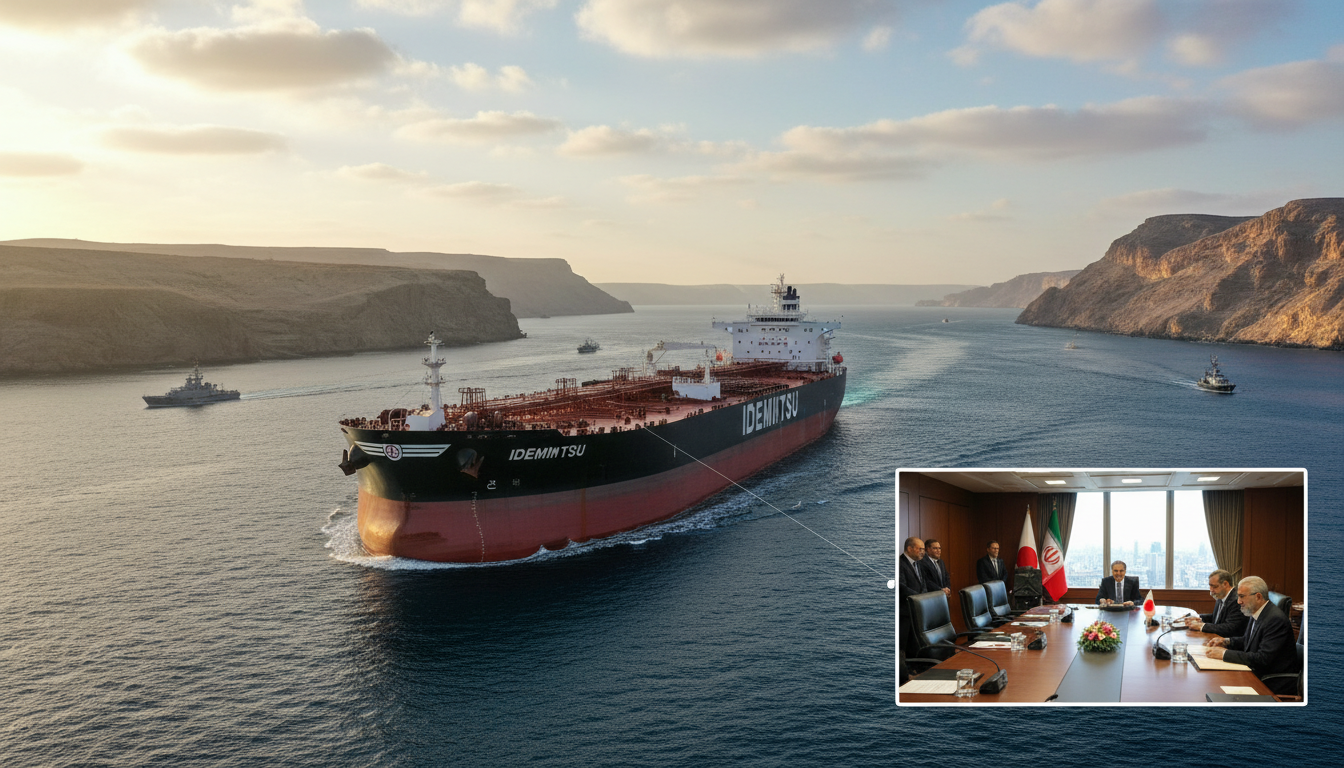
Japan–Iran friendship spotlighted as Idemitsu Maru clears Strait of Hormuz
Japan–Iran friendship draws attention after the Panama‑flagged Idemitsu Maru transited the Strait of Hormuz on April 28, 2026, ending a hold in the Persian Gulf.
The Panama‑flagged Idemitsu Maru, a large oil tanker operated by Idemitsu Kosan, navigated the Strait of Hormuz on April 28, 2026, after being held in the Persian Gulf amid Iran’s effective partial blockade of the waterway. The vessel, reported to be carrying roughly 2 million barrels of crude bound for Nagoya, completed the passage with what Iranian state media described as official permission to transit. On April 29, the Iranian embassy in Tokyo posted on X a message referencing the 1953 Nissho Maru episode as “a testament to the long friendship between our two countries,” drawing renewed attention to the historical ties between Japan and Iran.
Idemitsu Maru’s transit and immediate reactions
The Idemitsu Maru’s passage marked one of the first instances in recent weeks of a Japan‑bound commercial vessel navigating the Strait amid heightened tensions in the region. Iranian reporting emphasized that the ship passed with authorization from authorities, while the tanker continued on a course for Nagoya, a major refining and industrial hub in central Japan. The movement has prompted close monitoring by shipping analysts and energy traders given the strategic importance of the strait for global oil flows.
Diplomatic note from Tehran’s Tokyo mission
The Iranian embassy’s April 29 post on X invoked the 1953 Nissho Maru episode and framed it as evidence of longstanding friendship with Japan. The reference, shared publicly on social media, was unusual in tone for recent official messaging and drew immediate interest from Japanese observers. The embassy’s comment underlined how historical episodes continue to be used in diplomatic narratives between the two countries.
Historical roots of Japan‑Iran ties
Scholars and diplomats point to centuries‑old connections that predate modern nation‑state diplomacy, with exchanges along routes tied to the Silk Road and maritime trade. Japanese museums, including the Shosoin repository in Nara, hold artifacts such as Sasanian‑period Persian glassware that attest to cultural exchange dating back to the 7th century. During the Meiji period, a Japanese envoy visited Qajar Persia in 1880, and formal bilateral diplomatic relations were first established in 1929.
Interruptions and restoration of formal ties
Formal relations between Tokyo and Tehran were interrupted during World War II, when diplomatic ties were severed in 1942 amid the global conflict and the pressures of larger powers. Relations were restored in 1953, a year that also entered bilateral memory in complex ways and is now periodically recalled in public discourse. That postwar restoration set the stage for decades of economic engagement, particularly in energy and trade, even as global politics shifted around both countries.
Contemporary dynamics: energy, politics and public perceptions
In recent years Iran has faced growing international isolation over its nuclear program and vocal opposition to U.S. and Israeli policies, yet many Iranians continue to view Japan with a degree of affinity. Japanese imports of Iranian oil have historically played a pragmatic role in Tokyo’s energy mix, and commercial ties have often persisted even when diplomatic relations were tested. Analysts say that economic interdependence, cultural familiarity and decades of people‑to‑people contact help sustain a distinct bilateral relationship that can diverge from broader geopolitical alignments.
Japan now confronts a balancing act between maintaining secure energy supplies and navigating allied concerns over Tehran’s regional posture. The transit of the Idemitsu Maru has prompted questions in policy circles about shipping security, insurance and the contingency planning of Japanese energy companies. Maritime experts also highlight the operational complexities for tankers sailing through a narrow chokepoint during periods of tension.
The Idemitsu Maru episode and Tehran’s public invocation of past incidents underscore how historical memory and present‑day commerce interact in the Japan‑Iran relationship. As the tanker proceeds to its destination and diplomatic channels register the exchange, observers in both Tokyo and Tehran are watching how practical energy considerations and long‑standing ties will shape the next phases of engagement between the two countries.

