
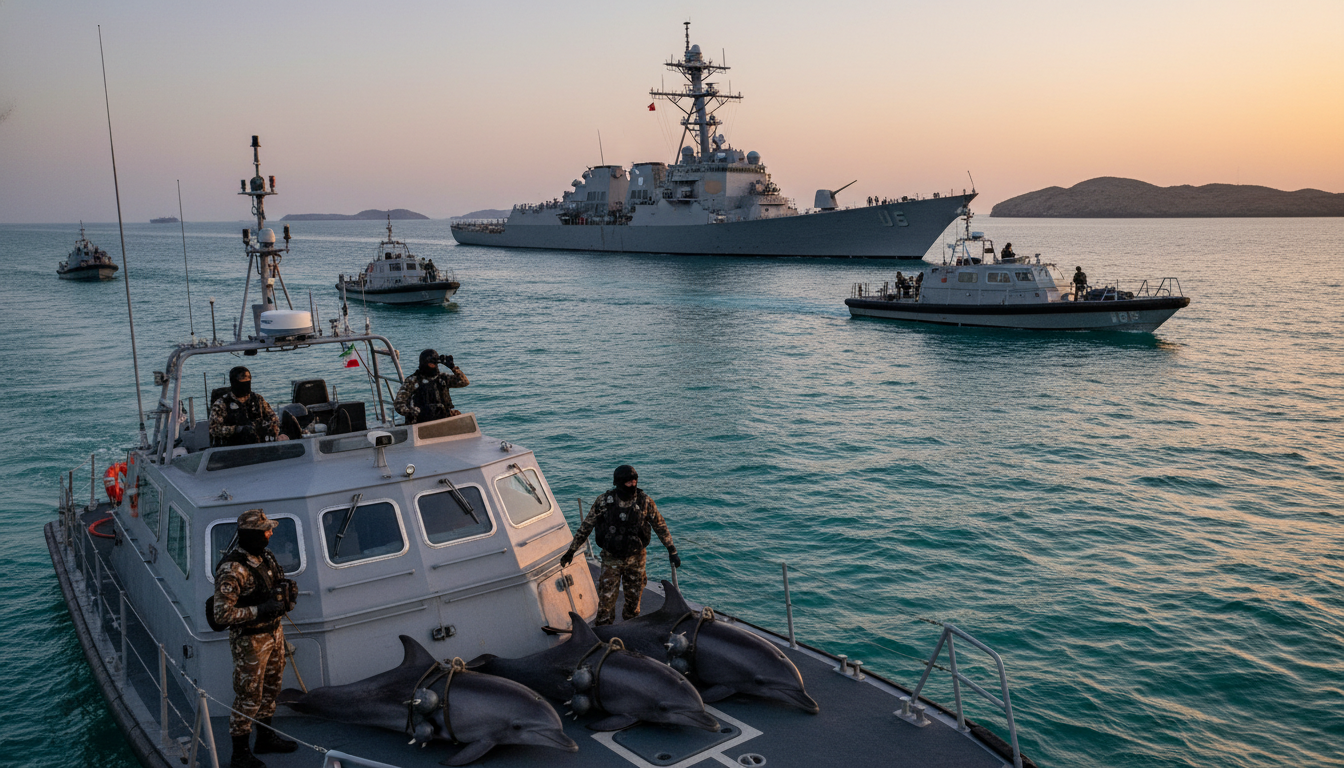
Iran May Deploy Mine-Equipped Dolphins as Gulf Naval Standoff Continues
Amid a protracted U.S. maritime blockade, Iranian officials have raised the prospect of using mine-equipped dolphins against U.S. naval forces in the Persian Gulf, a move that could complicate navigation and escalate regional tensions.
Stalemate over the Persian Gulf and Strait of Hormuz
Since late February 2026, commercial traffic through the Persian Gulf and its chokepoint at the Strait of Hormuz has failed to return to normal after U.S. and allied strikes on Iranian targets, leaving a de facto maritime blockade in place. Efforts to negotiate a second ceasefire have been intermittent, and both Tehran and Washington continue a mix of diplomatic engagement and strategic signaling. The prolonged disruption has alarmed shipping companies and regional governments that rely on the routes for energy exports and global trade.
Iran signals unconventional options, including marine mammals
In statements conveyed publicly at the end of April, Iranian officials warned they might resort to previously unused weapons and tactics in response to the maritime pressure, explicitly raising the possibility that dolphins fitted with explosive devices could be used against U.S. ships. The reference to mine-equipped dolphins marks an escalation in rhetoric and points to Tehran’s willingness to highlight asymmetric tactics as leverage in wider bargaining over the blockade. Military planners in the region are treating the claim with caution while assessing its plausibility and potential consequences for neutral shipping.
U.S. military research shows long history of marine mammal programs
The notion of using trained marine mammals in naval operations is not new: U.S. naval research dating back to the late 1950s and Cold War-era programs explored dolphins and sea lions for sonar research, mine detection, and equipment delivery. Declassified and public Navy documents from later decades describe the animals’ exceptional biosonar capabilities and their use in locating submerged objects, though official U.S. statements have repeatedly rejected the idea that dolphins were weaponized for offensive strikes. Analysts note that decades of research provide technical foundations that could inform, or be invoked to justify, contemporary claims of marine mammal militarization.
Recent analyses point to similar patterns elsewhere
Western defense assessments in recent years have flagged expanded use of trained marine mammals in conflict zones, citing instances where occupying forces increased numbers of trained animals for port security or counter-diver operations. A 2023 defense analysis highlighted concerns over the use of marine mammals in the Black Sea region, where activity around Sevastopol—an occupied naval hub—appeared to include steps to bolster underwater surveillance. Such precedents demonstrate how states can adapt nontraditional tools to maritime security roles, heightening concern about novel threats to ports and harbors.
Operational, legal and humanitarian complications for shipping
Deploying mine-equipped dolphins would pose acute challenges for naval commanders and commercial operators, because underwater mammal behavior is difficult to predict and current mine-countermeasure tactics are optimized for conventional devices. International law and maritime conventions offer limited direct guidance on the weaponization of animals, creating legal ambiguity that could hinder unified responses from shipping consortiums and navies. Humanitarian groups and marine scientists warn that using animals in combat raises ethical and ecological issues, potentially causing long-term damage to already stressed marine ecosystems in the Gulf.
Diplomacy and deterrence face new pressures
The prospect of unconventional maritime tactics arrives alongside political signals that both sides are preparing for an extended standoff, with reports indicating U.S. leadership has instructed advisers to plan for prolonged blockade operations. That stance, coupled with Tehran’s public assertions of new defensive measures, compresses the window for a negotiated settlement and increases the risk that localized incidents could spiral. Regional and global actors face a pressing choice: intensify patrols and intelligence-sharing to deter asymmetric threats, or redouble diplomatic efforts to reopen shipping lanes and reduce incentives for escalation.
The emergence of claims about mine-equipped dolphins underscores how modern conflicts can revive and repurpose older concepts of warfare, blending technological, ethical and environmental dimensions. As naval forces and maritime authorities heighten surveillance across the Persian Gulf, the international community will be watching whether rhetoric turns into operational practice and what measures will be taken to protect civilian navigation and marine life.

