
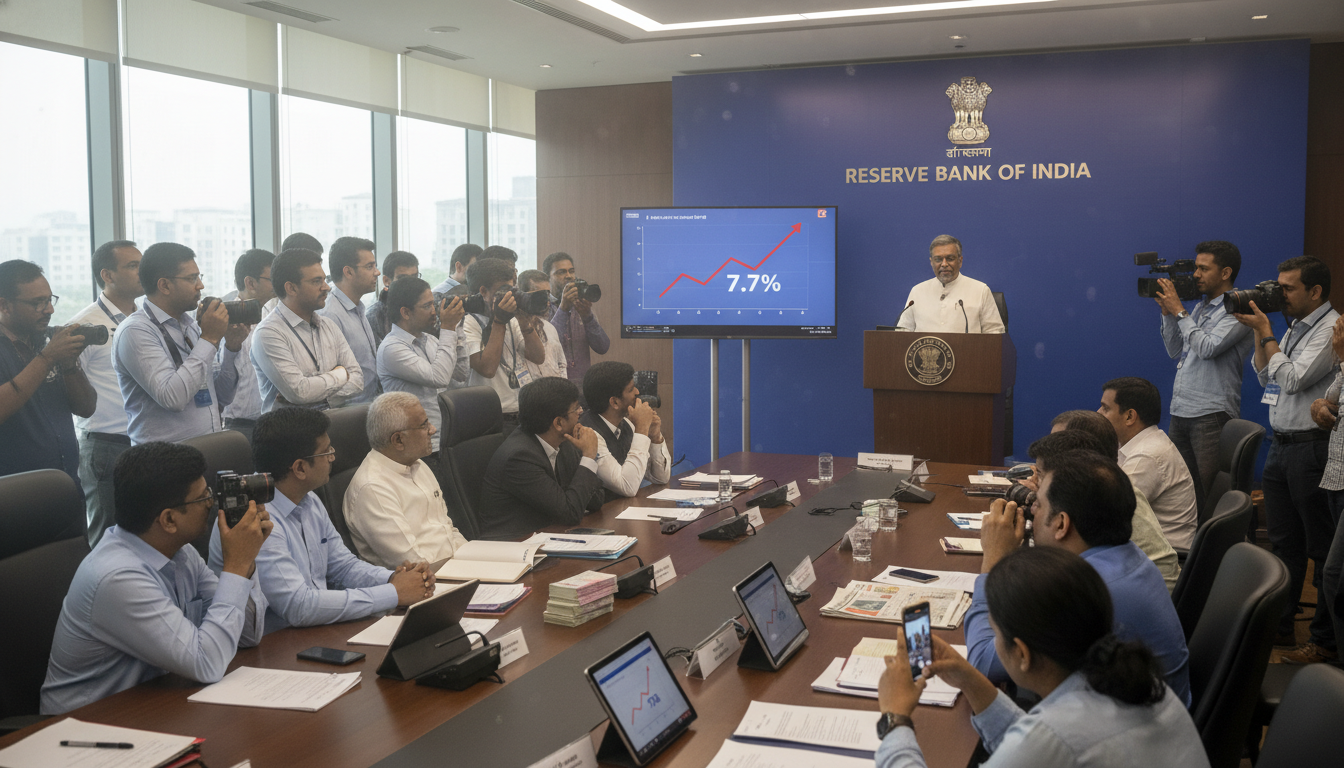
India GDP Rises 7.8% in Q4 as Annual Growth Reaches 7.7%, Inflation and Geopolitics Raise Concerns
India GDP grew 7.8% in the quarter through March, pushing full fiscal-year expansion to 7.7% and outpacing the prior year’s 6.5%, government data showed, even as inflationary pressures and geopolitical shocks weigh on the outlook.
Strong quarter lifts headline growth
The latest official figures show India GDP accelerated to 7.8% in the March quarter, delivering a stronger-than-expected finish to the fiscal year. For the full year through March, gross domestic product growth stood at 7.7%, up from 6.5% in the previous fiscal year, underscoring sustained domestic momentum. The statistics ministry reported the numbers amid signs that external shocks are beginning to ripple through prices and supply chains.
Private consumption and investment provided the bulk of momentum during the quarter, according to ministry commentary accompanying the release. Household spending on services and durable goods rebounded in urban areas, while business investment in machinery and construction supported fixed capital formation. These internal drivers helped offset weaker external demand in some manufacturing segments.
Inflationary pressures and the U.S.-Iran conflict
The data release comes as policymakers and market participants note rising inflationary pressures, partly linked to higher global energy and commodity prices. Economists warn that the U.S.-Iran war has added volatility to oil markets and freight costs, a dynamic likely to feed into domestic inflation and import bills. Higher consumer prices could erode real incomes and temper consumption if they persist.
Core inflation trends will be closely watched by monetary authorities, which face a balancing act between supporting growth and containing price rises. Any sustained jump in inflation would complicate the Reserve Bank of India’s policy calculus and could prompt a more cautious stance on rate cuts or further tightening if headline inflation overshoots targets.
Sectoral picture: services and investment lead, exports mixed
Services sectors continued to be a bright spot, with robust activity in information technology, professional services, and domestic retail contributing to output gains. Services have remained a primary engine of India GDP growth, reflecting structural shifts toward a consumption- and service-led economy. Employment indicators tied to these sectors also showed modest improvement in recent months.
Manufacturing presented a mixed picture, with select capital goods and pharmaceuticals performing well while export-oriented manufacturing faced headwinds from softer external demand and logistical disruptions. Merchandise exports were affected by higher shipping costs and uncertain global demand patterns, which muted the contribution of net exports to headline India GDP.
Policy outlook and fiscal considerations
Fiscal authorities will likely point to the growth figures as validation of ongoing public investment and targeted fiscal support, particularly in infrastructure and social spending. The 7.7% annual expansion provides the government room to maintain investment-led programs aimed at long-term productivity gains. However, rising inflation and external pressures may necessitate prudent budgetary management to preserve fiscal credibility.
On monetary policy, the Reserve Bank is expected to prioritize anchoring inflation expectations while being sensitive to growth dynamics. Analysts say the central bank’s communications will be critical in shaping market reaction and sustaining investor confidence in India GDP prospects amid a volatile global backdrop.
Market and investor reaction
Stock markets and bond yields reacted to the data with attention to the inflation signal embedded in the growth numbers. Investors are parsing whether the stronger growth trajectory justifies a reassessment of interest-rate expectations or whether the inflation threat will prompt tighter financial conditions. Foreign portfolio flows, which can be sensitive to global risk sentiment, will be an important variable for markets in the coming weeks.
Ratings agencies and multilateral lenders that monitor India GDP performance are likely to incorporate the new figures into their outlooks, while financial institutions may adjust growth forecasts and risk assessments. Corporate India will also be watching for updates to consumer demand and input-cost trends that could affect margins and investment plans.
India’s trade links and commodity exposure mean external events remain a key risk factor, and any prolongation of geopolitical tensions could translate into further volatility for inflation and the external current account. Policymakers have limited near-term levers to control global price shocks, making domestic resilience and policy credibility more important than ever.
The March-quarter acceleration and the 7.7% annual outcome underline India’s role as one of the faster-growing major economies, but the path forward will hinge on the interplay between domestic demand, inflation control, and global stability. Economic managers must navigate these trade-offs to sustain momentum without allowing price pressures to erode real incomes and investor confidence.

