
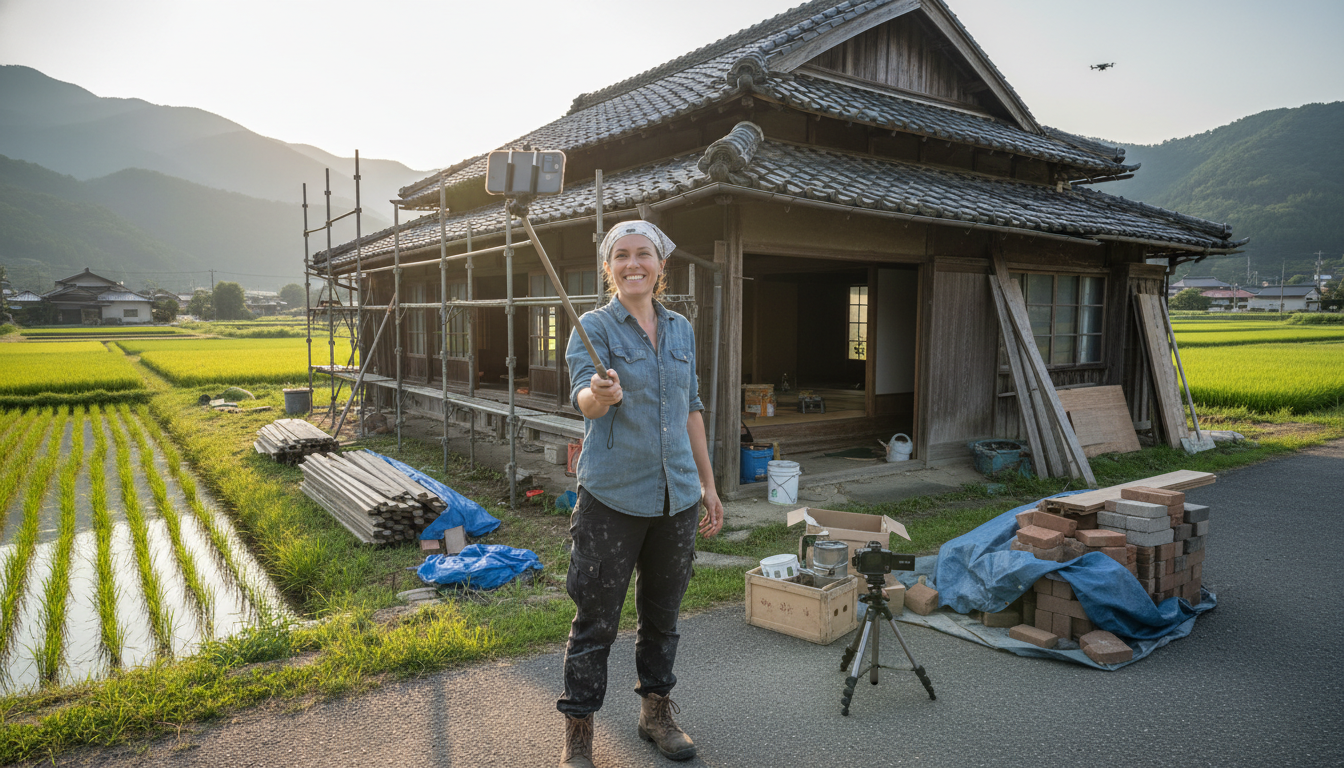
Living in Regional Japan — Brisbane Teacher Returns at 49 to Renovate an Akiya in Wakayama
Brisbane-born Chani returned to Japan at 49 and rebuilt her life in Wakayama while renovating an akiya, teaching English and documenting the process online. This profile examines how her move reshaped daily routines, visa arrangements and community ties, and why her experience matters for those considering living in regional Japan. Her story highlights practical steps, language challenges and the realities of rural life that often differ from urban expectations.
From Kagawa homestay to a new life in Wakayama
Chani’s connection to Japan began at 17 with a homestay in Takamatsu, in Kagawa Prefecture, where no one spoke English. That early immersion forced rapid language learning and left a lasting impression on her approach to culture and community. She later returned on a working-holiday visa, worked in Osaka’s HR department and experienced the Great Hanshin Earthquake, which marked the end of her early stay in Japan. Years later, after a long teaching career in Australia, she chose to return at 49 to make a permanent life in regional Japan.
Her pathway is both personal and instructive: she studied Japanese and psychology at university, trained as a high-school teacher and maintained ties to Japan by leading student trips. Those professional and academic decisions kept her connected to the language and culture and set the stage for a later, deliberate move. When the pandemic affected school programs and her children left home, she began researching repatriation options, financial realities and the practicalities of buying a home. The choice to move was methodical rather than impulsive, shaped by experience, planning and a clear sense of purpose.
How she learned Japanese and adapted to local life
Arriving in Kagawa with no Japanese, Chani relied on a phrasebook and free classes at city hall taught by a retired teacher. The early lessons focused on phonics and pronunciation, which she cites as essential for being understood. Her initial immersion taught her that vocabulary alone is not enough; accurate pronunciation and cultural cues are crucial to everyday communication. Those lessons later influenced her teaching style when she returned to Australia to teach Japanese.
Over the years she continued formal study and daily practice, including watching NHK news and working through business Japanese materials. Back in Japan she also took the Business Japanese Proficiency Test and felt it gave a useful numerical measure of progress. Today she participates in public-safety meetings at the local police station, which require advanced language skills and the confidence to express opinions in Japanese. Her language journey emphasizes steady learning, practical exposure and the need to adapt study methods to real-world situations.
Buying an akiya and the economics of renovation
Chani began searching for an akiya shortly after returning, spending about six months researching listings and talking with locals to identify safe and desirable neighborhoods. The house she purchased had sat empty for about a decade and initially seemed out of reach financially. An agent suggested the owners might negotiate, and a family visit coincided with her viewing, prompting her to make an offer that the sellers accepted. Her purchase decision rested on a practical assessment — the house had "good bones" — and a willingness to invest time and earnings into renovation.
Financial planning for akiya ownership proved more complex than the popular idea of "free houses" suggests. Costs include purchase price, building inspections, renovation work, materials and local permits, and Chani committed the income from her YouTube channel and sponsorships to the project. Renovation also required learning construction vocabulary and coordinating tradespeople while balancing work obligations. Her approach demonstrates that acquiring an akiya is feasible but demands realistic budgeting, clear priorities and ongoing investment.
Balancing visa-sponsored teaching and monetized content creation
Teaching is central to Chani’s life in Wakayama and underpins her visa status, as her school sponsors her work permit. She schedules lessons in the afternoons and evenings and dedicates mornings to editing videos and managing her online presence. When her channel reached monetization she sought official permission to engage in content creation, ensuring that her additional work complied with immigration regulations. That balance reflects the need for anyone living in regional Japan to align side work with visa conditions and employer expectations.
Her workflow is tightly scheduled: filming typically takes place on weekends, while weekdays require several hours of editing and community engagement online. As a sole content creator she handles production, post-production and audience management, which amounts to four to five hours of daily editing when demand is high. Despite the workload, she treats YouTube as a creative outlet rather than a burden, noting that the social interaction of school work offsets the isolation that can come from solo digital work. Her case underscores the importance of clear communication with employers, formal permission for secondary income and disciplined time management.
Daily life in Wakayama and the social realities of rural Japan
Life in regional Japan for Chani has meant closer ties with neighbors and a stronger sense of belonging than she experienced in a larger city. In Wakayama she frequently runs into students’ parents at local shops and finds that casual conversations are common. The social fabric of the town provides daily interactions and informal support networks that are harder to replicate online. For many newcomers, that communal atmosphere is a primary draw when considering living in regional Japan.
Daily routines blend renovation work, classroom hours and digital production, with mornings often reserved for editing and afternoons for teaching. Her school responsibilities limit the flexibility of travel, so trips tied to her channel are planned around school holidays and require advance coordination. The presence of a pet, Millie the cat, has also been important to her sense of home; she adopted Millie locally after being unable to bring her Australian cat to Japan. These practical adaptations illustrate how newcomers negotiate work-life balance and develop roots in smaller communities.
Language proficiency, formal assessments and public-safety responsibilities
To perform her role in local public-safety meetings and to contribute meaningfully at school, Chani pursued higher-level Japanese competencies. She recently took the Business Japanese Proficiency Test, which provided a scored evaluation that she felt reflected her progress more precisely than a pass-fail exam. That quantified feedback helped her identify areas to improve, particularly in policy and administrative vocabulary. She now focuses on watching news broadcasts and reviewing business Japanese textbooks to strengthen technical language skills.
Her position as a public-safety officer for the local police station has required clear, accurate language in formal settings and the ability to express opinions during meetings. Such responsibilities push language learners beyond conversational fluency into professional registers. For residents seeking substantive community roles, targeted study in relevant vocabulary and participation in official gatherings can accelerate integration. Chani’s experience shows that advancing language competence is a continual process tied closely to the roles one takes on in the community.
Practical lessons and advice for creatives considering Japan
Chani recommends that creators listen closely to audience feedback and remain open to adjustments in style and production. Early critiques about audio and content pacing prompted concrete changes that improved viewer engagement and helped her channel grow. She emphasizes the importance of distinguishing constructive criticism from unhelpful remarks and using feedback as a tool for refinement. That mindset applies equally to work, language learning and renovation choices.
For those exploring akiya purchases, she advises realistic financial planning and local research to understand which neighborhoods are viable and safe. Talking to residents and agents can reveal information not visible in listings, and having a contingency budget for renovations is essential. She also stresses the need to secure proper visa arrangements and, when planning secondary income, to obtain necessary permissions to stay compliant with immigration rules. Her cumulative advice centers on preparation, patience and the willingness to learn on the job.
Community connections and the emotional side of resettling
Beyond logistics, Chani’s transition reflects emotional work: building friendships, finding a place in communal rhythms and documenting a life in stages. She found rural Japan to be warmer in interpersonal terms than a large city, noting that informal encounters at shops and local venues created a sense of belonging. Sharing the renovation process publicly became a way to connect with others and to encourage people who might feel isolated by age, background or circumstance. Her openness about setbacks and small victories has resonated with viewers and neighbours alike.
Her personal narrative also highlights the role of family in major life decisions; parental encouragement at the time of purchase and the inability to bring her Australian cat shaped key outcomes. The everyday choices around pets, travel and work affect the practical course of resettlement as much as financial planning. This blend of pragmatic and emotional adjustments is part of why many people considering living in regional Japan find the promise of community both appealing and demanding.
Chani’s experience offers a grounded portrait of what resettling in regional Japan can look like when planned carefully and pursued with persistence and humility. She combined formal language study, professional experience, careful budgeting and community engagement to build a life that balances teaching, renovation and creative work. Her akiya has become both a home and a public project, funded through earnings she channels back into the property while she continues to grow as a communicator and local participant. The result is a measured, actionable example for anyone considering a similar move.
Her story underscores that living in regional Japan requires practical preparation, clear legal and financial planning and a willingness to embrace community rhythms. It also shows that age is not a barrier to reinvention and that creative work can complement formal employment when coordinated responsibly. For readers considering their own transition, the lessons here offer concrete starting points: invest in language, verify visa rules, seek local advice on property and be prepared for the slow, satisfying work of building connections.

