
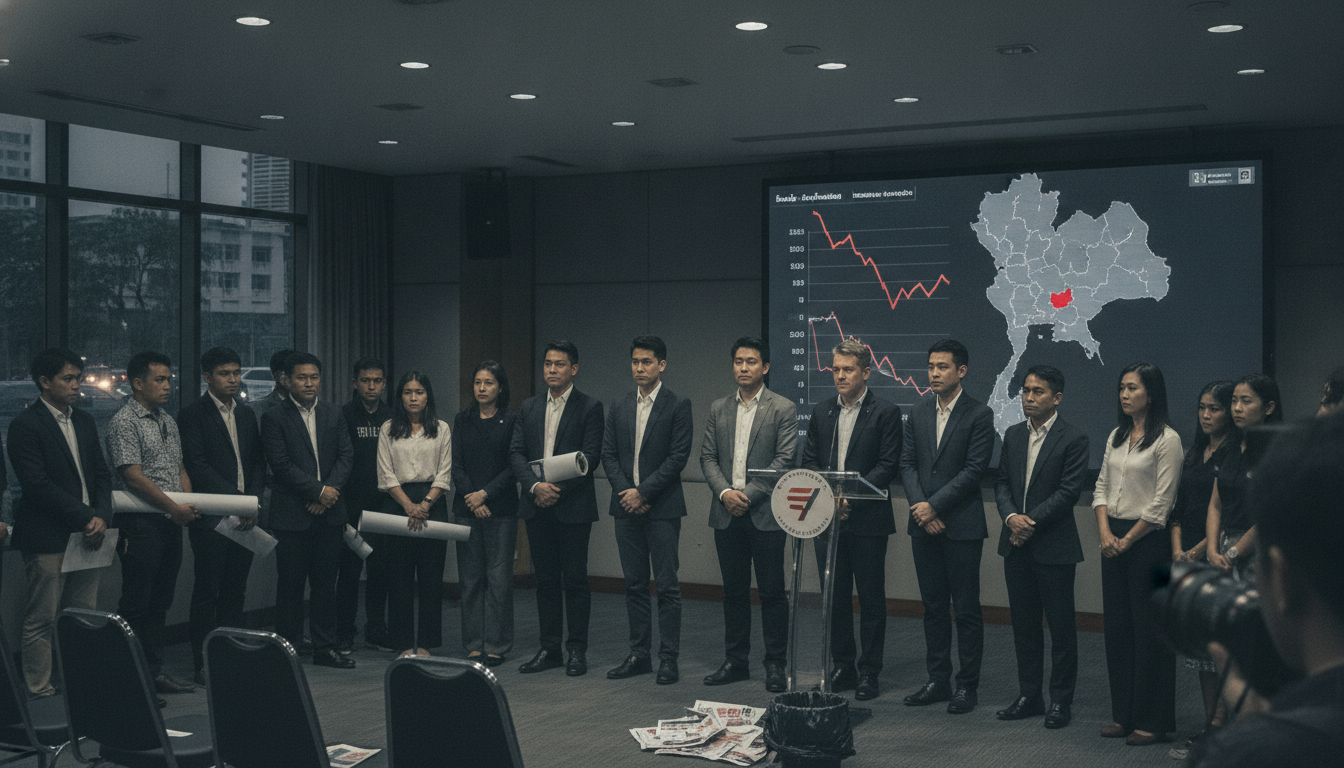
People’s Party Faces Setback in Bangkok Gubernatorial Vote
People’s Party suffers defeat in Bangkok governor race as city voters give incumbent a landslide on June 28, undermining the party’s recent national momentum.
BANGKOK — The People’s Party failed to translate its national popularity into victory in the Bangkok gubernatorial election held on June 28, with its candidate Chaiwat Sathawornwichit placing a distant third. Voters delivered a decisive win to incumbent Chadchart Sittipunt, leaving the opposition party to reassess its urban strategy. (thailand.prd.go.th)
Election Outcome and Vote Totals
Chadchart Sittipunt won re-election by a wide margin, receiving more than 1.4 million votes, the highest raw tally in Bangkok gubernatorial history. His nearest rival, independent Mallika Boonmeetrakul Mahasuk, finished second with roughly 288,000 votes, while People’s Party candidate Chaiwat polled about 177,000 votes and trailed in third. (thediplomat.com)
Party officials quickly conceded as tallies became clear and publicly congratulated Chadchart, noting the scale of the victory left little room for challenge. Election authorities reported the results publicly on election night and provided provisional counts that underscored Chadchart’s broad appeal across multiple districts. (nationthailand.com)
People’s Party’s Urban Strength and Recent Trajectory
The outcome is a sharp contrast with the People’s Party’s performance in February’s general election, when the party swept Bangkok’s constituency seats and emerged as a dominant force in the capital. That national success raised expectations that the party could convert legislative gains into local executive offices. (en.wikipedia.org)
Observers say the disconnect between parliamentary victories and the gubernatorial result highlights differences in voter behaviour between national and municipal contests. Urban electorates often prioritize local management, public services and personal familiarity with candidates when choosing a city mayor or governor. (electiomap.com)
Campaign Strategy and Voter Response
Chaiwat campaigned on the People’s Party platform of progressive reforms and appealed to the party’s February supporters, but his message struggled to gain traction against Chadchart’s record as a technocratic incumbent. Campaign events in central districts, including public appearances in the weeks before June 28, failed to shift the race’s momentum. (en.thairath.co.th)
Party leaders acknowledged the gap in post-vote briefings and suggested voters treat local elections differently from national polls, saying urban residents focused on tangible city services and crisis management. The People’s Party pledged to study the result and adapt its municipal tactics while maintaining its broader legislative agenda. (nationthailand.com)
Turnout, Demographics and Local Issues
Voter turnout in the gubernatorial contest was below 50 percent, with about 2.2 million ballots cast from roughly 4.43 million eligible voters, according to official tallies. Analysts say the turnout pattern and the geographic distribution of votes favoured the well-known incumbent and candidates with established local networks. (nationthailand.com)
Key local issues such as transport, flood mitigation, urban planning and public services dominated the campaign narrative, and Chadchart’s incumbency allowed him to lean on tangible project records. The People’s Party’s broader national platform resonated less on these municipal questions, contributing to its weaker showing. (thediplomat.com)
Implications for National Politics and the People’s Party
Political strategists warn that the result could complicate the People’s Party’s plans to expand influence at the municipal level, even as it remains a major force in the national legislature following February’s vote. The contest underlined the limits of top-line popularity when voters evaluate day-to-day governance needs. (apnews.com)
For the ruling coalition and national rivals, Chadchart’s emphatic win reinforces the appeal of candidates who blend technocratic credentials with visible local delivery. The outcome may prompt rival parties to recalibrate candidate selection, messaging and grassroots operations ahead of upcoming local and parliamentary battles. (apnews.com)
The People’s Party leadership faces immediate choices: double down on legislative work while rebuilding local outreach, or pivot resources into city-level organising to regain ground in future mayoral and council contests. The June 28 result provides a clear test case of how national parties must adapt their tactics when moving between parliamentary and municipal arenas.

