
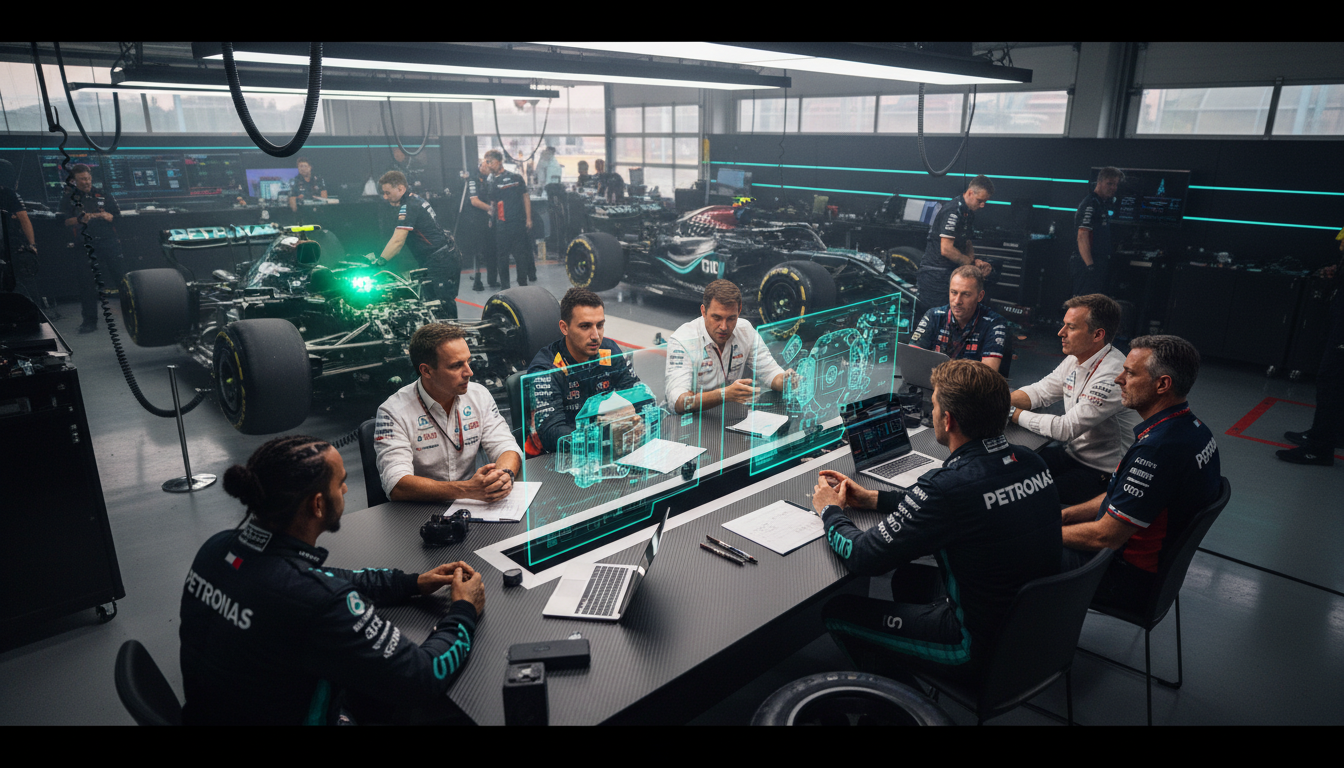
FIA praises drivers as teams prepare to discuss Formula One rule changes to restore racing quality
FIA lauds drivers as teams meet to consider Formula One rule changes targeting safety and racing problems from new 50/50 electric-combustion power units.
Formula One’s governing body has praised drivers for their “invaluable” input ahead of a teams meeting on Monday where proposed Formula One rule changes will be tabled to improve racing and address safety concerns. Drivers have reported that the sport’s recent technical overhaul, which splits power delivery roughly 50/50 between electric and combustion systems, has changed the dynamics of cornering and overtaking. The meeting will bring teams together to consider how regulations might be adjusted to protect both competition and on-track safety.
FIA highlights driver feedback in rule process
The FIA emphasized that drivers’ observations played a central role in prompting the agenda for Monday’s meeting. Officials described the feedback as essential for shaping any proposed amendments to technical or sporting regulations. The governing body said it values frontline perspectives when assessing whether recent technical changes have produced unintended consequences.
Teams and independent engineers told the FIA that the drivers’ reports helped pinpoint specific scenarios where current power unit behaviour affects racecraft. That input has been shared with technical working groups tasked with drafting possible rule text. The outcome will determine whether changes are recommended to the World Motor Sport Council or implemented through sporting directives.
Drivers report coasting into high speed corners
Several drivers have raised concerns that the new hybrid power units force them to reduce throttle earlier than before, increasing coasting into high-speed sections of circuits. This behaviour is driven by the need to preserve combustion engine energy and to allow battery recharging, they say. The altered approach to corner entry has, according to drivers, affected both overtaking opportunities and the flow of closed-wheel racing.
Beyond competitive impacts, drivers have flagged safety issues related to unexpected speed differentials between cars at the same point on track. When one car must lift and coast for energy reasons while a following car can maintain higher drive, the result can be unstable braking and late reaction windows. Teams’ engineers have been asked to quantify those differentials so any technical changes can be precisely targeted.
Technical shift to roughly equal electric and combustion power
The recent power unit regulations introduced a significant technical shift, allocating approximately half the usable power to electric systems and half to combustion. Manufacturers and teams delivered the new architectures as part of a multi-year effort to align top-level motorsport with sustainability goals. The result is a complex energy management task for drivers and engineers, combining harvesting, storage, and deployment strategies mid-race.
Teams acknowledge that the new units present a steeper learning curve than incremental upgrades. Power delivery maps, battery management systems, and hybrid deployment windows now factor directly into race strategy and driver inputs. Engineers say the balance between recovered electrical energy and internal combustion output will continue to be refined as data accumulates across race weekends.
Proposed rule changes aim to remove racing impediments
Draft proposals under consideration seek to preserve the environmental and technological aims of the new power units while reducing behaviours that hinder wheel-to-wheel competition. Options being discussed include adjustments to energy deployment windows, revisions to charging rules, or clarifications of how engine maps may be used in the race. The intention is to restore predictable power delivery without undoing the technical advances already introduced.
Some proposals would set stricter limits on how teams can force drivers into energy-conservation modes during critical overtaking zones. Others would focus on harmonizing rules across race and qualifying sessions to reduce sudden shifts in power strategy. Any change would require technical feasibility studies and approval processes, meaning a rapid solution is unlikely without broad consensus.
Teams meeting on Monday to debate concrete amendments
Representatives from all teams are scheduled to convene on Monday to weigh the proposed measures and their likely impact across different chassis and power unit packages. The meeting will include engineers, team principals, and FIA technical staff, with the aim of narrowing options and identifying consultative steps. Teams say they will need to reconcile competitive fairness with safety obligations before endorsing any adjustments.
If the teams reach preliminary agreement, the FIA will move to formalise draft wording and circulate it to stakeholders for final comment. The process may include additional testing or simulation work to ensure that any regulation change does not introduce new performance imbalances. Observers expect a measured approach rather than sweeping overnight changes.
There is also an acknowledgement that some solutions will take time, given the integration of software and hardware in the new power units. Any rapid fixes are likely to be procedural, such as clarifying permissible driving behaviours, while hardware-related changes would require longer lead times.
Industry sources note that the dynamic highlights a broader tension between rapid technical innovation and the practical demands of close, safe racing. Resolving that tension will be central to the discussions at the teams meeting and to the FIA’s subsequent recommendations.
The meeting’s outcome will be watched closely by drivers, teams, and fans who want the sport to evolve technologically without sacrificing the close racing that defines its appeal.

