
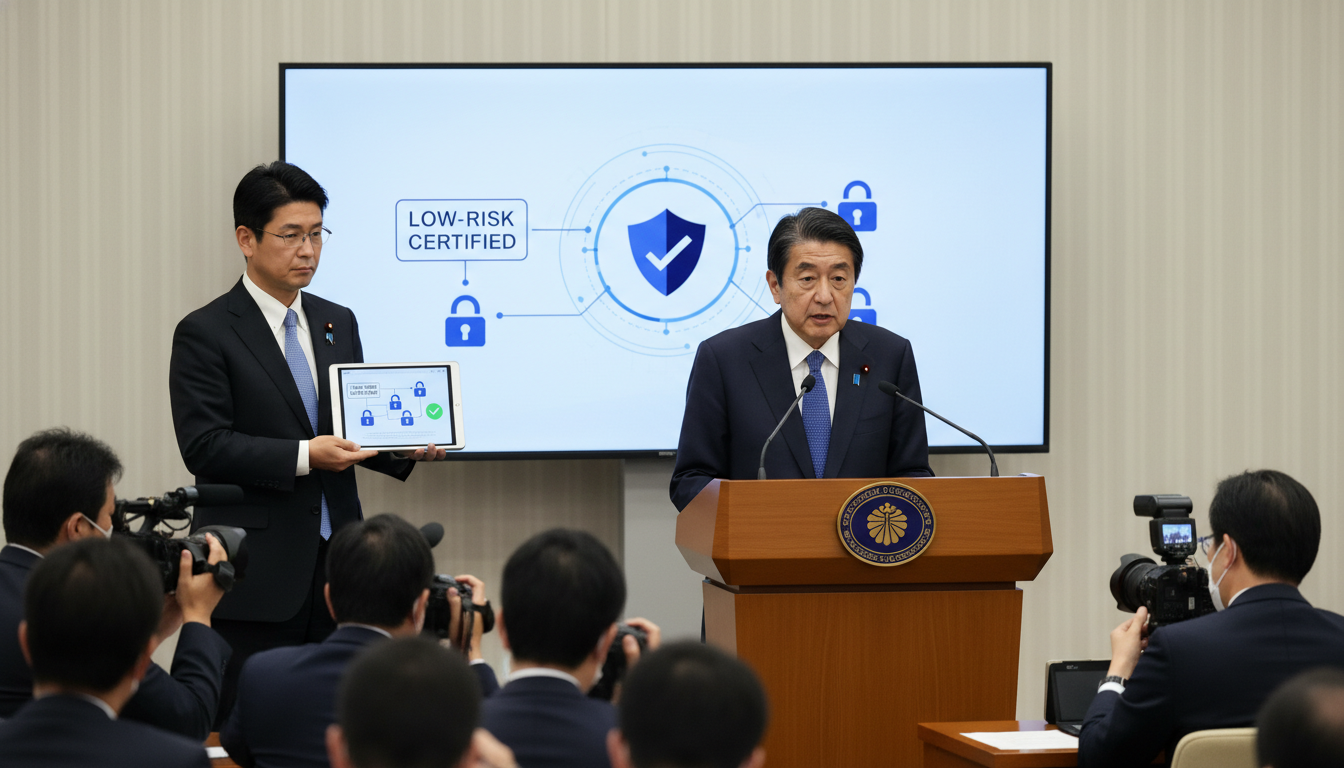
Japan to Tighten Cybersecurity Procurement for Local Governments
Japan will require local governments to buy only IT equipment certified as low cybersecurity risk to curb data leaks and foreign supply-chain threats.
Japan plans to require local governments to procure only information-technology equipment that has been certified as presenting low cybersecurity risk, part of a broader cybersecurity procurement drive intended to reduce the chance of information leaks and attacks. (alojapan.com)
The move would effectively bar devices and systems judged to pose elevated supply‑chain or backdoor risks from municipal contracts, reshaping buying rules for PCs, servers, network gear and related services. Officials say the policy is aimed at strengthening protections around citizen records and administrative systems while standardizing minimum security requirements across thousands of local authorities. (alojapan.com)
New procurement requirement targets low‑risk IT equipment
Japan’s central government is expected to update procurement criteria so that only products carrying an approved cybersecurity certification will be eligible for local government purchase. This approach shifts decisionmaking from case‑by‑case technical reviews to a certification-first gate for procurement. (alojapan.com)
Officials framed the requirement as a way to reduce administrative fragmentation and ensure consistent baseline protections across municipalities, many of which currently run legacy systems with uneven patching and vendor oversight. The change is designed to shorten the time between detection of vulnerabilities and remediation by tightening controls at the point of purchase. (alojapan.com)
Government cites rising attacks on municipal systems
The policy push follows a string of high‑profile incidents in which local governments and their contractors suffered unauthorized access or data leaks, exposing millions of residents’ personal records. Recent municipal breaches have underlined vulnerabilities in outsourced systems and third‑party services used by smaller localities. (improved-move.com)
Security experts in Tokyo have repeatedly warned that municipal networks present an attractive target for criminal and state‑linked actors because of the volume of personal and administrative data they hold. Central policymakers argue that procurement standards must reflect that heightened threat profile. (mondaq.com)
Certification scheme expected to rely on JC‑STAR and industry standards
Officials have indicated that Japan’s existing product assessment frameworks and conformity schemes, such as the IoT security conformity assessments developed under METI, will form the backbone of the certification regime. The government has been promoting conformity labels and certification pathways to help buyers distinguish lower‑risk products. (meti.go.jp)
Digital governance bodies have also convened working groups to map out technical requirements and oversight mechanisms that vendors must meet to obtain certification. Those discussions aim to combine national standards with internationally recognized practices so that certified equipment meets both domestic security needs and interoperability expectations. (meti.go.jp)
Past procurement precedents and foreign‑made equipment
Tokyo’s move echoes earlier decisions to restrict certain foreign suppliers from central government contracts on national‑security grounds. Previous procurement guidelines effectively barred selected foreign telecom vendors from sensitive government networks, establishing a legal and administrative precedent for excluding equipment deemed a security risk. (cnbc.com)
While policy documents typically avoid naming specific companies, the practical effect has been to steer sensitive procurement toward vendors and products that clear formal security reviews or hold domestic and allied certifications. The new municipal rule would extend that logic more broadly across local government purchasing. (cnbc.com)
Suppliers and local budgets face transition costs
Municipalities and system integrators will face logistical and financial adjustments as they align contracts to the certification requirement. Smaller local governments that rely on long‑standing contracts or low‑cost vendors may need additional funding or transitional assistance to replace non‑certified systems. Analysts warn that short timelines could create procurement bottlenecks and service disruptions if spare inventories and certified supply channels are limited. (alojapan.com)
Industry groups are likely to press for phased implementation, technical guidance, and grant support to offset upgrade costs. Central ministries are expected to consider subsidy or loan measures to help prefectures and municipalities meet the new standards without compromising frontline services. (alojapan.com)
Implementation, oversight and next steps
Government ministries responsible for digital policy and economy officials are coordinating on the details of certification criteria, contract clauses and enforcement mechanisms. The design process will address how to handle legacy systems, vendor appeals and cross‑border procurement rules that touch international trade commitments. (meti.go.jp)
Authorities have signalled that procurement rules will be accompanied by guidance on risk assessment, incident reporting and supplier transparency to create a comprehensive governance framework. Local governments will receive technical support materials and, in many cases, central oversight of procurement tied to the new cybersecurity standards. (meti.go.jp)
The policy marks a significant step toward centralizing cybersecurity procurement criteria and reducing exposure in municipal networks, while raising practical questions about timing, costs and supply‑chain capacity that policymakers will need to manage in the months ahead.

