
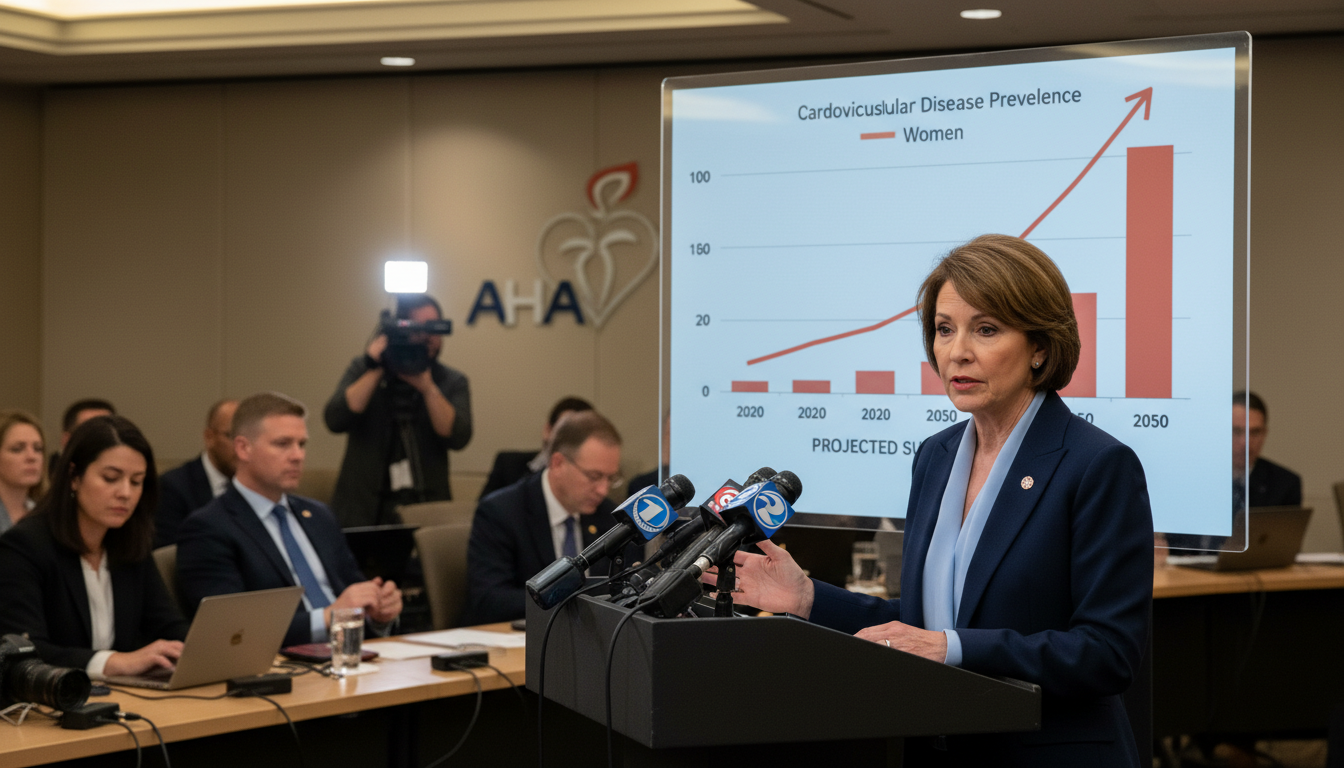
Cardiovascular disease in women projected to surge by 2050, driven by hypertension, obesity and diabetes
AHA projects cardiovascular disease in women will surge by 2050, driven by rising hypertension, obesity and diabetes—risking younger and minority women.
The American Heart Association’s new scientific statement warns that cardiovascular disease in women will rise dramatically over the next 25 years, with nearly six in ten women expected to have high blood pressure by 2050. The projection, published in the journal Circulation, links increasing rates of hypertension, obesity and diabetes to a growing national burden of heart disease, stroke and related conditions. Experts say the trend threatens to shift risk to younger women and to widen racial and ethnic disparities unless prevention and treatment strategies are scaled up.
American Heart Association forecast and scope
The AHA’s analysis models prevalence of heart disease, stroke and major risk factors across the U.S. female population through mid-century. Investigators estimate that more than 62 million women already live with some form of cardiovascular disease and that costs exceed $200 billion annually, with both figures expected to climb if current trends persist. The statement synthesizes national data and simulation models to show how incremental increases in risk factors translate into substantially higher disease burden by 2050.
Hypertension, diabetes and obesity as primary drivers
Projected increases in high blood pressure are central to the forecast, with nearly 60% of women estimated to have hypertension by 2050, up from under half today. Diabetes prevalence among women is expected to rise from roughly 15% to more than 25%, while obesity rates could grow from about 44% to over 60%. These three conditions are interrelated and amplify the likelihood of heart failure, atrial fibrillation and stroke, making them the leading contributors to the projected escalation in cardiovascular disease.
Younger women and girls face rising early risk
The report signals a troubling shift toward earlier onset of cardiovascular risk: almost one in three women aged 22 to 44 could have some form of cardiovascular disease in the near term, compared with fewer than one in four at present. Diabetes and high blood pressure are expected to increase sharply in this age group, and by 2050 nearly 32% of girls ages 2 to 19 may have obesity. Researchers emphasize that risk factors beginning in childhood and young adulthood can persist, shortening healthy life expectancy and increasing lifetime medical needs.
Racial and ethnic disparities likely to worsen
Projected increases are not uniform across demographic groups, and women who identify as American Indian/Alaska Native, Black, Hispanic or multiracial face disproportionately larger rises in risk. The AHA models show the largest relative increases in hypertension among Hispanic women and a steep projected rise in obesity among Asian women, while Black women are expected to continue to have the highest absolute rates of several risk factors. Authors of the statement stress that social determinants of health—poverty, limited access to care, food insecurity and structural inequities—help drive these disparities and must be addressed in policy responses.
Evidence of modest improvements and remaining gaps
Not all trends are negative: average cholesterol levels are forecast to decline and certain health behaviors, including lower smoking rates and incremental increases in physical activity and healthier eating, may improve. Nevertheless, those gains are judged insufficient to offset the broader rise in metabolic risk. The AHA emphasizes that better management of blood pressure, cholesterol and blood sugar, combined with reductions in obesity and improved preventive measures, could substantially reduce projected cardiovascular events and deaths.
Prevention strategies and clinical recommendations
The scientific statement highlights the AHA’s Life’s Essential 8 as a framework for preventing cardiovascular disease across the life course: healthier diet, physical activity, tobacco avoidance, healthy sleep, weight management, cholesterol control, blood sugar management and blood pressure control. Authors call for strengthened screening beginning in pediatric and reproductive-age settings, coordinated care before, during and after pregnancy, and targeted public-health programs in schools and communities. They also urge evaluation of new obesity medications and digital tools to expand access and long-term support for people managing chronic conditions.
The projection models suggest that meaningful gains are achievable: modest reductions in major risk factors and improved control of blood pressure, cholesterol and glucose could lower cardiovascular events and deaths by roughly one-fifth, while more aggressive reductions in obesity and risk-factor control could cut events by up to 40%. Researchers and clinicians underscore that prevention is the most efficient and cost-effective approach, but note that implementation requires investment in systems of care, equitable access to services and policies that address social drivers of health.
Public awareness has declined even as risk rises, according to AHA leaders, making communication and education central to any response. Greater attention to menstrual and reproductive history in routine evaluations, tailored programs for communities with the highest burden, and partnerships between health systems, schools and policymakers are among the measures recommended to change course.
If current patterns continue, cardiovascular disease in women will become an even more dominant public-health challenge by 2050, but the AHA’s analysis also shows that a combination of proven prevention strategies and emerging medical tools can still alter that trajectory.

