
Nishi-Nippon City Bank data leak: employee posted branch images showing customer names on BeReal
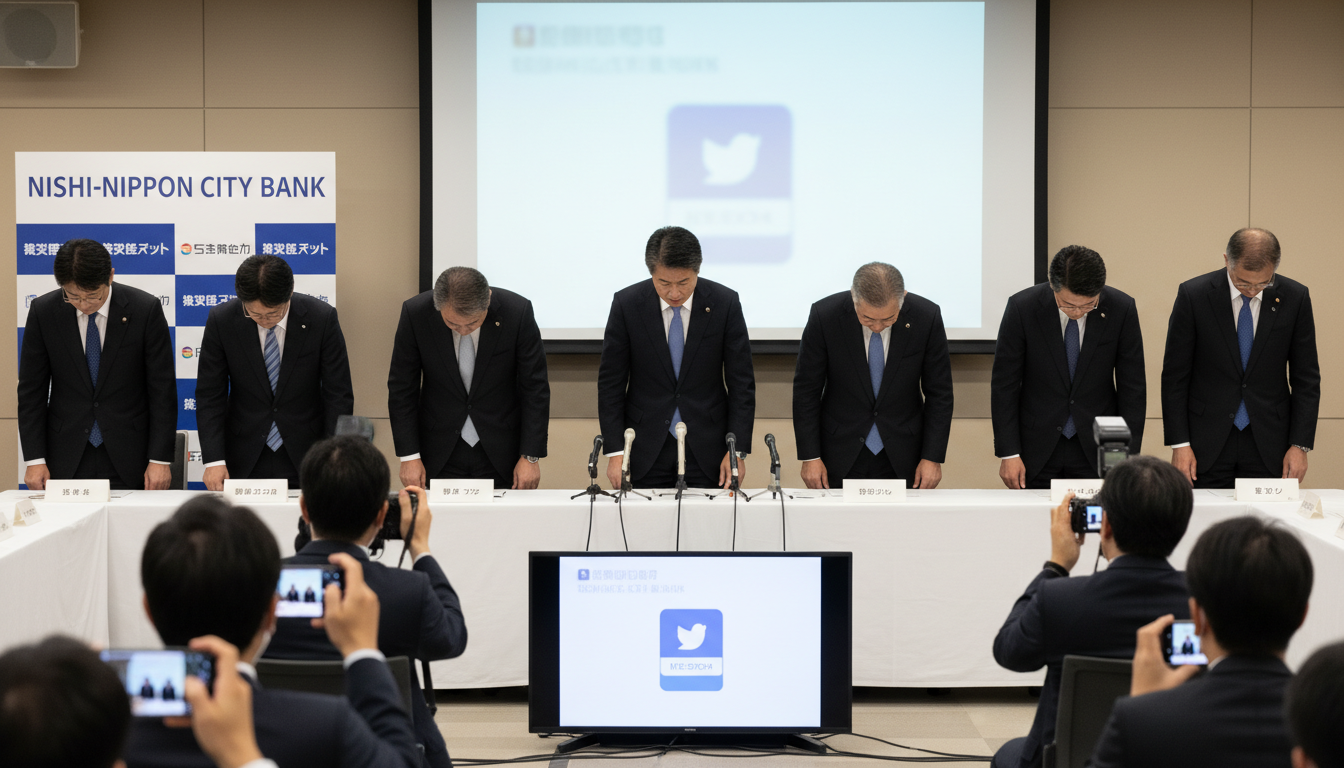
Nishi-Nippon City Bank apologized after a staff member posted images and video from inside a Shimonoseki branch to BeReal, exposing seven customers’ names that were widely shared online.
Incident announced by bank
Nishi-Nippon City Bank announced on April 30, 2026 that a bank employee had posted images and a short video taken inside the Shimonoseki branch to the social app BeReal.
The materials captured a whiteboard displaying the names of seven bank customers, and the bank confirmed that personal information was visible in the images.
The bank posted an apology on its website saying it “deeply and sincerely” regretted the incident, and pledged to inform and explain the situation directly to the affected individuals.
The disclosure was first published on BeReal and subsequently spread by third parties on X (formerly Twitter), where some reposts had amassed more than ten million views by 1:00 p.m. JST on April 30, 2026.
What was visible and how the post spread
The posted content comprised a still image and short video taken inside the branch’s office area, a bank official said in the announcement.
A whiteboard with handwritten customer names was clearly legible in the footage, raising immediate concerns over the exposure of personal data.
After the employee’s BeReal upload, the content was captured and reshared on X by users outside the bank, accelerating distribution across social networks.
The rapid amplification triggered widespread attention within hours, prompting the bank to issue an urgent public apology and begin direct outreach to the affected customers.
How BeReal works and why the post appeared
BeReal prompts users once per day with a notification that asks them to take two simultaneous photos—using the phone’s front and rear cameras—within a roughly two-minute window.
The design encourages immediate, unedited sharing of a moment; in this case the post captured both the employee and the branch interior at the time of upload.
That one-shot model can increase the likelihood of incidental captures of sensitive material in the background, particularly in workplaces where screens, documents or whiteboards are visible.
Security experts have noted that any app with camera access carries a risk of inadvertent disclosure when users are in environments that display personal or confidential information.
Bank response and customer outreach
Nishi-Nippon City Bank said it will contact the seven customers whose names were exposed and provide individual apologies and explanations.
The announcement did not specify whether the bank would offer compensation or what remedial steps would be taken for those affected.
The bank’s public statement stopped short of outlining a full investigative timetable or concrete changes to staff policies, but it acknowledged the seriousness of the breach and the need to address the fallout.
Customers seeking more information were directed to the bank’s notice, and officials said they would follow up directly with those identified in the images.
Operational and privacy implications for financial institutions
The incident underscores how everyday social apps can create privacy risks in customer-facing environments, particularly in branches where confidential information is visible.
Financial institutions typically rely on strict internal rules for handling customer data; breaches caused by staff activity on personal devices reveal gaps in training, supervision or technological controls.
Regulators and industry groups increasingly expect banks to demonstrate robust measures to prevent inappropriate disclosures, including clear device policies, staff education and physical controls over visible customer information.
Even without formal sanctions, such public incidents can erode trust and prompt accelerated reviews of operational safeguards across the sector.
Industry reaction and potential next steps
Observers said the episode may prompt the bank to review its internal security policies, limit the visibility of customer information in branch workspaces and tighten guidance on employee use of social media during work hours.
Banks often respond to similar incidents by enhancing staff training, revising access controls and auditing what materials are visible in areas where employees may be photographed.
For customers, the most immediate concern is whether exposed names will be tied to other personal data; the bank’s pledge to contact affected individuals is the first step in addressing those risks.
How swiftly Nishi-Nippon City Bank implements technical or procedural remedies will shape public confidence in its ability to safeguard customer information going forward.
The bank’s April 30 announcement and the swift spread of the images on social media have placed both operational practices and staff conduct under scrutiny, and further details about internal measures and any regulatory response are expected to emerge in the coming days.

