
Ikawa Line fare increase: Oigawa Railway sets flat 3,500 yen as all services become tourist trains
Oigawa Railway’s Ikawa Line will switch to tourist-only services and a flat 3,500 yen fare from July 1, prompting local concern over steep increases to passengers.
The Ikawa Line fare increase, due to take effect on July 1, will convert every train on the mountain route into a tourist service and standardize one-way fares at 3,500 yen. Passengers and local businesses have expressed alarm at what many describe as an unusually large rise, warning it could deter regular riders and reduce visitor numbers. A reporter rode the line in late May and spoke with travelers and community members to gauge immediate reactions ahead of the formal change.
Fare Hike to Take Effect July 1
The operator announced the new pricing and service model in advance of the July 1 implementation date, setting a uniform one-way price that officials say reflects the line’s repositioning as a tourism product. For some riders the hike represents an increase of up to about 20 times the previous fares, particularly for local commuters and frequent users who relied on discounted or distance-based fares. The sudden and large adjustment has raised questions about affordability and equitable access for residents along the route.
Crowds and Reactions at Senzu Station
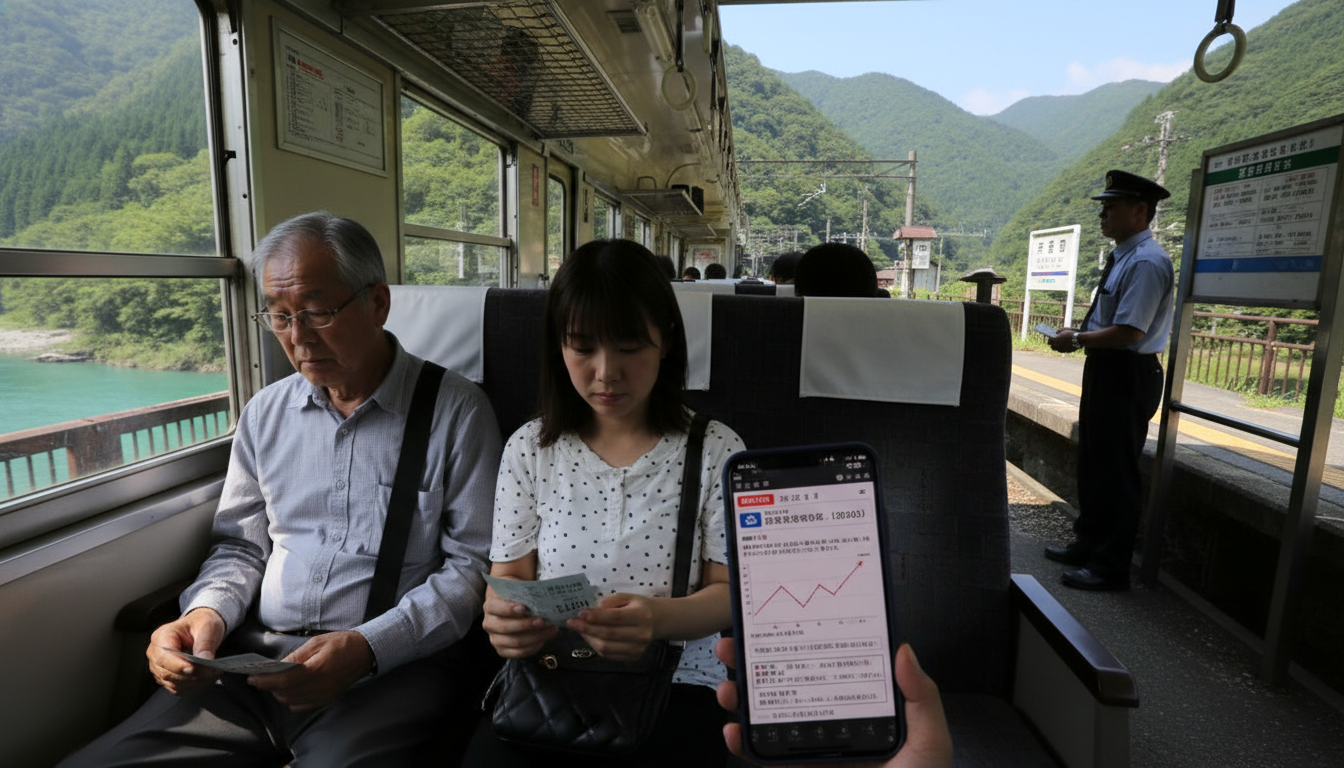
On a Saturday in late May, nearly 100 people waited at Senzu station before the first departures, underscoring the line’s current popularity as a scenic attraction. The reporter boarded a red, retro-styled five-car train pulled by a small diesel locomotive and traveled close to two hours through steep valleys and riverside cliffs. Among fellow passengers was a 20-person hiking group; its leader, a 71-year-old organizer, told the reporter the new fare was “too expensive” and suggested members might choose to drive in future.
Tourist-Only Service Across All Trains
The operator’s plan converts all scheduled Ikawa Line runs into tourist-focused services, a move aimed at marketing the route’s scenery and historic rolling stock to day-trippers and domestic visitors. Train interiors and timetables will be adjusted to emphasize sightseeing, and the flat fare simplifies ticketing for occasional tourists. Local stakeholders, however, worry the shift may reduce practical connectivity for residents who use the line for errands, school, or work.
Scenic Value and Unique Features of the Line
The Ikawa Line is known for dramatic canyon views, steep gradients, and sections of track that run close to the Oi River, making it a draw for photographers and rail enthusiasts. The route’s vintage rolling stock and engineering features have long been promoted as part of Shizuoka’s regional tourism offer. Supporters of the fare change argue that charging tourists more fairly reflects the line’s experiential value and could fund preservation and upgraded services that enhance safety and comfort.
Local Business and Community Concerns
Businesses that depend on steady visitor flows voiced mixed reactions; some anticipate that marketing the line more aggressively as a tourist train could boost spending at restaurants and shops, while others fear that higher upfront travel costs will cut total visitor numbers. Residents living near stations said they had not been adequately consulted about the scale of the increases, and community groups raised the possibility of reduced use by older or lower-income locals. Elected representatives in nearby towns have called for clearer explanations from the operator and for measures to protect essential travel.
Questions Over Pricing, Passes and Alternatives
Transport advocates and regular riders are seeking details on whether discounted multi-ride passes, local concessions, or off-peak fares will remain available after July 1. The current announcement sets a single headline price but leaves open many operational questions that will shape the practical impact on ridership. Observers also noted the potential for modal shift to private cars or buses if commuters judge the new fares unaffordable, which could have knock-on effects for traffic and local emissions.
Railway officials say the change is part of a broader strategy to stabilize revenue and invest in the line’s upkeep, but they have not yet released a full timetable of supporting measures such as targeted discounts for residents or partnerships with local tourism operators. Community groups are pressing for negotiated solutions, including trial discount schemes and transparent reporting on how additional revenue would be spent.
The coming weeks will be critical for measuring the immediate impact of the policy ahead of the July 1 start date, with operators, local governments and businesses all needing to coordinate messaging and practical support for affected passengers. Stakeholders will also be watching ridership figures and tourist bookings to assess whether the increased fare achieves the intended financial sustainability without eroding the Ikawa Line’s appeal.
Local voices along the valley expressed a mix of resignation and hope: some accept that preserving the line may require higher prices, while others want safeguards to protect regular users. How the operator balances conservation, tourism promotion and community access will determine whether the Ikawa Line fare increase strengthens the route’s future or narrows its role in daily life along the Oi River.

