
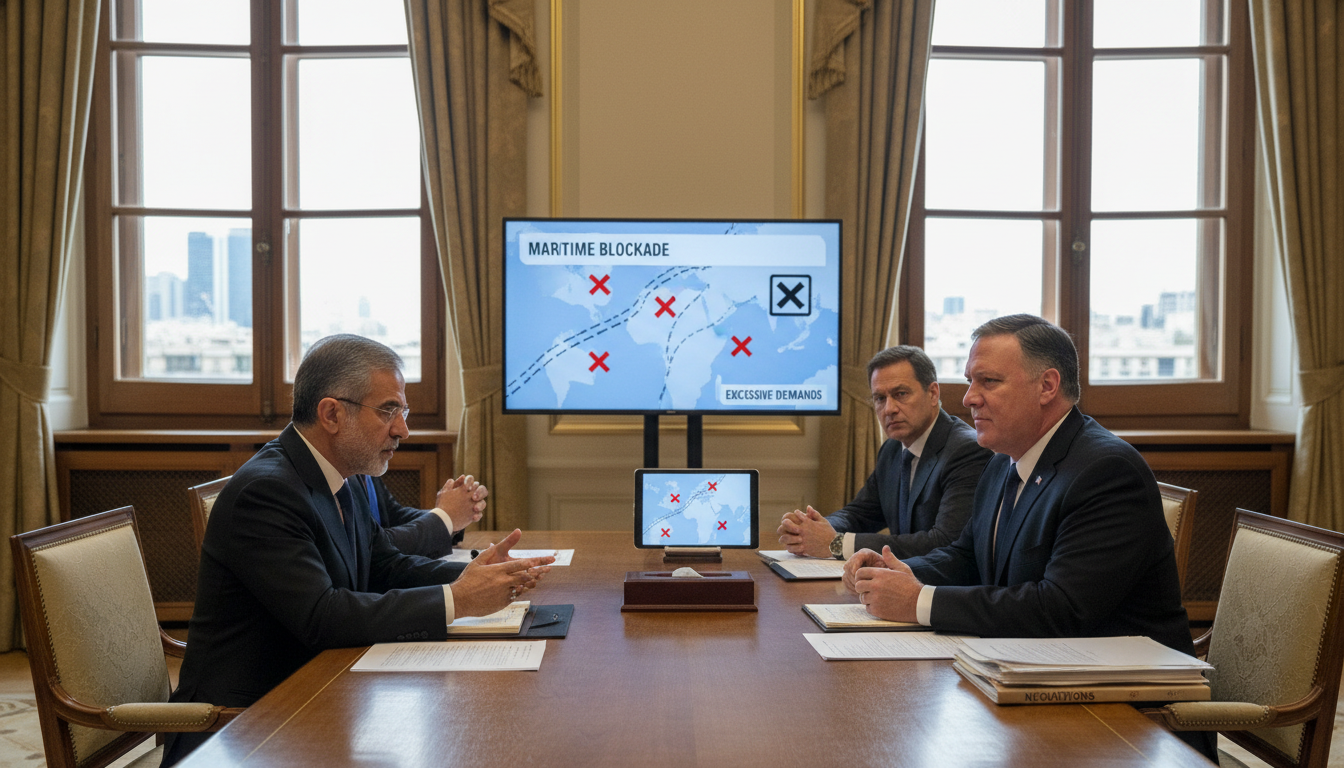
Iran Refuses Next Round of Iran-US Talks, Citing Trump’s Maritime Blockade and ‘Excessive’ U.S. Demands
Tasnim reports Iran has declined the next round of Iran-US talks, saying President Trump’s maritime blockade announcement and U.S. “excessive” demands halted progress and ended negotiations.
Tasnim report: Iran declines next round of Iran-US talks
Tasnim, a news agency linked to Iran’s Islamic Revolutionary Guard Corps, reported on April 18 that Tehran has not agreed to hold a next round of Iran-US talks. The agency said its account is based on inquiries with Iranian authorities and that the decision reflects current conditions created by recent U.S. actions and negotiating positions.
Pakistan was named as the channel used to relay Iran’s position to Washington, according to the Tasnim dispatch. The report quotes Iranian officials as saying they will not engage in discussions while U.S. demands remain, framing the stance as conditional rather than an absolute rejection.
Iran ties refusal to Trump maritime blockade announcement
Iranian sources cited by Tasnim attribute the refusal in part to a public announcement by President Trump of a maritime blockade targeting Iran. That announcement, the report says, was viewed in Tehran as an escalation that undercuts the environment needed for productive diplomacy.
Iran’s statement, as relayed by Tasnim, singles out the blockade declaration as a direct factor affecting Tehran’s willingness to continue negotiations. Iranian officials told the agency they consider such measures incompatible with the good-faith conditions required to resume formal talks.
Pakistan acted as intermediary to convey Tehran’s message
Tasnim’s account states that Iran used Pakistan as an intermediary to communicate its position to U.S. officials. The report indicates Tehran chose to transmit its message through the Pakistani channel rather than direct bilateral contacts, signaling the use of regional diplomacy to manage the dispute.
The use of a third-party intermediary reflects a pattern in the region where neighboring states facilitate communication when direct channels are strained. Iran’s decision to route its message through Pakistan underscores the role Islamabad plays in regional diplomacy and crisis management.
Iran says U.S. demands are ‘excessive’ and unacceptable
The Tasnim report quotes Iranian authorities describing American negotiating positions as “excessive,” and frames the Tehran line as conditional: Washington must abandon what Iran calls unreasonable demands for talks to resume. Iranian officials added that they will not spend time on negotiations perceived as meaningless.
That language points to a broader negotiating impasse rooted in differing expectations about the content and scope of any discussions. Iran’s characterization of U.S. demands as excessive highlights a core obstacle that will need to be resolved before formal rounds of talks can be scheduled.
Diplomatic and regional security implications
Iran’s refusal to agree to the next round of talks could complicate efforts to reduce tensions in the Gulf and beyond. A breakdown in direct negotiations risks prolonging standoffs that affect commercial shipping, energy markets and regional security arrangements.
Observers caution that prolonged diplomatic deadlock may prompt other actors to increase engagement or to press for new mediating formats. The role played by regional intermediaries such as Pakistan may expand if bilateral channels remain frozen or politically untenable.
Potential trajectories and what to watch next
Key indicators to watch include whether Washington publicly responds to Pakistan’s transmission of Tehran’s stance and whether either side signals willingness to narrow substantive demands. Further public statements from Tasnim or Iranian officials may clarify whether Tehran’s position is fixed or contingent on specific concessions.
Diplomats and analysts will also monitor any change in U.S. policy language or actions that Tehran has identified as barriers to talks. A shift in rhetoric or the removal of measures cited by Iran could reopen space for diplomacy, but the current public standoff suggests more time will be required to bridge core differences.
The Tasnim report presents Tehran’s position as a conditional halt to negotiations tied to recent U.S. actions and demands, a stance conveyed to Washington through Pakistan and framed as an effort to avoid what Iran calls meaningless talks.

