
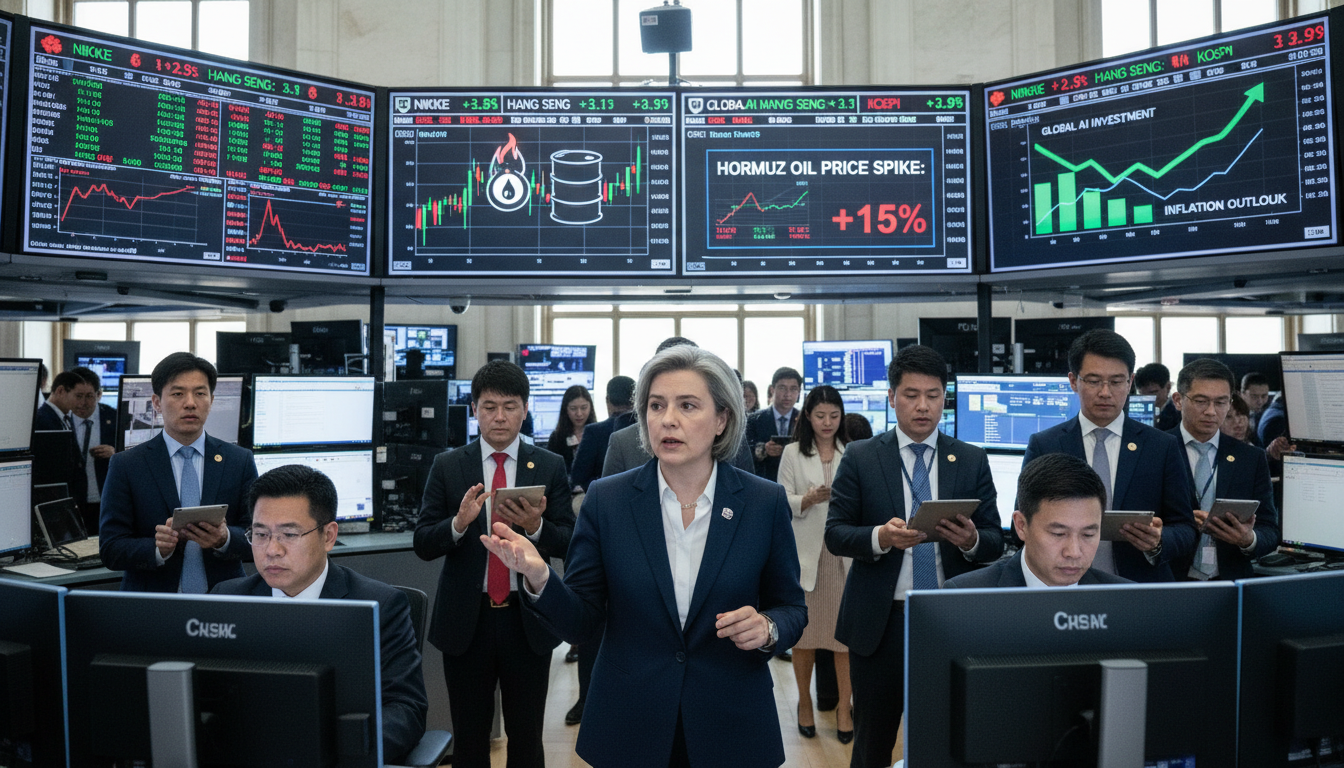
K-shaped recovery deepens in Asia as AI stocks surge and Hormuz oil shock drives inflation
K-shaped recovery in Asia widens as AI-fuelled rallies lift Tokyo and Seoul while a closure in the Strait of Hormuz drives oil prices up, raising stagflation concerns.
The rapid rise of AI-linked equities has helped push markets in Tokyo and Seoul to record levels in April 2026, even as energy shocks and higher fuel costs batter lower-income households across the region. The contrasting dynamics, often described as a K-shaped recovery, are prompting warnings from economists that combined slower growth in vulnerable sectors and accelerating inflation could produce stagflation. Recent transport strikes in the Philippines and tightening consumer prices underscore the unevenness of the rebound and complicate policy choices for central banks and governments.
Stock rallies driven by AI momentum
The technology sector has led equity markets higher in several Asian financial centers this month, with investors favoring companies that stand to benefit from artificial intelligence adoption. Large-cap software and semiconductor firms accounted for much of the gains, drawing heavy trading volumes and lifting broader indices.
Market analysts attribute the rally to a fresh wave of corporate earnings expectations and investment flows into AI-focused funds. The concentration of gains in a handful of sectors contributes to the K-shaped recovery pattern, where asset-rich households and technology-linked firms outpace the rest of the economy.
Strait of Hormuz closure raises oil prices
A recent closure of the Strait of Hormuz—one of the world’s most important oil transit chokepoints—has pushed global crude prices higher, raising costs for energy-importing economies in Asia. The disruption tightened supply fears and translated quickly into elevated pump prices in countries that rely heavily on imported petroleum.
Higher fuel costs have a pronounced pass-through effect on transport, food logistics, and manufacturing. Economies with large energy subsidies or limited fiscal room now face harder trade-offs between shielding households from price shocks and preserving budgetary stability.
Widening K-shaped recovery across Asian economies
The divergence between booming capital markets and struggling real-economy sectors is becoming more visible across multiple Asian nations. While urban, high-income consumers and firms linked to digital transformation enjoy stronger demand, lower-income households and small businesses confront rising costs and weaker revenue growth.
This split amplifies inequality and risks entrenching divergent recovery paths within single countries. The K-shaped recovery framework helps explain why headline GDP figures can look resilient even as a significant share of the population faces economic strain.
Grassroots protests and transport disruptions
Social tensions have surfaced in several locales as fuel price inflation hits pocketbooks. In March 2026, jeepney drivers in Manila staged strikes to protest surging diesel costs, disrupting daily commutes and highlighting the political sensitivity of energy price spikes. Similar localized protests and labor actions have occurred where transport and delivery costs rose sharply.
These grassroots responses complicate policymaking by increasing public pressure for subsidies, targeted relief, or price controls. Policymakers must weigh short-term social stability against the long-term fiscal costs of recurring interventions.
Central bank dilemmas and stagflation risk
Policymakers face a complex policy matrix as inflationary pressures rise while growth prospects dim in parts of the economy. Central banks typically combat inflation by tightening monetary policy, but doing so risks suppressing demand in already fragile sectors and deepening the K-shaped split.
Economists warn that if supply-driven price increases persist alongside stagnant wage growth for many workers, the region could experience stagflation—slower aggregate growth with elevated inflation. Fiscal and monetary authorities will need calibrated responses that balance inflation containment with targeted support for the most affected households.
Corporate winners and household losers
The uneven recovery is creating distinct winners and losers at both firm and household levels. Large firms with digital business models and access to capital markets are expanding, while small and informal enterprises face tighter margins and weaker demand. Households with asset exposure to equities and real estate have seen net worth gains, while those spending a larger share of income on food and transport suffer real-income erosion.
This divergence has implications for consumption patterns, savings rates, and social cohesion, and it may influence political dynamics in the coming months as voters react to perceived unfairness in the recovery.
Policy responses that blend targeted fiscal relief, energy policy adjustments, and measures to broaden access to high-growth sectors could mitigate the K-shaped dynamic. Transparent communication from authorities about the nature of the shocks and the intended duration of interventions will be critical to maintaining public trust.
Economic indicators and labour market data over the next quarter will be closely watched for signs that the divergence is narrowing or deepening. If inflation proves persistent and growth remains uneven, governments across Asia may face increasingly difficult choices to avoid a prolonged period of weak growth and high prices.

