
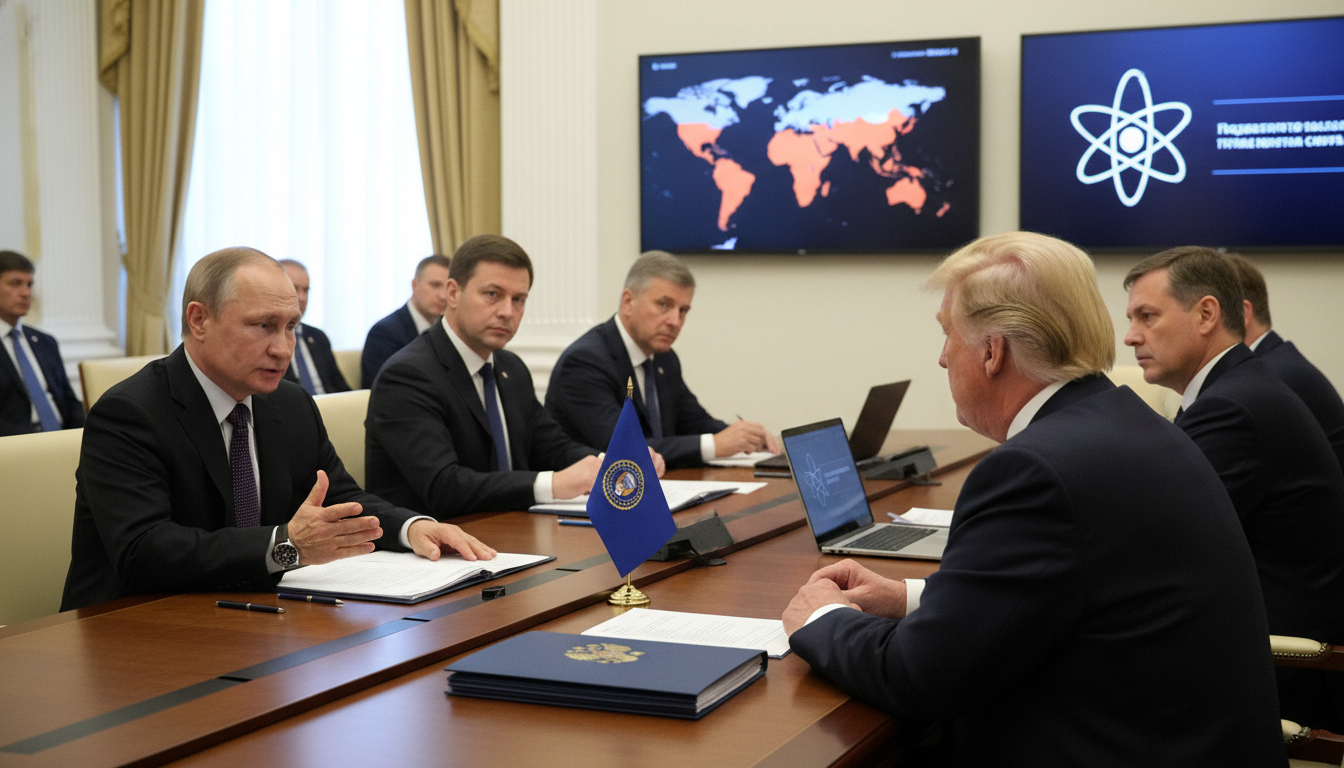
Putin-Trump phone call on Iran raises prospect of new diplomatic channel for nuclear talks
Putin-Trump phone call on Iran drew attention on April 29 as leaders discussed the escalating situation and Russia’s proposal on Tehran’s nuclear program, signaling a possible shift in diplomatic engagement.
Russian President Vladimir Putin held a phone conversation with U.S. President Donald Trump on April 29, according to Kremlin aides, in a discussion that addressed Iran’s nuclear developments and regional security risks. The call, initiated by Moscow and lasting more than an hour, featured warnings from Putin about the consequences of renewed military action by the United States or Israel. White House statements indicate Mr. Trump acknowledged Putin’s interest in the nuclear enrichment issue and said he encouraged Russia to focus on ending the war in Ukraine.
Length and initiation of the call
The Kremlin said the telephone exchange was prompted by Russia and extended for roughly 90 minutes, a notably long bilateral discussion by recent standards. Kremlin aide Yuri Ushakov described the call as wide-ranging, centered on Iran but touching on regional stability and broader security concerns. U.S. officials confirmed the conversation took place and that Mr. Trump spoke to reporters about the content after the call.
Putin’s warning on renewed strikes
During the conversation, President Putin warned that if the United States and Israel resumed offensive operations, the consequences would be catastrophic not only for Iran but for the international community as a whole. Russian statements framed the warning as a plea to avoid escalation and to seek alternative, diplomatic paths to reduce tensions. Putin’s message emphasized the global fallout of a wider conflict in the Middle East, reflecting Moscow’s long-standing interest in limiting large-scale military confrontations in the region.
Russia’s proposal on Iran’s nuclear activities
Kremlin officials said Putin raised a Russian proposal aimed at addressing Iran’s nuclear development and indicated Moscow would continue consultations with relevant parties on the idea. President Trump told reporters that Mr. Putin offered to be involved “if it would help” on the question of enrichment, a remark suggesting Moscow is seeking a more active role in negotiations. The U.S. leader reportedly responded by pressing Putin to focus diplomatic energy on ending Russia’s war in Ukraine, underscoring divergent priorities in bilateral diplomacy.
Diplomatic context before the call
The exchange followed a Moscow meeting on April 27 between President Putin and a visiting Iranian foreign minister, in which leadership reportedly discussed efforts toward de-escalation and possible peace initiatives. Russian officials framed the phone call as a continuation of those discussions, intended to translate recent diplomatic contacts into a multilateral track. Observers note the timing coincides with heightened global concern over nuclear proliferation and the potential for military reprisals that could draw in multiple powers.
Regional and international implications
The dialogue between Washington and Moscow on Iran may create space for alternative diplomatic arrangements, but it also raises questions about alignment and influence in the Middle East. Israel has signaled strong opposition to any arrangement perceived to enable Iran’s enrichment, while regional states are watching closely for shifts in great-power engagement. Analysts caution that even well-intentioned proposals could falter without buy-in from Tehran, Washington, and key allies, leaving the door open to miscalculation.
Intersection with the Ukraine question
Mr. Trump’s reported request that Putin prioritize ending the war in Ukraine highlights how bilateral tensions—and mutual demands—shape discussions about third-party crises. Moscow may see engagement on Iran as leverage to extract concessions or attention on other strategic fronts, while Washington faces the challenge of balancing immediate regional risks against longer-term security concerns in Europe. The conversation underlines how crises in different theaters are increasingly interconnected in the diplomacy of major powers.
The phone call signals a rare public moment of direct talks between the two leaders on a high-stakes regional issue and suggests Russia intends to press its proposal in forthcoming consultations with other countries. Officials on all sides said further communication would continue, and foreign ministries are expected to exchange views in the coming days to determine whether a workable diplomatic path can be agreed.

