
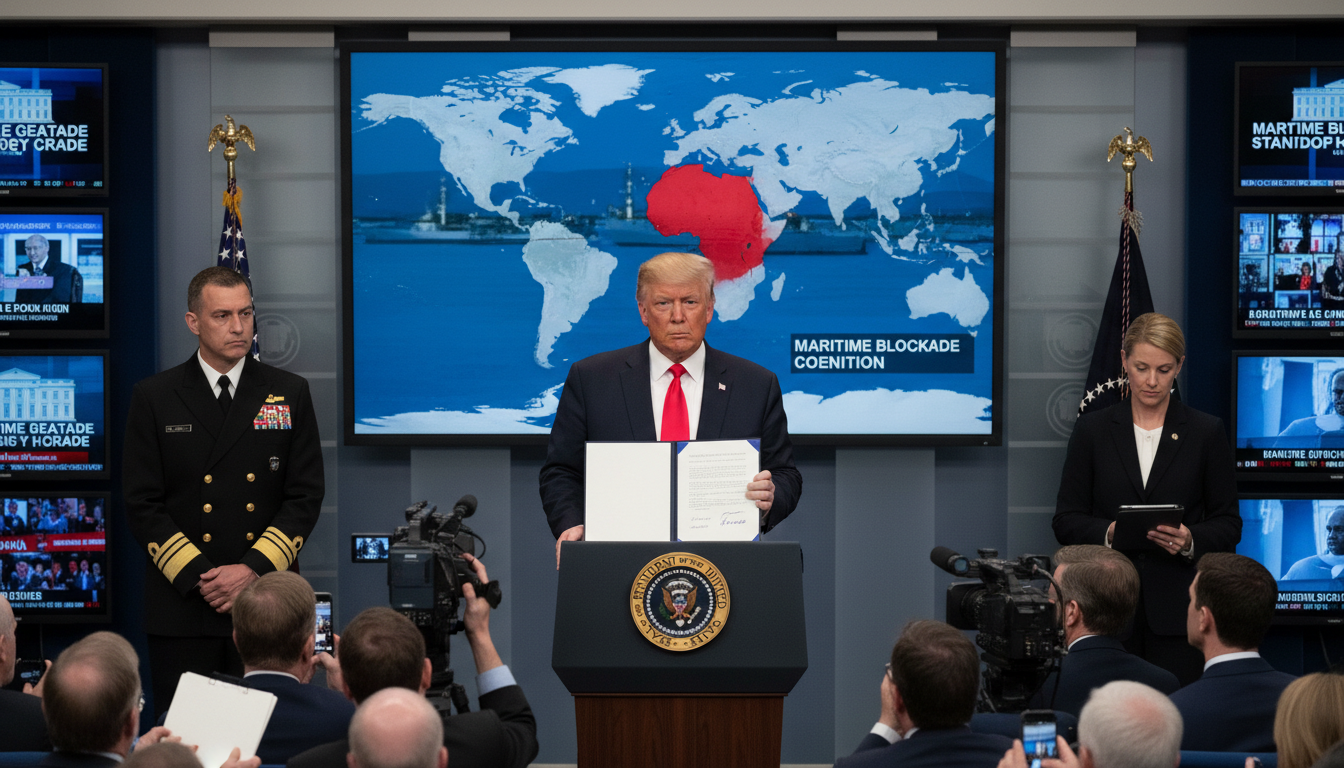
Trump ceasefire extension with Iran signals U.S. hesitation as naval blockade continues
U.S. President Donald Trump announced an indefinite ceasefire extension with Iran on April 21, 2026, while ordering a continued naval blockade that keeps maritime tensions and market anxiety high. (apnews.com)
Opening summary
President Trump’s decision on April 21 to extend the ceasefire with Iran removed an immediate deadline for renewed hostilities but left the terms and timeline open-ended. (apnews.com)
The announcement came after talks expected in Islamabad were put on hold and followed a day in which the White House signalled both diplomatic outreach and sustained military pressure. (washingtonpost.com)
Markets and maritime operators reacted to the mixed signals: hopes for de-escalation were tempered by the continuation of a U.S.-led naval blockade that has already disrupted shipping in the Strait of Hormuz. (ca.finance.yahoo.com)
Trump’s abrupt reversal and public rhetoric
In the hours before the extension, the president told television interviewers that he saw little chance of prolonging the truce and even warned of military strikes if Tehran did not meet U.S. conditions. (theguardian.com)
Hours later, a Truth Social post said the ceasefire would be extended “until such time as their proposal is submitted, and discussions are concluded,” citing a Pakistani request for more time and describing Iran’s leadership as “seriously fractured.” (apnews.com)
The contrast between public threats and the unilateral extension underscores a fraught U.S. posture that mixes coercive tactics with an openness to mediated talks. (washingtonpost.com)
Naval blockade as leverage and its regional consequences
While halting immediate large-scale attacks, the administration made clear the U.S. military would maintain a blockade of Iranian ports and continued to restrict shipping through key waterways. (aljazeera.com)
The blockade is intended to pressure Tehran economically by choking oil exports, but it also risks further disrupting global energy flows and escalating incidents at sea. (ca.finance.yahoo.com)
Iran has denounced boarding of its vessels and other interdictions as violations of the truce, framing U.S. naval actions as acts of aggression rather than disciplined enforcement. (thenationalnews.com)
Pakistan’s mediation and the halted Islamabad talks
Pakistani mediators had been arranging a second round of face-to-face negotiations, and Islamabad’s leaders urged both sides to allow time for a unified Iranian response. (apnews.com)
Vice President JD Vance and a U.S. negotiating team were expected to travel to Islamabad but the White House suspended the trip amid uncertainty over Tehran’s willingness to participate. (apnews.com)
Pakistan’s role as intermediary highlights the regional stakes and the preference of some actors for a diplomatic pause rather than immediate military escalation. (newsweek.com)
International and domestic reactions to the extension
Global capitals welcomed the delay in renewed fighting but expressed concern over the continued blockade and the potential for miscalculation at sea. (aljazeera.com)
Iranian officials and allied regional actors warned that halting hostilities in name while sustaining maritime pressure could be read as a strategy to force capitulation rather than negotiate in good faith. (thenationalnews.com)
Inside the United States, some policymakers and analysts noted the contradiction in publicly rejecting an extension one day and announcing an indefinite truce the next, suggesting the president’s comments had complicated U.S. negotiating leverage. (washingtonpost.com)
Risks for shipping, markets and the longer timeline
Shipping through the Strait of Hormuz, a conduit for a sizable share of seaborne oil, remains fragile while interdictions and warnings continue to affect routing and insurance costs. (ca.finance.yahoo.com)
Energy markets reacted to the mixed signals with price swings as traders weighed the odds of a durable political settlement against the prospect of renewed hostilities. (ca.finance.yahoo.com)
Analysts say the current posture—an open-ended ceasefire paired with sustained economic pressure—creates a protracted standoff in which each side tests the other’s tolerance rather than settling core issues quickly. (rferl.org)
The extended truce buys time for mediators but leaves fundamental disagreements unresolved and keeps the risk of accidents, miscommunication and escalation at sea unacceptably high. (apnews.com)

