
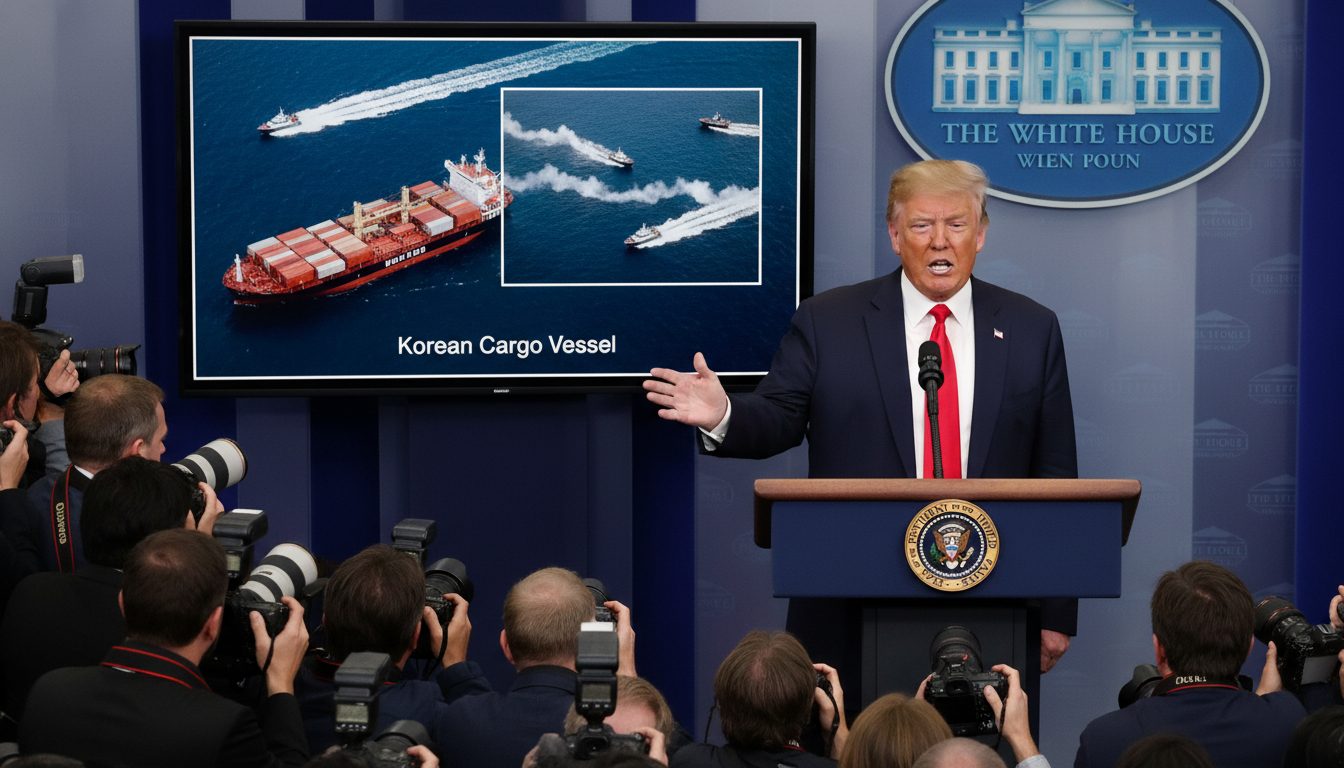
U.S.-Iran tensions flare after Trump accuses Iran of attacking South Korean cargo ship
U.S.-Iran tensions escalate after Trump accused Iran of attacking a South Korean cargo ship in the Strait of Hormuz, as U.S. forces struck Iranian vessels and the UAE reported a missile and drone barrage.
Opening summary
President Donald Trump said on social media on May 4 that Iran attacked a South Korean cargo vessel, increasing fears that the fragile U.S.-Iran ceasefire could unravel. The United States reported strikes on Iranian small fast boats and the United Arab Emirates said it intercepted dozens of incoming missiles and drones. The developments have raised concerns about renewed military escalation across the Gulf and risks to commercial shipping.
Trump’s public accusation and call for allies
Trump publicly asserted that Iran had struck a Korean-operated ship anchored near the Strait of Hormuz and urged South Korea to join a U.S.-led mission to escort vessels through the waterway. South Korean media and government sources reported an explosion and fire aboard a vessel tied to a Korean company, noting the possibility that the blast resulted from incoming fire.
The president framed the proposed escort operation as a humanitarian measure to secure safe passage for merchant shipping, and warned that any attempt to impede that process would be met with strong consequences. His comments intensified diplomatic pressure on regional and allied governments to clarify their roles in maritime security.
U.S. military engagement with Iranian craft
U.S. officials said American forces engaged multiple Iranian small high-speed boats in the region as part of operations tied to ensuring freedom of navigation. U.S. statements initially described strikes on seven such craft, while a U.S. Central Command commander later told media that U.S. forces had sunk six Iranian vessels and intercepted Iranian cruise missiles and drones.
U.S. military officials characterized the actions as defensive responses to hostile behavior and as measures meant to protect transiting ships and U.S. personnel. The Pentagon’s public descriptions emphasized interdiction of threats at sea, but offered limited detail about the exact sequence of events or casualties.
UAE reports missile and drone barrage, damage in Fujairah
The United Arab Emirates on May 4 said its air defenses responded to a wave of incoming strikes from Iran, reporting 12 ballistic missiles, three cruise missiles and four drones. Authorities in the Emirati emirate of Fujairah posted that a drone strike sparked a fire at an oil-related facility, and that three Indian nationals were injured in the incident.
The UAE foreign ministry issued a strong condemnation, calling the strikes a dangerous escalation and declaring that it reserved the right to a full and lawful response. Emirati statements signal the possibility of direct regional retaliation if evidence points to Iranian responsibility.
History of attacks and fragile ceasefire
Iran has carried out strikes on energy and infrastructure targets in the region since February 28 in what it described as retaliation for U.S. and Israeli preemptive strikes. Hostilities had largely calmed after a ceasefire agreement reached on April 8, which saw a temporary reduction in cross-border attacks and a drop in incidents involving merchant shipping.
The latest exchanges have cast doubt on the durability of that truce, with both the United States and Iran signaling they may respond forcefully to perceived provocations. Observers warn that episodic attacks, miscalculations at sea, or rapid escalation between local forces and major-power militaries could quickly widen the conflict.
Regional and international implications
The renewed clashes threaten to disrupt shipping through one of the world’s most important oil transit corridors and to drive further volatility in energy markets and global trade. Washington’s push to shepherd vessels through the Strait of Hormuz and the UAE’s warnings suggest states in the region are preparing contingency measures to deter or respond to further strikes.
Allied governments and commercial operators will be watching for concrete evidence identifying the perpetrators, while diplomatic channels may be pressed into service to prevent missteps. The risk of spillover to broader regional confrontations remains a primary concern for capitals dependent on stable Gulf oil flows.
The situation remains fluid, with U.S.-Iran tensions evolving rapidly and officials in the Gulf and beyond assessing whether the recent actions mark an isolated flare-up or the start of broader hostilities.

